
Review · BUKHARA
Bukhara Walking Tour
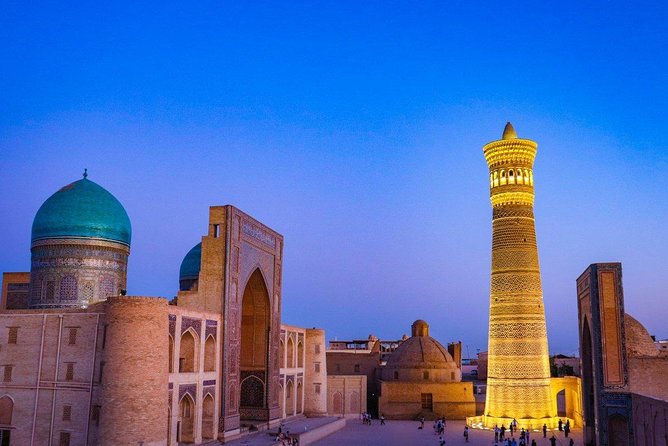
Bukhara feels like a living museum. This 5 to 6 hour walking tour strings together the city’s biggest Islamic-era landmarks, from Lyabi Hauz to the Samanid Mausoleum, with clear explanations along the way. Two things I really like are the strong guide focus and the way the route balances monuments with everyday cultural stops like the puppet theater.
I also like that it starts in Lyabi Hauz, a natural meeting point that’s especially active around the evening vibe, not just a stop on a map. You get context fast, including major names like Kukeldash and Nadir Divanbegi, plus the dervish hanaka atmosphere nearby. A second standout is the Central Asian puppet theater history stop, where you can even catch a short show from the master himself.
One thing to plan for: entrance tickets for monuments are not included, so your total day cost can go up depending on which sites you choose to enter. The tour is well paced, but you should budget extra time and money for those add-ons.
In This Review
- Key highlights you should not miss
- A half-day route from Lyabi Hauz to Samanid Mausoleum
- Lyabi Hauz ensemble, where Bukhara’s social life starts
- The puppet theater stop that turns culture into a moment
- Magoki Attori Mosque and the carpet museum pairing
- Ulugbek and Abdulaziz-Khan madrassas, scholarship in stone
- Ulugbek Madrasah
- Abdulaziz-Khan Madrasah
- Poi Kalyan complex, the city’s big religious statement
- Ark Citadel, a city within a city
- Bolo Hauz mosque, 40 columns as a reflection trick
- Chashmai Ayub and the water story behind the mausoleum
- Ismail Samani Mausoleum, the walk’s final anchor
- What’s included, what to budget, and how to keep the day smooth
- Guide quality is the secret sauce here
- Should you book this Bukhara walking tour?
Key highlights you should not miss
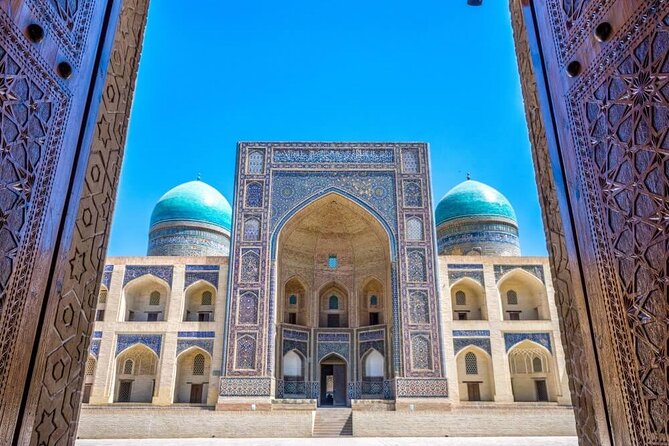
- Lyabi Hauz ensemble orientation: Kukeldash, Nadir Divanbegi, and the dervish hanaka are your “start here” cultural anchor.
- Central Asian puppet theater history: the only place in Uzbekistan where you can learn this specifically, plus a short master show.
- Pre-Mongol religious monuments: Magoki Attori and the Poi Kalyan minaret help you see how old the layers are.
- School and power architecture in one walk: Ulugbek, Abdulaziz-Khan, and the Ark Citadel show scholarship and rule side by side.
- A real photo trick at Bolo Hauz: the reservoir reflection is part of the experience, not just a bonus.
- Guide quality matters here: guides like Nilufar and Peri are repeatedly noted as punctual, patient, flexible, and strong in English.
A half-day route from Lyabi Hauz to Samanid Mausoleum
This is built for people who want the essentials of Bukhara without turning the day into a chaotic scavenger hunt. You’ll move on foot for about 5 to 6 hours, and the tour is private for your group, not shared with strangers. That matters, because it keeps the pace workable and makes questions easier.
The tour also has a practical rhythm: you start at the Lyabi Khause ensemble area and the walk finishes at the Ismail Samani Mausoleum. Along the way, you hit major clusters instead of isolated one-off sites. That saves time and helps the architecture make more sense as a connected story.
Price is $28, and it’s unusually clear what you’re buying. You’re paying for a professional guide and all fees and taxes tied to the tour itself. The big catch is right up front: entrance to monuments listed in the program is not included, so it’s not a “pay once and everything is free inside” situation.
Lyabi Hauz ensemble, where Bukhara’s social life starts
Your first real anchor is Lyab-i-Hauz, the center of social life in Bukhara. The tour gives this stop about 1 hour, which is a smart choice because it’s the kind of place where you need a little time to orient your eyes.
Here’s what you’re looking at around the courtyard area:
- Kukeldash madrasah
- Nadir Divanbegi madrassah
- Hanaka, a dwelling associated with dervishes
What makes this stop valuable is that it’s not only “pretty architecture.” It’s a staging point for understanding how these institutions lived next to ordinary city life. In the evening, the area is intensively animated, so you can see how the buildings sit in a living public space.
If you like street-level context, this is the best early start. If you’re the type who prefers fast museum-style entry, you might wonder why you’re spending a full hour before paying any monument tickets. For this tour, that early investment pays off because the rest of the route starts to feel organized, not random.
Deeper into the Bukhara old town
- Best of Bukhara: All Day Private Old Town Tour
★ 5.0 · 66 reviews - Best of Bukhara: All Day Private Old Town Tour
★ 4.9 · 62 reviews - City Tour Around Bukhara
★ 5.0 · 55 reviews - Bukhara Full Day Old City Private Tour
★ 5.0 · 46 reviews
The puppet theater stop that turns culture into a moment
Next you get a very specific cultural detour: the history of Central Asian puppet theater. The tour highlights it as the only place in Uzbekistan where you can get acquainted with that history. You’ll spend about 20 minutes here.
Two details make this stop special:
- you can watch a 2 minute show from the master himself
- if luck smiles, you can find some puppet
Even if puppetry is not your main interest, this is a good way to break up the long run of religious and educational monuments. It gives your day a different texture, and it’s also an easy mental reset.
Think of it like this: stone monuments tell you what a society built. A living craft stop helps you understand what people did with their imagination and stories. That balance is one reason the tour feels more like a guided walk than a checklist.
Magoki Attori Mosque and the carpet museum pairing
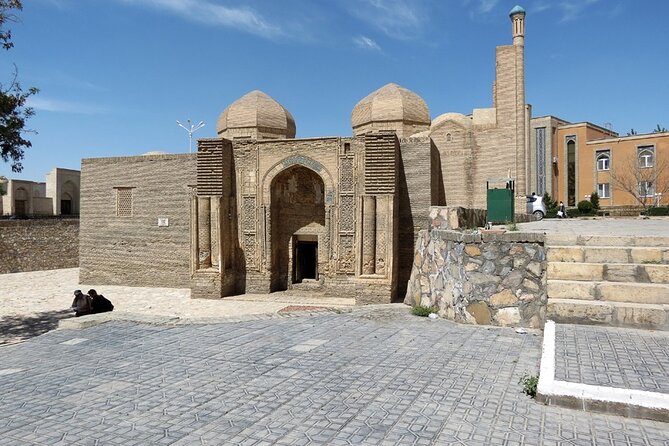
At Magoki Attori, you get one of the tour’s most layered historical claims: it’s described as the first mosque in Uzbekistan, and also a pre-Mongol period monument. The tour also notes that before Islam, the site was a place where pagans sold idols.
That kind of before-and-after context is useful. It reminds you that places in Central Asia often didn’t start as a single-purpose site and then stay frozen. They gained, lost, and reinterpreted meaning over time. This stop does that for you without turning the walk into a lecture.
You’ll also see a carpet museum component associated with this stop. The tour lists it as part of the visit, so it’s not an optional side quest you might miss if you’re rushing.
This is a short stop (around 15 minutes), so treat it as a highlight you want to absorb quickly. If you’re the type who loves slow, detailed museum time, you may want to plan extra time elsewhere in Bukhara on a different day.
Ulugbek and Abdulaziz-Khan madrassas, scholarship in stone
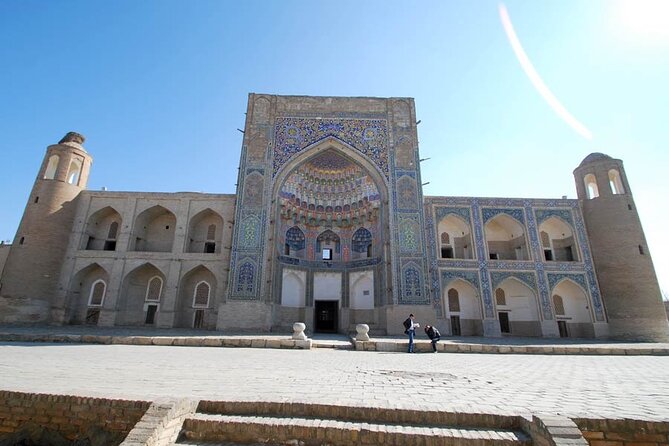
Bukhara’s madrassas can feel similar at first glance, but this tour helps you tell them apart with clear identifiers.
Ulugbek Madrasah
You get about 15 minutes at Ulugbek Madrasah, described as the oldest madrasa in Bukhara and the only monument of the Timurid period in the city. That’s a strong label, and it helps your brain keep track of what era you’re seeing as you move forward.
Other Uzbekistan walks at an easy pace
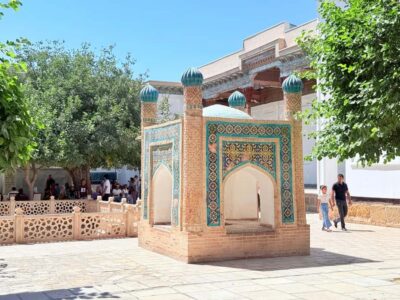
Abdulaziz-Khan Madrasah
Then you shift to Abdulaziz-Khan Madrasah, described as the most magnificent madrassah of Bukhara. The tour also points out something practical for your eyes: it’s the first monument where they began using the yellow color.
Why that matters: it’s easy to remember Bukhara as a sea of blue, but color shifts help you understand that decoration evolved. When your guide points out the yellow element as historically “first,” it becomes more than aesthetics. It becomes a marker of time.
Both stops are short, about 15 minutes each, so your biggest job is to keep your attention on the guide’s pointers. If you get distracted by photo angles, you can lose the context that makes these stops click.
Poi Kalyan complex, the city’s big religious statement
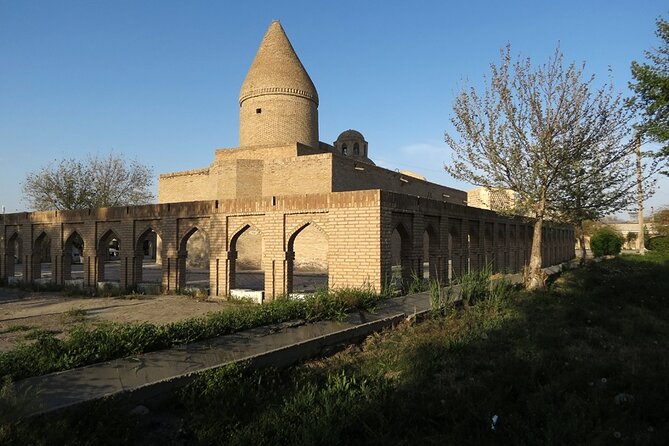
Next is Poi Kalyan Mosque, part of a complex with three monuments. You’ll spend about 1 hour here, which is generous for such a “main attraction” area and a sign the tour wants you to look around, not just stand in front of one building.
The key pieces:
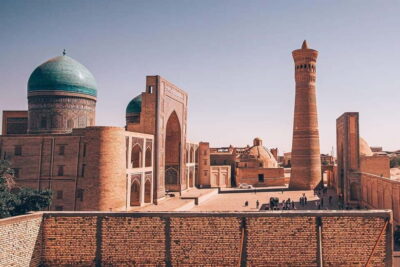
- Minaret Kalan, described as the highest minaret in the city and a pre-Mongol monument
- Kalan Mosque, described as the medieval largest mosque of the city, restored as part of the area
This is the kind of stop where your guide’s pacing really matters. If you rush, it becomes “tall tower, big mosque.” If you slow down a bit, the Po i Kalyan complex starts to feel like a planning decision. It’s religious authority shown in scale, and it’s meant to be seen from distance.
Entrance tickets are not included, so you might choose to view from the outside and save your ticket costs for another day’s deep interior visits. Either approach works, as long as you’re honest with your time and budget.
Ark Citadel, a city within a city
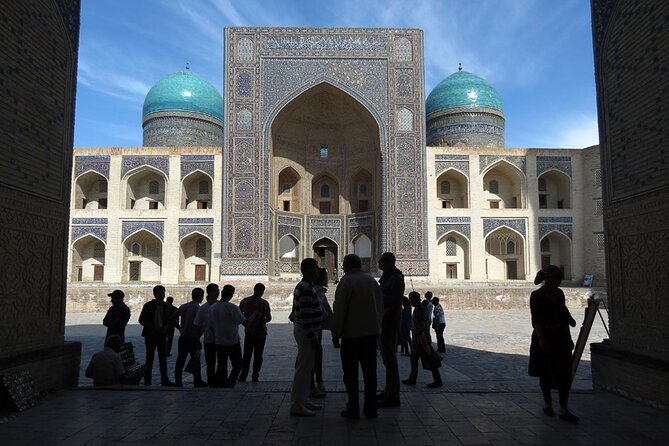
Then you head to Ark of Bukhara, described as the winter residence of the Bukhara emirs. The tour frames it as a city within the city, which is a useful mental model.
You’ll spend about 40 minutes here. That time is important because the Ark area is not just one structure you look at from one angle. Even without assuming anything extra, the concept of a power center makes you want to scan how space is organized.
Because this stop is described as a major residence and administrative area, it also gives contrast to the educational madrassas and mosques you’ve already seen. Instead of “learn and pray,” this part reads as “rule and store,” at least in the way your guide frames it.
Bolo Hauz mosque, 40 columns as a reflection trick
Bolo Hauz Mosque is a short but memorable stop, about 20 minutes. The tour says it has the highest columns in the city and explains the nickname Chilustun, which refers to “40 columns.” It also notes a correction: the mosque only has 20 columns, but reflections on the reservoir create the impression of more.
That detail is exactly the kind of thing that makes a guided walk worth it. Without the explanation, you’d see columns and maybe move on. With it, you start to look for the reflection effect and understand why the nickname stuck.
If you’re coming here as a photo person, this is a stop where your guide’s timing helps. If the lighting is wrong, reflections might not show as clearly. The tour doesn’t promise exact timing beyond its overall schedule, but it does give you enough time for your eyes to make sense of what you’re seeing.
Chashmai Ayub and the water story behind the mausoleum
At Chashmai Ayub Mausoleum, the tour gives you about 20 minutes. It’s described as the city’s water supply museum and also as the mausoleum of “St. Jehovah.”
Water is always a central theme in desert civilizations, and this stop tries to turn that basic fact into something you can see and connect to belief and memory. The “museum” framing matters, because it’s not only a tomb stop. It’s also meant to help you understand water infrastructure and its cultural meaning.
The “St. Jehovah” line is unusual, and your guide may explain it in the way they interpret the site. Either way, the stop stands out because it connects a physical resource, water, with a place of remembrance.
Ismail Samani Mausoleum, the walk’s final anchor
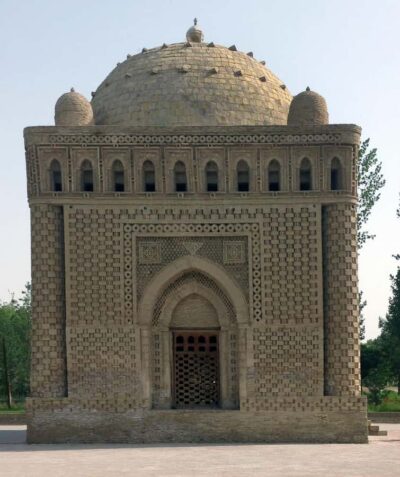
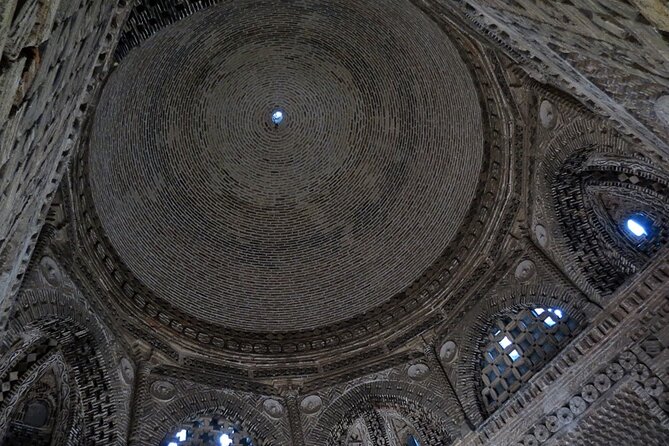
Your last major stop is Ismail Samani Mausoleum, about 30 minutes. The tour highlights it as:
- the first mausoleum in Central Asia
- the second mausoleum in the Islamic world
- the mausoleum of the founder of the first local Emperor of Central Asia
The takeaway for you is not just superlatives. It’s that the tour ends at a spot that your guide can use as a final “why it mattered” explanation. By the time you reach this point, you’ve already seen education buildings, religious complexes, and political space. Finishing here ties those threads into a single closing statement about leadership and legacy.
The tour ends at the Samanid Mausoleum area, which is convenient if you plan to keep exploring afterward. You’re not left stranded in the middle of nowhere. You’re set down in a known landmark zone.
What’s included, what to budget, and how to keep the day smooth
Here’s the practical reality of the deal. You’re paying $28 for a professional guide and all fees and taxes included with the tour. The guide is offered in multiple languages, including English, Spanish, French, German, and Russian.
Not included:
- entrance to monuments specified in the program
- lunch
- an air-conditioned vehicle
The not-included list is why I recommend treating this as a guided walking experience first, and a ticketed monument circuit second. If you want the inside experience of several sites, your day cost can rise. If you’re okay viewing some things from outside and focusing on your guide’s interpretation, the tour stays good value.
Also, because it’s a walking route, you’ll want to be comfortable with a half-day on your feet. The stops are timed, but the old-city feel of Bukhara means you’ll naturally slow down to look and listen.
Guide quality is the secret sauce here
The most praised aspect in the experiences around this tour is the guide itself. People highlight patience, flexibility, and excellent English. They also mention punctual energy.
In particular, guides like Nilufar and Peri are described as:
- patient while explaining details
- flexible with how you move through stops
- punctual, with a lot of energy
- strong in English
That matters because many of these sites are visually impressive but easy to misunderstand if you’re alone. A good guide keeps you from getting stuck in photo mode. They help you connect what you see, like the pre-Mongol label on certain monuments, or why the Abdulaziz-Khan madrasa’s yellow color is called out as historically important.
Should you book this Bukhara walking tour?
Book it if you want a structured half-day that hits the major Bukhara touchpoints, with a guide who explains the “why” behind the architecture and includes a unique cultural stop like the puppet theater history show. It’s also a good pick if you value small-group comfort, because it’s set up for your group only.
Skip it, or at least adjust expectations, if you hate paying separate entrance fees at monuments, because admission tickets are not included. Also skip if you want lunch built in or you’re expecting vehicle comfort, since the tour explicitly does not include an air-conditioned vehicle.
If your goal is to leave Bukhara with your bearings and a clean mental map of what matters, this tour does that job well, especially with the Lyabi Hauz start and the Samanid Mausoleum finish.
More Tours Around Uzbekistan

The Full Uzbekistan Review Pile
Keep Walking Bukhara
More of Uzbekistan we have reviewed
- Full-Day Private Guided Tour to Islamic 7 Saints of Bukhara★ 4.5 · 3 reviews
- Uzbekistan 8 Days Private Guided Tour★ 4.6 · 3 reviews
- A Complete Chapter To Old Bukhara★ 5.0 · 5 reviews
- 2 – Days Guided Tour of Samarkand and Bukhara from Tashkent★ 5.0 · 5 reviews
- Bukhara Walking Tour★ 5.0 · 4 reviews
- A Group Walking Tour Of Old Town★ 5.0 · 8 reviews
Bukhara Old Town & Heritage Tours, compared.
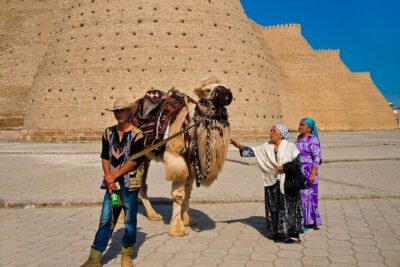 ★ 5.0Best of Bukhara: All Day Private Old Town TourFrom $6566 reviews
★ 4.9Best of Bukhara: All Day Private Old Town TourFrom $6462 reviews
★ 5.0Best of Bukhara: All Day Private Old Town TourFrom $6566 reviews
★ 4.9Best of Bukhara: All Day Private Old Town TourFrom $6462 reviews
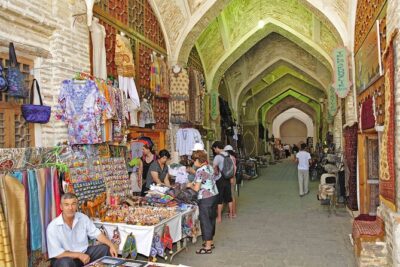 ★ 5.0Bukhara Full Day Old City Private TourFrom $8546 reviews
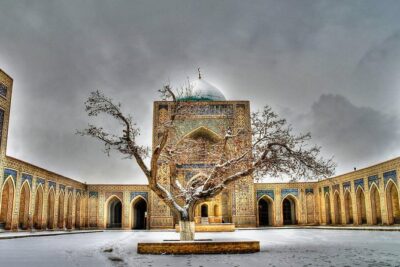 ★ 4.5Bukhara One Day Tour – Departure From TashkentFrom $24937 reviews
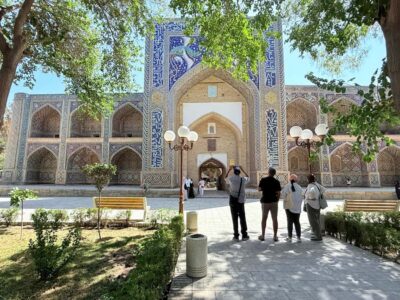 ★ 5.0Private Guided Tours in Bukhara with Several OptionsFrom $5034 reviews
 ★ 4.9All You Need To Know About Bukhara. A Walk In The TownFrom $5531 reviews
 ★ 5.0One-Day Private Tour in the Old Town of BukharaFrom $6724 reviews
 ★ 4.4Bukharian Bath in Ancient Hammam with MassageFrom $6719 reviews
Browse the lists this tour appears in