
Review · BUKHARA
City Tour Around Bukhara
Bukhara feels like a letter from yesterday. This small-group city tour wraps the big sights in a story format, including handmade Messages from the past and a guide, Kamilla Yu, who keeps explanations short and clear. I love that the tour doesn’t drown you in names, yet still helps you see what you’re looking at.
I also like the way the route connects architecture to everyday life. You’ll spot the working process of traditional crafts like puppets, blacksmith work, gold embroidery, fabric making, and wood carving, plus local music and folk shows, with small coffee and tea breaks built in.
One consideration: several monuments list admission as not included, and coffee and tea are also not included in the price. Plan a little extra cash for entry fees depending on which stops you want to go inside.
In This Review
- Key highlights you’ll feel on the walk
- A half-day that reads like a story, not a textbook
- Meet Kamilla Yu, the guide at the center of the experience
- Price and value: $66 per group, up to 6 people
- Your walk through Old Bukhara: stop by stop
- Ismail Samani Mausoleum: brick patterns without the color
- Chashmai Ayub Mausoleum: healing well story in a religious overlap
- Bolo Hauz Mosque: wood-carved pillars and the “announcing the king” use
- Ark of Bukhara: fortress ruins plus a city view
- Great Minaret of the Kalon: a tower that has stayed upright since the 12th century
- Poi Kalyan Mosque: 288 domes and photo-worthy corners
- Mir-i-Arab Madrasa: a functioning religious college since the 16th century
- Trading Domes: three domes with different roles
- Kosh Madrasah: two madrassas, two styles, one square
- Magoki Attori Mosque and Carpet Museum: oldest mosque underfoot
- Lyab-i-Hauz: the old city center with a caravanserai feel
- Crafts, music, and food: why this tour feels more local
- Best time to go, including summer evenings
- Tickets, entry fees, and what to budget
- Who should book this city tour
- Should you book this City Tour Around Bukhara?
- FAQ
- How much does the City Tour Around Bukhara cost?
- How long is the tour?
- Is pickup included?
- Is there a mobile ticket?
- What is included in the tour?
- Are coffee and tea included?
- Do I need to buy entry tickets for monuments?
- Where does the tour start and end?
- Are evening tours available?
- What happens if weather is bad?
- Is there a cancellation window for a full refund?
Key highlights you’ll feel on the walk
- Handmade Messages from the past add a story layer that makes photos and ruins feel personal
- Kamilla Yu delivers context in plain, friendly language, including how modern Uzbek life connects to the old city
- Craft process stops go beyond sightseeing and show how skills are made, not just displayed
- Iconic Bukhara landmarks from Ismail Samani to Lyab-i-Hauz, with smart timing at each stop
- Small-group private tour means you’re not squeezed into a big bus rhythm
- Evening options in summer can include the illuminated look of major sites like the Kalon minaret
A half-day that reads like a story, not a textbook
Bukhara can feel intimidating if you show up expecting only architecture trivia. This tour is built to feel like you’re turning pages in an old letter. The “messages from the past” idea is more than a gimmick. It’s a way to help you notice brickwork, dome shapes, courtyard layouts, and the practical reasons buildings were designed the way they were.
You’ll also appreciate the pacing. The stops are broken into short blocks, so you get time to look, ask questions, and grab a photo without losing the thread. That matters in Bukhara, where you can easily burn an entire day just walking and not really understanding what you’re seeing.
The other thing I like is how the guide keeps history simple and tied to what you can actually observe. Instead of piling on long dates, you get “what to look for” guidance, like why a tower stood where it did or how a space was used to share news.
Meet Kamilla Yu, the guide at the center of the experience
Kamilla Yu Tour Guide Bukhara is the face of this tour, and the reviews spell out the same pattern: friendly, prepared, and able to explain Bukhara in a way that feels human. What you gain from that is confidence. You’re not guessing what’s important. You get a clear reason to care at each stop.
Kamilla’s English is described as strong and conversational, which is a big deal on a history-heavy walk. You can follow the details without translating in your head. And she’s flexible with timing, including adapting for breaks for photos and shopping, so you don’t feel rushed out of the moment.
If you want a tour that feels handcrafted, this is it. The “messages from the past” element and the craft focus are the proof. This isn’t just a checklist of sites.
Deeper into the Bukhara old town
- Best of Bukhara: All Day Private Old Town Tour
★ 5.0 · 66 reviews - Best of Bukhara: All Day Private Old Town Tour
★ 4.9 · 62 reviews - City Tour Around Bukhara
★ 5.0 · 55 reviews - Bukhara Full Day Old City Private Tour
★ 5.0 · 46 reviews
Price and value: $66 per group, up to 6 people
The price is $66.00 per group, up to 6 people, for a 4 to 6 hour tour. That’s good value if you’re traveling as a small crew, especially with a private guide.
Here’s the practical way to think about it:
- You’re paying for the guide time and the story-based route, not for entry tickets.
- Since some admissions are listed as not included at multiple stops, you should budget extra for what you choose to enter.
- The tour includes pickup and a mobile ticket, which saves hassle in a place where directions can get tricky fast.
Compared with big-group tours, the private setup matters. You can ask questions, pause for photos, and keep the flow without the “line up and move” vibe.
Your walk through Old Bukhara: stop by stop
This route is designed for the old city core and ends near Lyab-i-Hauz. Expect a mix of outside views, quick interior visits where allowed, and time for real looking. Below is what each stop gives you, plus the key things to keep an eye on.
Ismail Samani Mausoleum: brick patterns without the color
At the Ismail Samani Mausoleum, you get to appreciate age without decorative distractions. The site is admired for its brickwork, described as the oldest mausoleum in the area from the 9th to 10th centuries. What to do here is simple: look closely at the different brick-laying styles.
Why it’s worth your time:
- The design is all about geometry and technique.
- You can still get a strong sense of the structure even if you don’t rely on tile decoration.
Drawback to plan for:
- Admission is not included here, so if you want to go in, you’ll need to pay separately.
Chashmai Ayub Mausoleum: healing well story in a religious overlap
Chashmai Ayub is presented as a holy place for three religions. You’ll hear about the grave of Prophet Job and the natural well with healing water for skin diseases. The complex is described as built in the 12th century.
What you’ll get from this stop:
- A change in mood, from landmark architecture to a spiritual site with living meaning.
- A chance to understand how different faiths and traditions have interacted in the same physical space.
Practical note:
- Admission is not included, so build that into your extra budget if you want full access.
Other Uzbekistan city walks worth comparing
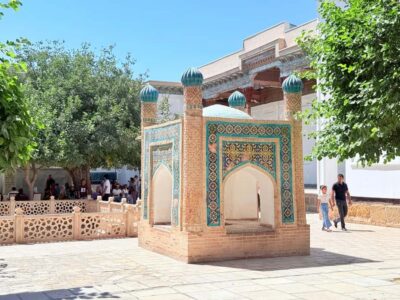
Bolo Hauz Mosque: wood-carved pillars and the “announcing the king” use
Bolo Hauz Mosque is famous in this tour format for its wood-carved pillars. People call it the mosque with 40 pillars, though the guide notes 20 pillars. The stop also includes a story about how the place was used to announce news about a new king.
What to look for:
- The pillar craftsmanship, because the details matter more than the overall size here.
- The “function” angle, how public messaging and religion were tied together.
Good thing:
- Admission is free on this stop.
Ark of Bukhara: fortress ruins plus a city view
Ark of Bukhara is the fortress where rulers lived from the 4th century BC until 1920. You’ll see ruins inside the citadel section, plus a city view from the top.
Why this stop clicks:
- It gives context for how power was organized physically.
- The view helps you understand the old city layout and why this spot mattered.
Tradeoff:
- Admission is not included, so factor that in if you want to enter.
Great Minaret of the Kalon: a tower that has stayed upright since the 12th century
The Great Minaret of the Kalon is described as a minaret that never fell down since the 12th century. The tour also promises talk about the reasons for its solidity and what the tower was used for before. In evening tours during summer, you may see it illuminated.
When you’re there:
- Pause and look up. This is one of those spots where small visual cues help you appreciate scale.
- If you’re doing an evening option, ask your guide if illumination is part of the plan for your date.
Admission:
- Free.
Poi Kalyan Mosque: 288 domes and photo-worthy corners
Poi Kalyan Mosque is described as active since the 16th century and as the biggest mosque in the city. The number to remember is 288 domes. The tour frames each corner as worth pictures.
Why it works on a walking tour:
- Domes and corners create natural photo angles even with short stops.
- You can see why people talk about visual rhythm in Bukhara.
Note:
- Admission is not included for this stop.
Mir-i-Arab Madrasa: a functioning religious college since the 16th century
Mir-i-Arab Madrasa is a religious college still functioning since the 16th century. The tour includes the steps and system of religious education and the typical construction style of madrassas. You can go inside on this stop.
Why you’ll like it:
- You get a sense of how learning spaces were built, not just how they look.
- Being inside changes your understanding of scale and design.
Admission:
- Free here.
Trading Domes: three domes with different roles
Trading Domes are treated like a time machine for commerce. You’ll see three trading domes and how each served a specific purpose. You’ll also have a chance to cross all of them.
What makes it more than a shopping stop:
- The guide connects architecture to profit and movement.
- You’re walking through the space where trade logic played out.
Admission:
- Free.
Kosh Madrasah: two madrassas, two styles, one square
Kosh Madrasah shows two different madrassas with two different styles in the same square. The tour points out the original classroom of the 17th century and a mosque in a cave-like style. There’s also a story tying it to two main religious streams.
What you should pay attention to:
- Contrast. The whole point is the visual and stylistic difference.
- The “same square, different ideas” lesson.
Admission:
- Admission is not included.
Magoki Attori Mosque and Carpet Museum: oldest mosque underfoot
Magoki Attori Mosque is described as the oldest mosque from the 12th century, hidden underneath. The tour also connects the space to a shared or overlapping story of worship, noting it was a place of worship for Judaism and Islam. A carpet museum is part of the stop.
Why it’s interesting:
- Hidden-under architecture changes how you understand old city layers.
- The worship overlap theme helps explain why Bukhara feels layered in a quiet, physical way.
Admission:
- Not included.
Lyab-i-Hauz: the old city center with a caravanserai feel
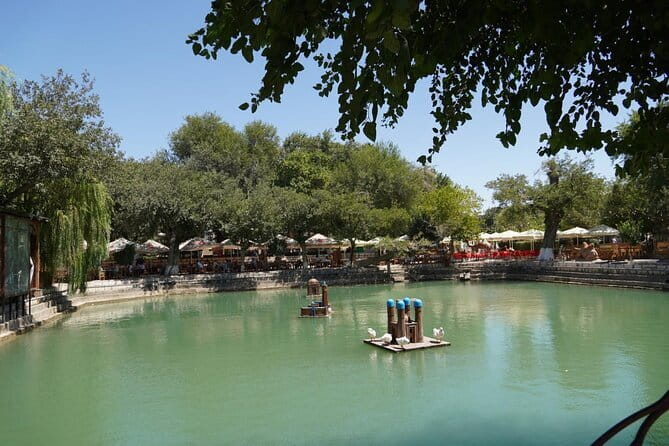
Lyab-i-Hauz is called the Heart of the Old City. You’ll see a complex including a mosque and two unique madrassahs, plus a caravanserai, described as a hotel of old days that still functions.
What you get at the end:
- A satisfying “breather” spot where the city feels social and lived in.
- A natural place to pause for tea or a snack after the walk.
Admission:
- Free.
Crafts, music, and food: why this tour feels more local

The route is built around more than monuments. The tour description highlights the working process of crafts, including puppets, blacksmith work, gold embroidery, fabric making, and wood carving. That’s valuable because it shows the skills behind the souvenirs.
You’ll also get culture diving through local music and traditions, with folk shows available. That’s the kind of add-on that turns a sight-focused day into a culture day, without turning it into a long performance schedule.
Food is another part of the experience. The tour mentions local places for food, and you’ll have small breaks for coffee and tea. Here’s the practical point: coffee and tea are not included in the listed inclusions, so budget for them if you want a drink during the breaks.
If you’re the kind of person who likes watching hands at work, this format suits you.
Best time to go, including summer evenings
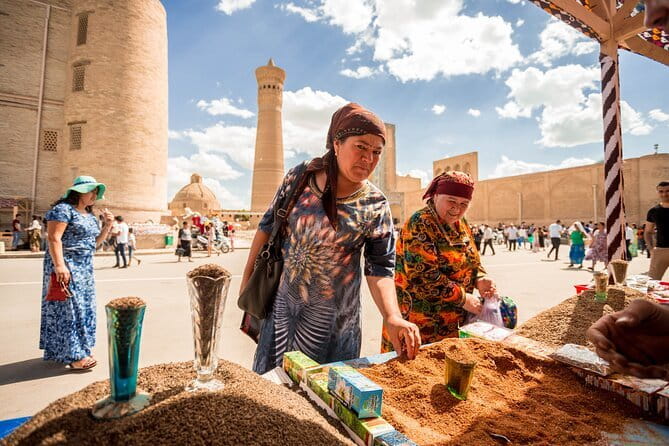
Your best timing depends on what you want most: daytime details or evening light.
In summer, evening tours are available, which matters for the Great Minaret of the Kalon, where the tour specifically mentions an illuminated version. That visual change can make a single stop feel like two experiences.
Also note the weather requirement. The experience requires good weather, so if it gets canceled because of weather, you’ll be offered a different date or a full refund.
If you’re planning around heat, you’ll appreciate the short stop structure. It’s not a marathon.
Tickets, entry fees, and what to budget
This tour clearly separates guiding from admissions.
- Many stops list admission as not included.
- Some are explicitly free, including Bolo Hauz Mosque, Great Minaret of the Kalon, Mir-i-Arab Madrasa, Trading Domes, and Lyab-i-Hauz.
- A few others are mixed, including Poi Kalyan Mosque and several madrassas where admission may apply.
The key practical tip: before you go in, ask your guide what’s free versus ticketed for your exact dates. The itinerary notes it by stop, but your guide can help you decide based on your interests, and keep the pace comfortable.
You’re also getting a pickup option and a mobile ticket. That helps with starting smoothly.
Who should book this city tour
Book this tour if:
- You want Old Bukhara highlights without feeling like you’re speed-running a museum.
- You like story-led guiding, especially with the added twist of handmade messages from the past.
- Your group is small enough for a private experience and you prefer walking at a human pace.
- You care about crafts, music, and local traditions, not just stone and domes.
You might think twice if:
- You want everything fully included with no extra ticket fees. This tour leaves some admissions as separate.
- You dislike walking for a half-day. It’s still a walking route, just paced in short stops.
Should you book this City Tour Around Bukhara?
If your goal is to understand Bukhara in a day, I’d say yes. The blend is strong: top sights, a functional story style, craft process elements, and local culture through music and folk shows. Plus, the price is set for small groups, which keeps it fair if you’re traveling with friends or family.
Two final checks before you book:
- Confirm what you want to enter with tickets, since several stops are not included for admission.
- If you’re going in summer and you like night lighting, ask about the evening version, where the Kalon minaret illumination may be part of your timing.
This is the kind of tour where you leave with more than photos. You leave with clues for what you saw and why it was built that way.
FAQ
How much does the City Tour Around Bukhara cost?
The price is $66.00 per group, up to 6 people.
How long is the tour?
The tour duration is approximately 4 to 6 hours.
Is pickup included?
Pickup is offered.
Is there a mobile ticket?
Yes, the tour includes a mobile ticket.
What is included in the tour?
Included items are handmade Messages from the past and an in-person guide.
Are coffee and tea included?
Coffee and/or tea are not included, even though small breaks for coffee and tea are part of the tour.
Do I need to buy entry tickets for monuments?
Some stops list admission tickets as not included, while others are free. For example, Ismail Samani Mausoleum and Chashmai Ayub Mausoleum note admission not included, while Bolo Hauz Mosque, Great Minaret of the Kalon, and Lyab-i-Hauz are free.
Where does the tour start and end?
It starts at Ismail Samani Mausoleum and ends at Lyabi Khause Square (near Divan-Beghi and the Lyabi Hauz pond area).
Are evening tours available?
Evening tours are available during the summer period.
What happens if weather is bad?
The experience requires good weather. If it is canceled due to poor weather, you will be offered a different date or a full refund.
Is there a cancellation window for a full refund?
Cancellation is free up to 24 hours in advance for a full refund.
More Tours Around Uzbekistan
The Full Uzbekistan Review Pile
Keep Walking Bukhara
More of Uzbekistan we have reviewed
- Full-Day Private Guided Tour to Islamic 7 Saints of Bukhara★ 4.5 · 3 reviews
- Uzbekistan 8 Days Private Guided Tour★ 4.6 · 3 reviews
- A Complete Chapter To Old Bukhara★ 5.0 · 5 reviews
- 2 – Days Guided Tour of Samarkand and Bukhara from Tashkent★ 5.0 · 5 reviews
- Bukhara Walking Tour★ 5.0 · 4 reviews
- A Group Walking Tour Of Old Town★ 5.0 · 8 reviews
Bukhara Old Town & Heritage Tours, compared.
 ★ 5.0Best of Bukhara: All Day Private Old Town TourFrom $6566 reviews
★ 4.9Best of Bukhara: All Day Private Old Town TourFrom $6462 reviews
★ 5.0Best of Bukhara: All Day Private Old Town TourFrom $6566 reviews
★ 4.9Best of Bukhara: All Day Private Old Town TourFrom $6462 reviews
 ★ 5.0Bukhara Full Day Old City Private TourFrom $8546 reviews
 ★ 4.5Bukhara One Day Tour – Departure From TashkentFrom $24937 reviews
 ★ 5.0Private Guided Tours in Bukhara with Several OptionsFrom $5034 reviews
 ★ 4.9All You Need To Know About Bukhara. A Walk In The TownFrom $5531 reviews
 ★ 5.0One-Day Private Tour in the Old Town of BukharaFrom $6724 reviews
 ★ 4.4Bukharian Bath in Ancient Hammam with MassageFrom $6719 reviews
Browse the lists this tour appears in