
Review · BUKHARA
Bukhara Full Day Old City Private Tour
Bukhara makes history walk right beside you. On this full-day private old city tour, you cover the town’s big-name Islamic architecture and palaces, plus a few quieter surprises, with a licensed local guide who can explain the stories behind the tiles. I love that entrance tickets are included, so you are not stopping every ten minutes to sort out paperwork. I also love the pace, because it is hands-on sightseeing where you can ask questions and get context on the spot. One thing to consider: it is largely all on foot, so comfy shoes matter.
In This Review
- What Makes This Tour Worth Your Time
- Key Highlights at a Glance
- Old Bukhara, One Guided Loop From Kalon to Trading Domes
- Price and What You Actually Get for $85
- Walking It All: Pace, Comfort, and Break Planning
- Entering the Po-i-Kalyan Power Center
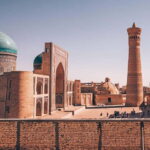
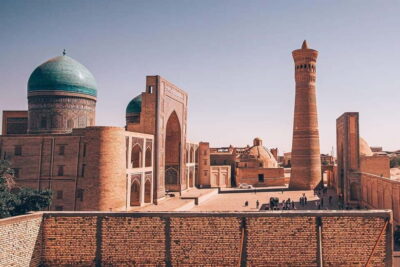
- Great Minaret of the Kalon (Kalyan Minaret)
- Mir-i-Arab Madrasa
- Chor Minor Madrasah
- Poi Kalyan Mosque Complex
- Ark of Bukhara: Fortress Feel, Real Weight
- Lyab-i-Hauz Courtyard Life, Where the Old City Breathes
- Bolo Hauz Mosque
- Nodir Devon Begi Madrasasi
- Nasreddin in the Square, Then the Trading Domes
- Monument to Hodja Nasreddin
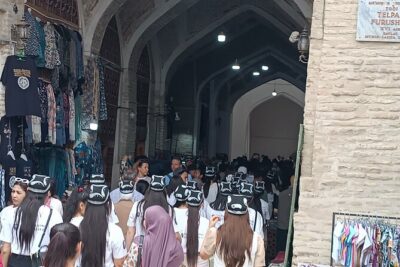
- Trading Domes
- Madrasas and Mosques, Plus the Bukhara Synagogue Moment
- Abdulaziz-Khan Madrasah
- Ulugbek Madrasah
- Maghak-i ‘Attari Mosque
- Bukhara Synagogue
- Who Will Enjoy This Tour Most
- Should You Book This Private Old City Tour?
- FAQ
- What is included in the Bukhara Full Day Old City Private Tour?
- Do I need to buy entrance tickets during the tour?
- Is pickup available, and where does the tour start?
- How long is the tour?
- Is the tour only walking?
- What is the cancellation policy?
What Makes This Tour Worth Your Time
You are not just ticking off famous buildings. You are walking through Bukhara’s full “how it all worked” picture, from education and worship spaces to trade and government power. It is a great way to see why this place is often described as a 1001-night kind of city, where legends and dynasties stuck around even after lots of change.
Based on guide-led moments like clarifying local customs, adjusting the route based on your interests, and making space for real breaks, the value here is the human side. You get a local who can point at details that most people miss, like why one madrasa’s courtyard and mosque layout matters, or how separate parts of the same complex fit together.
The one drawback I would plan around is timing and breaks. One tour ended earlier than expected for one party, and another felt like lunch was not truly built in, so you will want to ask your guide about where to pause and eat.
Key Highlights at a Glance
- Kalyan Minaret and the Po-i-Kalyan complex: the skyline moment that anchors your whole old city loop
- Lyab-i-Hauz ensemble: three major buildings gathered around the courtyard atmosphere
- Ark of Bukhara: the fortress feel, and the sense of power behind the walls
- Trade Domes and old lanes: practical old-city texture, not just big monuments
- Local guide flexibility: many guides adjust to your pace, questions, and time for shopping or coffee
Old Bukhara, One Guided Loop From Kalon to Trading Domes
This is a walking-focused way to see central Bukhara without wasting energy on guesswork. You start at Hotel Malika-Bukhara on Gavkushon Road, and you can expect pickup offered, with the tour ending back at the meeting point. That matters in a place where streets can twist, shops spill into the route, and you do not want to spend your best light hours figuring out directions.
The tour’s shape is simple: you move from landmark architecture to the education sites, then to the fortress and the courtyard-center of town life. After that, you shift toward specific mosques, madrasas, and religious history, and you finish with the trade domes and a well-known local character moment in the square.
What you gain is order. Bukhara can feel like one long list of monuments, but a good guide helps you understand what belonged together, what function each building served, and why certain courtyards and gates mattered.
Deeper into the Bukhara old town
- Best of Bukhara: All Day Private Old Town Tour
★ 5.0 · 66 reviews - Best of Bukhara: All Day Private Old Town Tour
★ 4.9 · 62 reviews - City Tour Around Bukhara
★ 5.0 · 55 reviews - Bukhara Full Day Old City Private Tour
★ 5.0 · 46 reviews
Price and What You Actually Get for $85
At $85 per person for about 5 to 7 hours, the big value is not the “private” label. It is what is covered.
Your price includes:
- a fully licensed guide
- all fees and taxes
- entrance tickets to monuments
That last point is a big deal. You will still want to budget for a small extra cost for photo or video at museums, listed as $1 per site paid directly to the museums, and tips are not included.
So the real question is fit. This tour is a strong choice if:
- you want someone local to translate architecture into story
- you want most major sites covered in one day
- you prefer not to manage ticket logistics all afternoon
If you already speak the local language well enough to read signage and you enjoy building your own route, you might spend less on a self-guided plan. But if you want a smooth day where the guide handles the hard parts, the price starts to feel fair fast.
Walking It All: Pace, Comfort, and Break Planning
Expect a lot of walking in the old city. The tour runs by foot, and several experiences highlight the same reality: you are seeing Bukhara up close, not through a window.
That means you should plan like a walker:
- wear shoes you can handle on uneven ground
- bring a hat and sun protection, especially earlier in the day
- keep small bills on you for any on-site photo or video fees
Lunch is the one gap to plan around. The tour does not list lunch as included. Some guides suggest where to eat and can help you find a proper Uzbek meal. One account even mentioned plov after the tour. Still, do not assume lunch is guaranteed. Instead, ask your guide to build a break when you reach the Lyab-i-Hauz area, or whenever your legs start negotiating.
Also watch the pace window. One party reported the tour ended earlier than the scheduled finish time. That can happen when a group moves quickly or a day’s timing gets adjusted. The upside is that you still see the core highlights; the downside is that you might want to plan a slightly flexible afternoon.
Entering the Po-i-Kalyan Power Center
Your day anchors around the Po-i-Kalyan complex, and it is the right start. This is where Bukhara flexes its skyline.
Great Minaret of the Kalon (Kalyan Minaret)
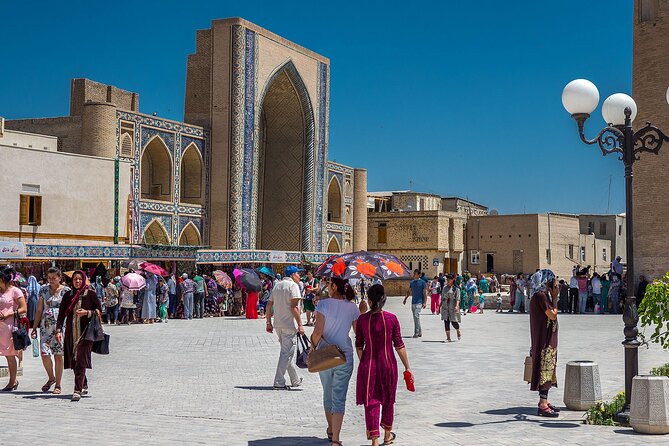
You get the “stop and stare” moment first. The Kalyan Minaret is tied to the Po-i-Kalyan mosque complex and is one of Bukhara’s most prominent landmarks. Standing near it, you get a sense of how a minaret was not just a religious symbol, it was also a visual wayfinding tool, a city marker you could spot from far away in the old layout.
Practical note: plan time here for photos and to let the scale sink in. If you rush, you miss the best part, which is seeing how the minaret dominates the surrounding architecture.
Other Uzbekistan city walks worth comparing
Mir-i-Arab Madrasa
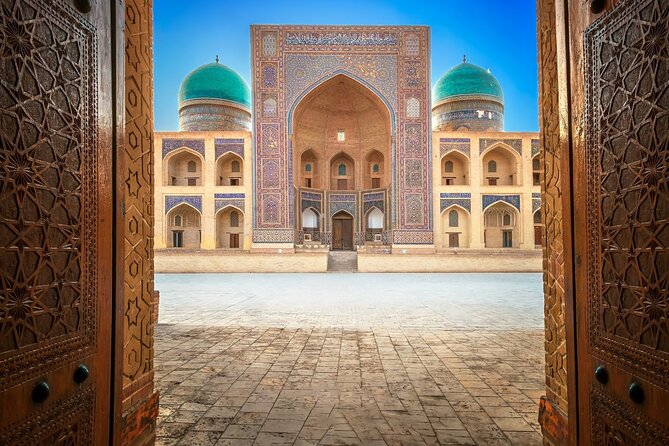
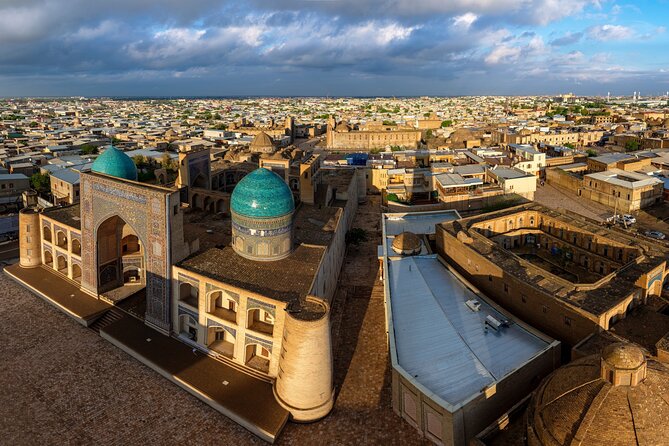
Next comes the striking college space. The Mir-i-Arab Madrasa is known for intricate tile patterns and a vast hall that shares its courtyard with a mosque. This is where the city’s education system becomes physical. You can literally see how study, worship, and daily life were meant to fit into one area.
If you like architectural details, this stop will reward you. If you are not into ornament, you might still enjoy it for the courtyard layout and the guide’s explanations of how these spaces worked.
Chor Minor Madrasah
Then you hit Chor Minor, a historic gatehouse for a madrasa that no longer exists. That makes it more emotional than it sounds. Instead of a complete building, you are looking at what survived and how the city remembers the past through fragments.
It is also a great pause from the big-scale monuments. The smaller, gatehouse feeling can break up the day nicely.
Poi Kalyan Mosque Complex
Finally, within this same cluster, you see the three-part complex concept: the Kalan Mosque, the Kalan Minaret, and the Mir-i-Arab Madrasah. The point is that these buildings are not separate attractions. They are a designed whole.
If your guide explains it well, you will start noticing patterns: where people would gather, where scholars would move, how the courtyard functioned, and why certain entrances and walls were built the way they were.
Ark of Bukhara: Fortress Feel, Real Weight
After the religious-educational complex, the Ark changes the mood. The Ark of Bukhara is a massive fortress built and occupied around the 5th century AD. That date alone helps you understand why this city feels layered: you are not starting with medieval, you are stacking eras.
From a visitor perspective, this stop is worth it because it brings politics into the picture. Mosques and madrasas teach and pray. A fortress is about control, protection, and administration.
The main consideration here is time and energy. This is one of the longer stops, listed at about an hour. If your feet are already tired, pace yourself on this one, not at the end of the day.
Lyab-i-Hauz Courtyard Life, Where the Old City Breathes
The Lyab-i-Hauz ensemble is one of those places that makes Bukhara feel lived-in. It is formed with major monumental buildings: Kukeldash Madrasah, the khanaka, and Nodir Divan-begi.
The big win is the courtyard setting. This is not just architecture. It is a social layout. Even when you are just walking through, the space hints at how people met, rested, and moved through daily routines.
Bolo Hauz Mosque
From there, you step across to Bolo Haouz Mosque, built in 1712. It sits opposite the Ark in the Registan district and is part of the UNESCO World Heritage listing along with other sites.
You might enjoy this stop most if you are paying attention to how the city’s religious buildings relate to the fortress side of town. A good guide connects the geometry, and suddenly the map in your head starts matching the reality outside.
Nodir Devon Begi Madrasasi
Then you move to a lively complex with an ornate mosaic-covered gate and a courtyard that includes shops and folk dance shows. Even if you catch just a brief moment, it adds a human rhythm to the day.
This is also a good place to shop for small crafts and souvenirs without feeling like you are sprinting. If you want shopping time, ask early so your guide can time it around this cluster.
Nasreddin in the Square, Then the Trading Domes
Monument to Hodja Nasreddin
You pause at the bronze monument to Hodja Nasreddin, placed in 1979 beside the Lyab-i-Hauz complex. The tone here is joy and humor, and that matters. Bukhara is not only serious monuments and scholarly halls. You also see the city’s character in public space.
This is a short stop, about 15 minutes, and it works well as a reset between architectural heavy-hitters.
Trading Domes
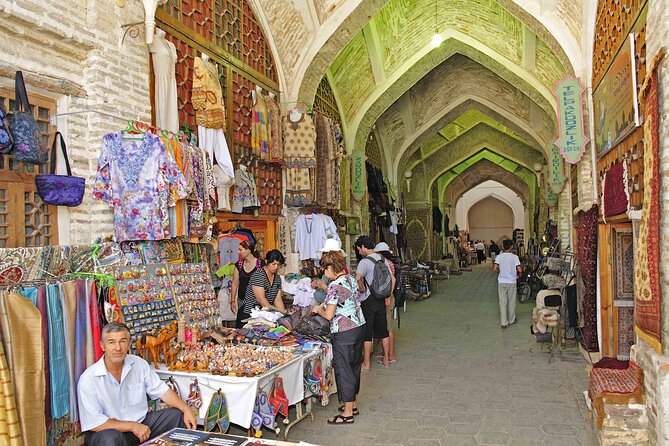
Then you head to the Trading Domes, with four domes remaining in the ancient city. They sit along a north to south route through the old city. One of the best ways to understand Silk Road cities is to walk where commerce still has physical form.
This stop is listed at about an hour, and you can use it in two ways:
- if you love street texture, linger and watch how the domes shape movement
- if you want a faster finish, keep an eye on your pace and ask your guide what to prioritize
Because it is commerce-oriented, it is also where you may notice prices and sales pressure more than at quiet memorial-type spaces. A good guide can help you navigate that calmly.
Madrasas and Mosques, Plus the Bukhara Synagogue Moment
The second half of the tour shifts into more specific educational and religious sites, which helps you compare styles and time periods.
Abdulaziz-Khan Madrasah
You visit Abdulaziz-Khan Madrasah, connected to Ulughbek, who was known as a ruler and patron of sciences. Ulughbek’s first madrasa in Bukhara is noted as being built in 1417. This stop helps you understand how scholarship had real institutions, not just ideas floating in the air.
If you enjoy learning why certain buildings look the way they do, ask your guide to point out the design logic rather than just reading the surface.
Ulugbek Madrasah
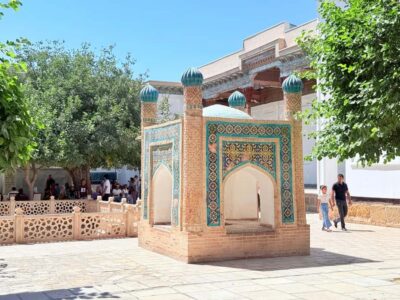
Next is Ulugbek Madrasah, completed in 1420. It has exterior tiles, a fluted dome, stained windows, and old tombs. This is a solid architecture stop, because the elements are specific and visible.
Try to slow down enough to spot those features, especially the dome shape and the stained window idea. Even at short visiting times, these details make the place feel less like a generic monument and more like a designed world.
Maghak-i ‘Attari Mosque
Then you see Maghoki Attori Mosque. It is part of the historical religious complex of Lyab-i Hauz. This stop is only about 20 minutes, but it works because it ties your earlier Lyab-i-Hauz experience to another part of the religious network.
If you are starting to lose the thread in a long day, this kind of connecting stop helps you regain the big picture.
Bukhara Synagogue
Finally, you visit the Bukhara Synagogue. This is free time listed for about 30 minutes. The focus is on the history of Bukhara Jews and their contribution to Central Asian and Great Silk Road civilization.
Even if you do not consider yourself a religious history traveler, this stop adds a necessary balance. It reminds you Bukhara was never a single-community story. It was a crossroads city.
Who Will Enjoy This Tour Most
This is the kind of tour that fits well if you:
- want a private guide and more back-and-forth questions
- like architecture plus context, not just photos
- prefer one organized route through the old city rather than planning every turn
It also works for solo travelers and couples because the tour is private, so your guide can match your pace. Based on guide stories shared in experiences like Sunny’s calm energy and Maksad’s ability to answer lots of questions, you can also expect a good portion of explanation, not just a head nod at each monument.
If you are the type who wants zero walking, this probably is not your best match. But if you can handle a few hours on foot and you enjoy learning as you go, you will likely have a strong day.
Should You Book This Private Old City Tour?
I would book it if you want to see the major Bukhara landmarks in one smooth, guided loop without fighting ticket lines. The value is in the included entrance fees, the licensed local guidance, and the fact that the route hits both the big skyline sights and the practical trade-and-courtyard parts of town.
I would think twice if you need a built-in lunch plan, or if you dislike walking through older streets for most of your day. In that case, you can still book, but you should go in ready to ask for a break and pace yourself around the Ark and trading-domes sections.
If you want an easy first day in Bukhara, this tour is a reliable start. You will leave with a clearer map in your head and a better feel for why people fall for this city again and again.
FAQ
What is included in the Bukhara Full Day Old City Private Tour?
The tour includes a fully licensed guide, all fees and taxes, and entrance tickets to the monuments. Photo and video charges are not included, and tips are not included.
Do I need to buy entrance tickets during the tour?
Entrance tickets to the monuments are included. There may be an extra photo or video charge of $1 per museum site, paid directly to the museums.
Is pickup available, and where does the tour start?
Pickup is offered. The tour meets at Hotel Malika-Bukhara on Gavkushon Road 25 in Bukhara, and it ends back at the meeting point.
How long is the tour?
The tour runs about 5 to 7 hours.
Is the tour only walking?
Yes. The tour is conducted on foot.
What is the cancellation policy?
You can cancel for a full refund up to 24 hours in advance of the experience start time. If you cancel less than 24 hours before, the amount paid is not refunded.
More Tours Around Uzbekistan

The Full Uzbekistan Review Pile
Keep Walking Bukhara
More of Uzbekistan we have reviewed
- Full-Day Private Guided Tour to Islamic 7 Saints of Bukhara★ 4.5 · 3 reviews
- Uzbekistan 8 Days Private Guided Tour★ 4.6 · 3 reviews
- A Complete Chapter To Old Bukhara★ 5.0 · 5 reviews
- 2 – Days Guided Tour of Samarkand and Bukhara from Tashkent★ 5.0 · 5 reviews
- Bukhara Walking Tour★ 5.0 · 4 reviews
- A Group Walking Tour Of Old Town★ 5.0 · 8 reviews
Bukhara Old Town & Heritage Tours, compared.
 ★ 5.0Best of Bukhara: All Day Private Old Town TourFrom $6566 reviews
★ 4.9Best of Bukhara: All Day Private Old Town TourFrom $6462 reviews
★ 5.0Best of Bukhara: All Day Private Old Town TourFrom $6566 reviews
★ 4.9Best of Bukhara: All Day Private Old Town TourFrom $6462 reviews
 ★ 4.5Bukhara One Day Tour – Departure From TashkentFrom $24937 reviews
 ★ 5.0Private Guided Tours in Bukhara with Several OptionsFrom $5034 reviews
 ★ 4.9All You Need To Know About Bukhara. A Walk In The TownFrom $5531 reviews
 ★ 5.0One-Day Private Tour in the Old Town of BukharaFrom $6724 reviews
 ★ 4.4Bukharian Bath in Ancient Hammam with MassageFrom $6719 reviews
 ★ 5.0Bukhara: Private Guided Walking Tour with Hotel PickupFrom $5011 reviews
Browse the lists this tour appears in