
Review · BUKHARA
One-Day Private Tour in the Old Town of Bukhara
Bukhara’s Old Town can feel like a puzzle. This private tour gives you the pieces fast, with pickup, a comfortable ride, and a tight route through the city’s most important Islamic and Silk Road landmarks.
I especially like the balance of big monuments and everyday craft life. You get the wow factor at sites like the Ismail Samani Mausoleum and the Poi Kalon area, then you shift gears to market domes where you can actually see how silk carpets, ceramics, embroidery, and small souvenirs are made.
One thing to plan for: several stops may require paid entry, including the Ark of Bukhara and the Magoki Attori Mosque and Carpet Museum. If you hate paying extra tickets, you’ll want to budget a little up front.
In This Review
- Key highlights worth your attention
- Price and logistics: what $67 really means
- Where you start: Lyab-i Khause Square, then the Old Town flow
- Ismail Samani Mausoleum: a 1,000-year stop you shouldn’t rush
- Chashmai Ayub: the Job story and a water museum in one
- Imam Al-Bukhari museum: learning done in a modern building
- Bolo Hauz Mosque: wooden columns and a quiet pocket for a breather
- Ark of Bukhara and Poi Kalon: power, prayer, and the big skyline
- Ark of Bukhara
- Great Minaret of Kalon and Poi Kalon ensemble
- Trading domes: where Bukhara’s crafts show up in real life
- Taqi-Zargaron: silk, ceramics, embroidery
- Kosh Madrasah: two madrasahs facing each other
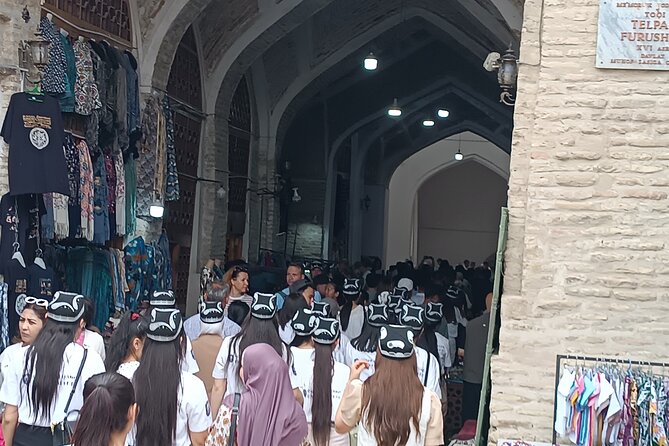
- Taqi-Telpakfurushon Market: five streets and a 16th-century bathhouse
- Magoki Attori Mosque and Carpet Museum: temple-under-temple vibes
- Taqi-Sarrafon Market: miniatures and caravansary context
- Lyab-i Hauz and Kukaldosh Madrasah: sit, look up, and feel the city
- Lyab-i Hauz: shade, pond, and three linked monuments
- Kukaldosh Madrasah: wall paintings that show daily routine
- Guides, language, and the kind of questions you can ask
- Should you book this private Old Town tour?
- FAQ
- Is pickup included?
- How long is the tour?
- What is the group size and price?
- What areas does the tour cover?
- Are entrance fees included?
- Does the tour include a mobile ticket?
- Where does the tour start and end?
- Is it a private tour?
- Is a female guide available?
- Is this tour okay for people with moderate mobility?
Key highlights worth your attention
- Private group up to 4 means you can move at your pace and ask questions without waiting.
- Air-conditioned vehicle + pickup helps when you have heat, sun, or just want an easy start.
- Poi Kalon power center includes the Great Minaret of Kalon and the Grand Mosque of Kalon.
- Craft domes and markets keep the day from turning into a museum march.
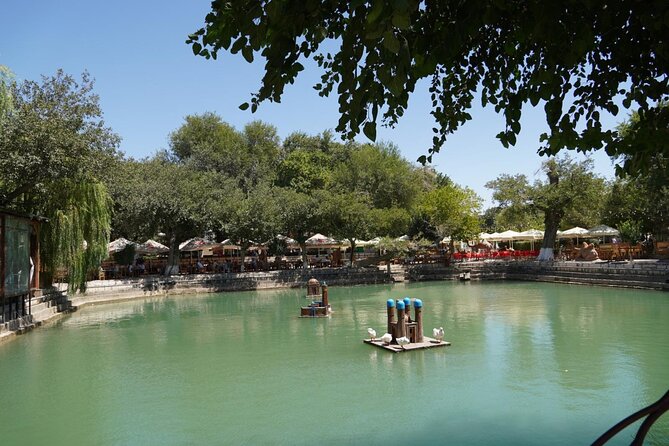
- Lyab-i Hauz pond area is a real break point, with shade and a place to sit.
- English, German, and Japanese have worked well with guides like Madina and Sho, depending on who’s assigned.
Price and logistics: what $67 really means
This is a one-day private tour for up to 4 people, priced at $67 per group. If you fill the group, that works out to about $16.75 per person, which is strong value for a private guide plus transport through a compact Old Town.
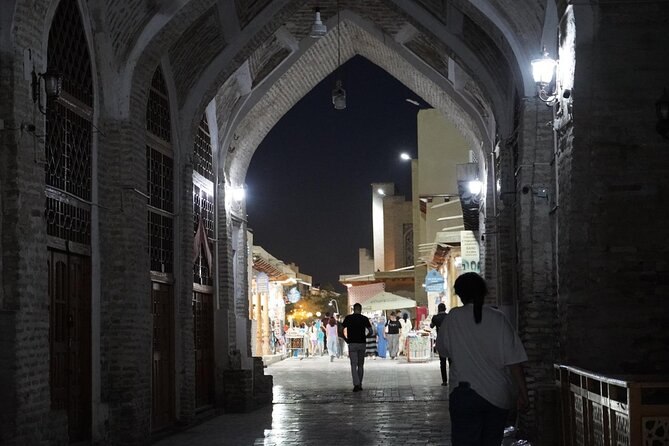
You’ll also save yourself time. In Bukhara, the distances are walkable but the turning around and finding the next entrance can still eat your day. Here, the driver-and-guide combo keeps it flowing, and you spend your energy on the sights instead of logistics.
That said, you should assume a few entries are extra. The Ark of Bukhara costs $3.50 per person, and the Magoki Attori Mosque and Carpet Museum costs $2 per person. Other “ticket not included” stops likely also have on-site entry, so bring a small amount of cash just in case.
Finally, this is a 5-6 hour loop with shorter visits at each stop. It’s great if you want an overview and smart context. If your travel style is slow and deep, you might feel the schedule a bit, especially at the most popular photo points.
Where you start: Lyab-i Khause Square, then the Old Town flow
The tour kicks off at Lyabi Khause Square (Divan-Beghi, Bukhara), and it finishes at the Ismail Samani Mausoleum area. That end point is convenient because it sits near a hub of sightseeing, so you’re not stuck far from the rest of your plans.
Expect a comfortable start. Pickup is offered, and the tour includes an air-conditioned vehicle, which matters in Bukhara’s heat and sun. The pace is structured, but you still get time for a coffee break during the day, which helps you keep energy for the next stretch of monuments and markets.
You’ll also do some walking on uneven historic ground. The tour lists moderate physical fitness as the target. In plain terms: wear comfy shoes, plan on standing for photos, and take your time at entrances. You’ll be glad you did.
Deeper into the Bukhara old town
- Best of Bukhara: All Day Private Old Town Tour
★ 5.0 · 66 reviews - Best of Bukhara: All Day Private Old Town Tour
★ 4.9 · 62 reviews - City Tour Around Bukhara
★ 5.0 · 55 reviews - Bukhara Full Day Old City Private Tour
★ 5.0 · 46 reviews
Ismail Samani Mausoleum: a 1,000-year stop you shouldn’t rush
Your first major history anchor is the Ismail Samani Mausoleum. It’s described as the only preserved structure from Bukhara’s most flourishing period, and it’s over 1,000 years old.
What I like about this stop is the way it sets the tone for the whole day. The mausoleum is known for blending three architectural styles tied to three religions, which gives you a quick lesson in how layered Bukhara’s cultural story really is. It’s not just one era. It’s multiple influences built into stone.
Plan for about 20 minutes here. You won’t see every angle if you try to do it all at once. Instead, take a few photos, then look carefully at the details the guide points out. It’s one of those moments where 10 good explanations can beat 40 minutes of wandering.
Ticket note: admission is not included for this stop, so expect to pay if you want entry.
Chashmai Ayub: the Job story and a water museum in one
Next up is the Chashmai Ayub Mausoleum, tied to the story of the prophet Job. This stop centers on a well, and it’s also the home of the Museum of Water Supply in old Bukhara.
This is a smart change of pace. Instead of only focusing on royal power and religious buildings, you get a practical theme: how a city like Bukhara managed water and everyday life. That museum angle makes the architecture feel more real, not just decorative.
You’ll get around 20 minutes. It’s usually enough for a first look if you’re also heading onward to mosques and markets. If you love “how cities worked” stories, this is one of the stops that can make your day feel cohesive.
Ticket note: admission is not included for this stop.
Imam Al-Bukhari museum: learning done in a modern building
There’s also a new museum building devoted to the life of the religious learner Imam Al-Bukhari. Even if you’re not a deep scholar of hadith, the museum context helps you understand why Bukhara has long been associated with learning and religious scholarship.
What’s practical about including it in a half-day tour is simple: it refreshes the day. After mausoleums and classic architecture, you get a different type of space, which can help you keep focus.
Ticket note: the entry status here is listed as not included, so plan on paying if you want to go in.
Bolo Hauz Mosque: wooden columns and a quiet pocket for a breather
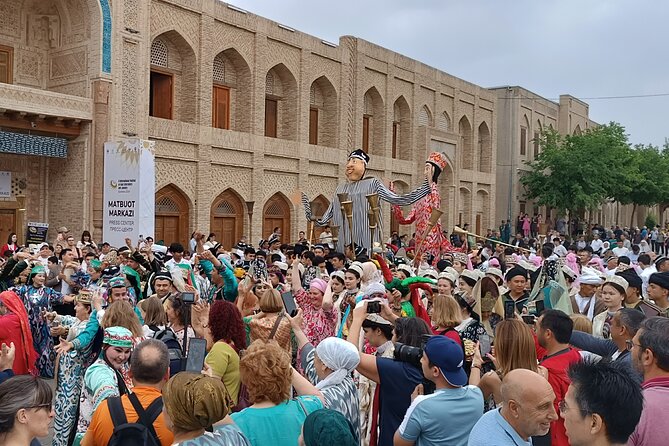
Then you hit Bolo Hauz Mosque, a functioning mosque that’s around 300 years old. The feature people point out is the set of outstanding wooden columns.
I like this stop because it’s not only about staring upward at architecture. It’s also a real pause point. The area includes a chill-out square with benches and trees, which turns the mosque stop into a short reset before the heavier “power center” sites later.
Admission is listed as free, so this one is easy to include without thinking about extra costs.
Plan for about 20 minutes. If your group is chatty or you like photos, don’t overpack your schedule here. A calm minute in the shade can make the rest of the day more enjoyable.
Prefer your own guide? More private Uzbekistan trips

Ark of Bukhara and Poi Kalon: power, prayer, and the big skyline
Two of the biggest “this is why people come” moments arrive back-to-back: the Ark of Bukhara and the Great Minaret of the Kalon with the Poi Kalon ensemble.
Ark of Bukhara
The Ark is the citadel and the residence of the emirs. It’s where politics and protection lived in one place. You’ll spend about 40 minutes, which is longer than most stops, because there’s more to see.
Ticket note: the Ark entrance is not included and costs $3.50 per person. If you’re the type who likes to explore rather than just look, this is the stop where paying attention to time matters most. If your schedule feels tight, still take the full time here.
Great Minaret of Kalon and Poi Kalon ensemble
The Great Minaret of the Kalon is described as around 900 years old, and the Poi Kalon ensemble includes the Grand Mosque of Kalon, the Kalon Minaret, and the religious school of Miri-Arab.
This is where the Old Town starts feeling like a single coordinated complex. The minaret gives you a vertical landmark, while the surrounding buildings help you understand how religion and education were set up in shared space.
You’ll get around 30 minutes. Again, the trick is not to sprint. Pause for the best views from different angles, then let the guide explain what you’re seeing.
Ticket note: admission is not included for this stop.
Trading domes: where Bukhara’s crafts show up in real life
After the monumental core, the tour shifts into market energy. This is where you’ll feel Bukhara as a living craft center, not only as a photo set.
Taqi-Zargaron: silk, ceramics, embroidery
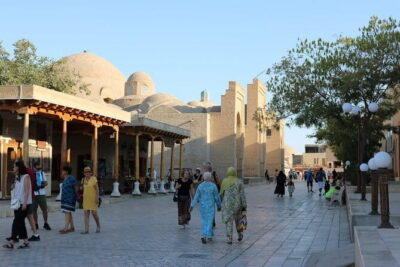
Taqi-Zargaron is a trading dome with craft workshops and souvenir shops. It’s especially associated with silk carpets, ceramics, embroidery, and clothes.
This stop is practical because it gives you something to do with your eyes besides monuments. If you’re shopping, you’ll be in the right mental mode here, since you’ll also be learning what the crafts represent.
Admission is free and the visit is about 20 minutes.
Kosh Madrasah: two madrasahs facing each other
Then you’ll see the Kosh Madrasah, which features two madrasahs facing each other with facades representing two outstanding historical periods.
This is one of those architecture stops where timing matters. About 20 minutes is enough if you stand in the right viewing spot and keep moving only when the guide tells you what to look for.
Ticket note: admission is not included.
Taqi-Telpakfurushon Market: five streets and a 16th-century bathhouse
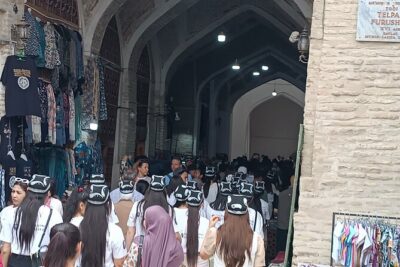
Taqi-Telpakfurushon Market sits at the crossing of five trading streets. It includes a 16th-century bathhouse, plus miniature and embroidery workshops.
This is also a good “people watching” stop. The domed market areas help you stay comfortable, especially if you catch heat or bright sun.
Admission is free, and you’ll have about 20 minutes.
Magoki Attori Mosque and Carpet Museum: temple-under-temple vibes
The Magoki Attori Mosque and Carpet Museum takes you into a mosque described as being in depth, and it’s connected with the idea that a former temple of fire existed here.
This layered story is what makes the stop interesting. It’s not just a mosque visit. It’s a setting where religious meaning shifted over time, all while the location stayed important.
Ticket note: the entrance fee is $2 per person, not included.
You’ll spend about 20 minutes, which is tight but workable if you focus on key objects or explanations rather than trying to read everything.
Taqi-Sarrafon Market: miniatures and caravansary context
Next is Taqi-Sarrafon Market, another trading dome with souvenir shops and miniature workshops. It also references caravansaries in its descriptions, which helps connect market goods to the travel and trade routes that fed Bukhara’s wealth.
Admission is free, and the stop is about 20 minutes.
Lyab-i Hauz and Kukaldosh Madrasah: sit, look up, and feel the city
Two late-day stops give the tour a human pace.
Lyab-i Hauz: shade, pond, and three linked monuments
At Lyab-i Hauz, you’ll see an ensemble made up of Devonbegi Madrasah, Devonbegi Khanaka, and the Devonbegi pond.
This is the place to slow down. The tour describes it as lively and chilly to sit near the pond, under shade, and grab a drink. Even if you’re not planning to linger, this stop helps you reset your legs and your brain.
Admission is free, and you’ll get about 30 minutes.
Kukaldosh Madrasah: wall paintings that show daily routine
Finally, you’ll visit Kukaldosh Madrasah, described as the biggest madrasah in the old town, with unique wall paintings showing the routine life of old Bukhara.
I like endings like this because it changes what you remember. Earlier stops explain power and devotion. Here, the murals hint at daily routines, so the city stops being only “big buildings” and starts being “real people.”
Admission is free, and you’ll spend about 30 minutes.
Guides, language, and the kind of questions you can ask
A standout from past participants is how strong the guiding experience is. Different guides have been praised for being friendly, patient, and accommodating, plus able to answer questions beyond basic site facts.
You’ll also see evidence of language flexibility. For example, Madina is noted for speaking German fluently, and Sho is mentioned for strong language skills including English and Japanese, with very clear explanations. Names like Nargiza, Saodq, and Shokhrukh come up too, each associated with knowledge, good pacing, and helpful answers.
What you can do with that as a practical traveler: ask not only what the building is, but why it matters in Bukhara. If it’s Ramadan or another special time, guides can also help you plan the day in a way that feels respectful and manageable.
Should you book this private Old Town tour?
Book it if you want a smart first look at Bukhara without getting lost in planning. This is especially a good fit for small groups, first-time visitors, and anyone who likes context along with photos.
Skip or adjust it if you want very slow museum time at one place, or if paying on-site entrances will stress you out. The visit lengths are short at many stops, so you’ll enjoy it most when you think of this as a tour for orientation and highlights, not a one-site deep study.
If you’re deciding now, my quick recommendation is simple: if you can afford the small extra ticket budget, the combination of private guidance, air-conditioned comfort, and a well-paced circuit of monuments plus craft domes makes this a high-value way to experience the Old Town in a single day.
FAQ
Is pickup included?
Yes, pickup is offered, and the tour also includes an air-conditioned vehicle.
How long is the tour?
It runs about 5 to 6 hours.
What is the group size and price?
The price is $67 per group, up to 4 people.
What areas does the tour cover?
It focuses on the Old Town of Bukhara, stopping at major monuments and craft markets such as Ismail Samani Mausoleum, Ark of Bukhara, Poi Kalon, several trading domes, Lyab-i Hauz, and Kukaldosh Madrasah.
Are entrance fees included?
No. Entrance fees are not included for several stops. The Ark of Bukhara costs $3.50 per person, and the Magoki Attori Mosque and Carpet Museum costs $2.00 per person. Other stops are listed as ticket not included, while some are free.
Does the tour include a mobile ticket?
Yes, mobile tickets are included.
Where does the tour start and end?
It starts at Lyabi Khause Square (Divan-Beghi) in Bukhara and ends at Ismail Samani Mausoleum.
Is it a private tour?
Yes, it is private. Only your group participates.
Is a female guide available?
Yes, a female guide is available.
Is this tour okay for people with moderate mobility?
The tour recommends a moderate physical fitness level, and it involves walking between Old Town sites.
More Tours Around Uzbekistan

The Full Uzbekistan Review Pile
Keep Walking Bukhara
More of Uzbekistan we have reviewed
- Full-Day Private Guided Tour to Islamic 7 Saints of Bukhara★ 4.5 · 3 reviews
- Uzbekistan 8 Days Private Guided Tour★ 4.6 · 3 reviews
- A Complete Chapter To Old Bukhara★ 5.0 · 5 reviews
- 2 – Days Guided Tour of Samarkand and Bukhara from Tashkent★ 5.0 · 5 reviews
- Bukhara Walking Tour★ 5.0 · 4 reviews
- A Group Walking Tour Of Old Town★ 5.0 · 8 reviews
Bukhara Old Town & Heritage Tours, compared.
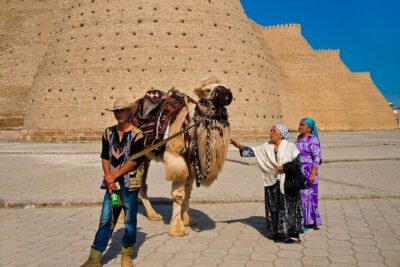 ★ 5.0Best of Bukhara: All Day Private Old Town TourFrom $6566 reviews
★ 4.9Best of Bukhara: All Day Private Old Town TourFrom $6462 reviews
★ 5.0Best of Bukhara: All Day Private Old Town TourFrom $6566 reviews
★ 4.9Best of Bukhara: All Day Private Old Town TourFrom $6462 reviews
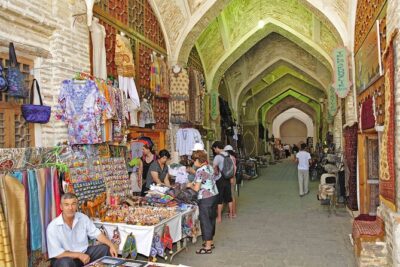 ★ 5.0Bukhara Full Day Old City Private TourFrom $8546 reviews
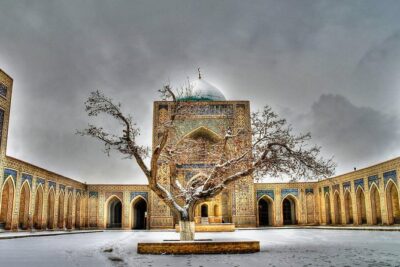 ★ 4.5Bukhara One Day Tour – Departure From TashkentFrom $24937 reviews
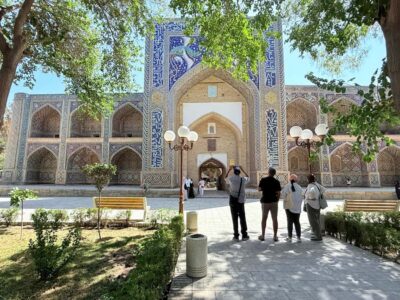 ★ 5.0Private Guided Tours in Bukhara with Several OptionsFrom $5034 reviews
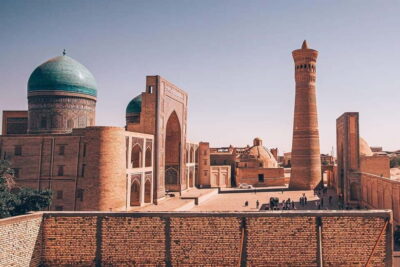 ★ 4.9All You Need To Know About Bukhara. A Walk In The TownFrom $5531 reviews
 ★ 4.4Bukharian Bath in Ancient Hammam with MassageFrom $6719 reviews
 ★ 3.9Bukhara Traditional Men’s Hammam / Bath XVI CenturyFrom $4911 reviews
Browse the lists this tour appears in