
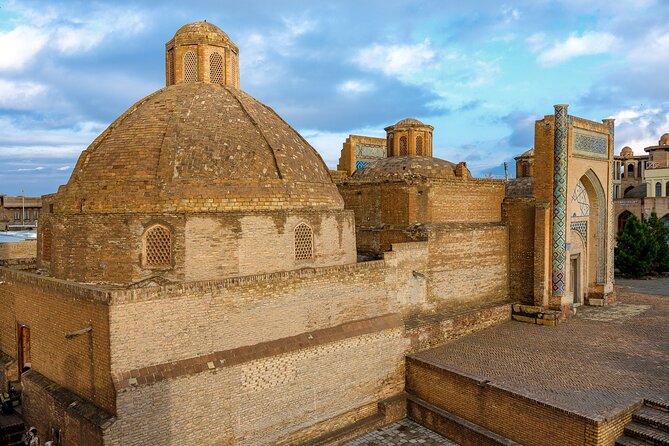
Review · BUKHARA
Full-Day Private Guided Tour to Islamic 7 Saints of Bukhara
Bukhara has a Sufi backstory worth touring. This full-day private route takes you through the Islamic Seven Saints of Bukhara, tied to the Naqshbandi brotherhood and the older hadzhagan spiritual tradition. You get pickup, a licensed guide, and entrance tickets along the way, so the day feels purposeful instead of like hopping stops on your own.
I especially liked two things. First, the pacing is comfortable, about 40 minutes per site, which gives you time to learn without feeling trapped in a long speech. Second, our guide, Hamza, explained Sufism and the “who’s who” of the Xojas in a way that makes the names feel connected, not random.
One thing to consider: this day is mostly tombs, shrine spaces, and spiritual sites, not big drama-filled landmarks or market wandering. If you want only architecture or only hands-on museums, you may find it quieter than a typical sightseeing day.
In This Review
- Key Highlights You’ll Notice During the Tour
- A Full-Day Private Route Through Bukhara’s Seven Saints
- Pickup, Timing, and What 7 to 8 Hours Feels Like
- Stop 1: Gijduvon and Abdalhalika Gijduvani’s Origins
- Stop 2: Safirkon and Khoja Arif Rivgariya
- Stop 3: Vobkent and Khoja Mahmud Angirey Fagnaviya
- Stops 4 and 5: Ramitan’s Two Saints and a Shared Tradition
- Stop 6: Kogon and Saint Mir Kulal (Potter and Sheikh)
- Stop 7: Bakhautdin Naqsband Mausoleum and Bahaaddina Naqshbandi
- Price and Value: Is $160 Worth It?
- What Makes the Tour Feel Good: Hamza and a Friendly Driver
- Practical Tips for a Smooth Day at Sufi Sites
- Should You Book This Private Sufi Tour of the Seven Saints?
Key Highlights You’ll Notice During the Tour
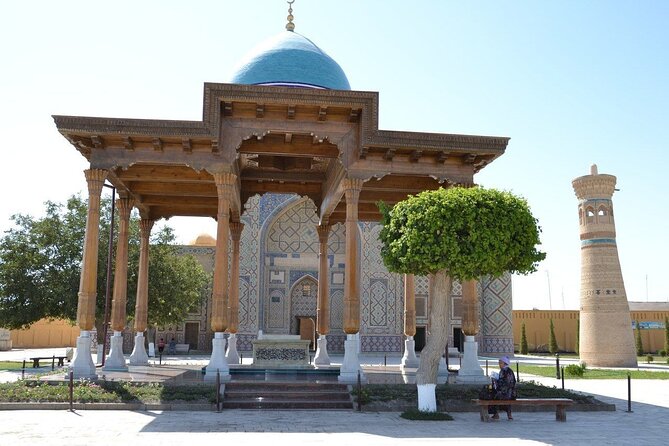
- Seven-saint route with a clear spiritual theme: You move from Gijduvon and Safirkon through the hadzhagan chain, ending at the Naqshbandi mausoleum.
- Hamza’s storytelling approach: The guide connects each saint to the larger tradition, so you can follow the logic of the day.
- Included entrance tickets (most sites): You do not have to buy entry for each stop as you go.
- Private transportation and pickup: Start at Hotel Malika-Bukhara and return there, which makes the itinerary feel smooth.
- Photo and video fees at some entrances: Budget a small extra amount on the spot if you plan to shoot.
- Timing that respects your attention span: Roughly 7 to 8 hours total, with shorter visits that still leave time to ask questions.
A Full-Day Private Route Through Bukhara’s Seven Saints
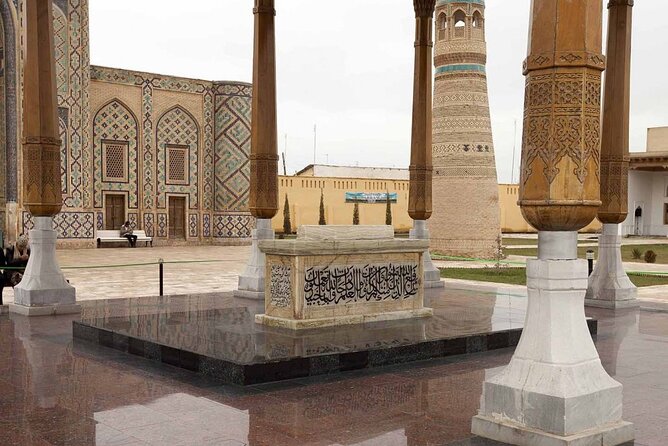
If you like learning by walking from place to place, this tour does that well. Bukhara is one of Central Asia’s oldest cities, with claims that it dates back about 2,500 years, and in medieval times it was known for having 360 mosques and 80 madrassas. That setting matters, because the Seven Saints route is not just a list of famous names. It’s a way of understanding how Sufism helped shape the city’s spiritual identity.
The big draw is that you are not trying to piece it together with a map while also decoding names you have never heard before. A licensed guide keeps the thread straight, explaining how each saint relates to the broader Naqshbandi world and the hadzhagan path of teachers.
This is also a solid value format for the right traveler. You pay $160 per person for a private experience that includes entrance tickets and private transportation, so you are effectively paying to save time and reduce decision fatigue. You also get a day that feels structured, with around 7 to 8 hours to cover multiple sites instead of doing one or two stops and calling it a trip.
Pickup, Timing, and What 7 to 8 Hours Feels Like
The tour begins at Hotel Malika-Bukhara on Gavkushon Road 25, and it ends back at the same meeting point. That matters in Bukhara, where moving between sites can be easy if you are organized, but annoying if you are not. Here, you start and finish where you are staying, and the transport is arranged for you.
Duration is listed as about 7 to 8 hours. In real terms, that means you are likely spending the day at a human pace rather than a sprint. Each stop is around 40 minutes, so you can listen, look, and absorb without losing your focus. If you get tired easily, this pacing is one of the tour’s hidden strengths.
Also, note the “private” part. Only your group participates, so you are not stuck in a one-size-fits-all rhythm built for the largest group in the schedule. If you like asking questions, you will probably get more attention that way.
Deeper into the Bukhara old town
- Best of Bukhara: All Day Private Old Town Tour
★ 5.0 · 66 reviews - Best of Bukhara: All Day Private Old Town Tour
★ 4.9 · 62 reviews - City Tour Around Bukhara
★ 5.0 · 55 reviews - Bukhara Full Day Old City Private Tour
★ 5.0 · 46 reviews
Stop 1: Gijduvon and Abdalhalika Gijduvani’s Origins
The day starts in Gijduvon, the birthplace of the first saint of the seven, Abdalhalika Gijduvani (1103 to 1179). This is not just a name on a schedule. It’s the starting point for understanding a major strand of mysticism in Maverannahr, known as hadzhagan, or the path of teachers.
During your visit, expect a short, focused introduction to why this person is considered foundational. The timing is about 40 minutes, and that’s enough to learn what the tradition emphasizes, then look around with a little context in your head instead of just taking photos and moving on.
A practical upside here is that entry is listed as free for this stop. That keeps the day from turning into constant “what do we do at the door?” moments.
The only mild drawback is that you need a bit of openness. This is a spiritual origin story, so if you’re expecting loud, sensory attractions, you may need to lean into the quieter learning mode.
Stop 2: Safirkon and Khoja Arif Rivgariya
Next up is Safirkon, where you visit the burial place of Khoja Arif Rivgariya, also listed as Saint Khoja Arif Mohi Tobon. The tour frames him as one of the most famous Sufis of Central Asia, and it connects his role to the hadzhagan tradition.
Here, the value of a guide becomes obvious. Without someone explaining it, you might see several shrines and think, okay, another tomb site. With guidance, you start to understand how each saint is part of the spiritual lineage, not just a historical curiosity.
As with the first stop, the entry is listed as free, which keeps your budget stable during the morning. The visit length is the same, so you keep momentum while still getting enough time to process what you’re hearing.
Stop 3: Vobkent and Khoja Mahmud Angirey Fagnaviya
In Vobkent, you visit the burial place of Khoja Mahmud Angirey Fagnaviya. The tour describes him as a famous Sufi and recognizes him as a spiritual authority of Maverannahr. It also notes he was among the first to introduce elements of the tradition that later shaped the hadzhagan school.
This stop tends to feel like the day becomes more coherent. By now you’ve heard how the tradition works in general terms, so the specifics about a particular saint land better. You can start noticing patterns in the way the tour presents spiritual authority, teachers, and succession.
Again, entry is listed as free and the visit is about 40 minutes. That consistency is helpful, because you can mentally reset at each stop and avoid tour fatigue.
If you like learning how traditions evolve through real people, this is one of the more satisfying stops because the description gives you a sense of why this saint mattered, not only that he existed.
Stops 4 and 5: Ramitan’s Two Saints and a Shared Tradition
Ramitan appears twice in the itinerary, which is a clever design choice. Stop 4 is Ali Khoja Romitaniya, and Stop 5 is Khoja Muhammad Babai Sammasi. Both are tied to the hadzhagan school traditions.
For Ali Khoja Romitaniya, the tour describes him as a spiritual authority within the hadzhagan school, emphasizing wisdom and charisma. For Khoja Muhammad Babai Sammasi, the tour describes him as an adherent and student connected to Ali Khoja Ramitani, and it also notes he is the fifth of the Seven Saints of Bukhara.
What I like about this double stop is that it shows relationships, not just individuals. You start seeing how spiritual authority passes through study and mentorship, which is part of what Sufism often looks like in historical practice.
Potential consideration: because it is back-to-back spiritual sites, you may want to ask your guide what changed from saint to saint, or how the tradition’s focus shifted (if at all). A good guide can make that difference feel real, not repetitive.
More guided Uzbekistan departures
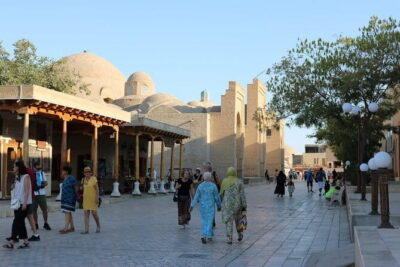
Stop 6: Kogon and Saint Mir Kulal (Potter and Sheikh)
In Kogon, you visit Saint Mir Kulal. The tour lists his nickname as Kulal, also explained as Hanchar or potter, and it frames him as a spiritual authority and Sheikh of the Sufi hadzhagan school. It also mentions him as sixth in the chain of spiritual succession, the silsila, of this school.
This is a great stop to slow down mentally. The name “Kulal” being tied to craft, plus the emphasis on silsila, makes it easier to imagine daily life alongside spiritual leadership. It’s a reminder that spiritual authority wasn’t only about ideas, it was also about practice, teachers, and community continuity.
The listed visit time stays around 40 minutes and entry is free. With the rhythm of the day, this is where the story often clicks for many people: you realize you are not touring seven unrelated shrines, you are tracing a lineage.
One practical note: the itinerary’s structure means you spend a lot of the day listening. If you get bored by lectures, you can counter it by asking for one takeaway at each stop, like what concept the saint is known for.
Stop 7: Bakhautdin Naqsband Mausoleum and Bahaaddina Naqshbandi
The final stop is the Bakhautdin Naqsband Mausoleum, where you visit Saint Bahaaddina Naqshbandi. This is described as the largest Central Asian representative of Sufism in the 14th century, and the tour notes the origin of the Naqshband name from Naqsh, meaning chaser, tied to his craft.
This last stop typically feels like the payoff. By the time you reach Naqshbandi, you have heard the hadzhagan tradition’s logic, and you’ve learned how spiritual succession is traced. That gives the mausoleum visit more meaning than if you were starting here without context.
Entrance is listed as included for this monument, and that’s helpful at the end of the day. You don’t have to worry about last-minute ticket confusion.
If you are someone who likes ending strong, this stop is the one to be fully present for. Give yourself time to look and to ask your guide how the Naqshbandi tradition relates to what you heard earlier in Gijduvon, Safirkon, Vobkent, Ramitan, and Kogon.
Price and Value: Is $160 Worth It?
At $160 per person, this is not a budget-only experience, but it can feel fair if you value time and guidance. Here’s what you’re paying for: a licensed guide, private transportation, and entrance tickets to all monuments. The tour also includes all fees and taxes, which reduces the risk of surprise costs.
You can think of it as buying a whole-day plan. Instead of spending your energy comparing routes, coordinating taxis, and figuring out entry fees one by one, you get a ready-made itinerary where the day’s theme is already chosen for you.
The day is booked about 25 days in advance on average, which is a small clue that people plan this as a dedicated Sufi-focused moment, not as a last-minute add-on.
Possible hidden cost to remember: photo and video fees are listed as $1 to $2 per site, paid directly at the museum entrance. Lunch is not included, and if you want one, it’s listed as $10 per person for extra lunch. These are small amounts, but they do exist.
What Makes the Tour Feel Good: Hamza and a Friendly Driver
The strongest theme from the experience feedback is the guide. Hamza’s approach is described as insightful and passionate, with a friendly, organized style that connects Islamic culture and Uzbekistan’s history to the Seven Saints. He also explained Sufism and the Xojas in a way that makes names feel like they matter.
That combination is key. If a guide only recites dates, the shrines can feel like stops. If a guide only tells stories without structure, you might lose the thread. Hamza, based on the feedback, seems to do both: context plus human meaning.
The driver also gets credit for being friendly and well mannered. That matters more than you might think. A private tour lives or dies by comfort during the ride. When transport feels polite and easy, the spiritual sites feel less like “work” and more like a calm day out.
Practical Tips for a Smooth Day at Sufi Sites
A few practical points will help you get the best experience from the Seven Saints route.
- Plan for a mostly seated, listening day: You’ll have short visits, but you’ll also hear a lot of explanations. Bring water if you can, and take a breath between stops.
- Budget a little for photo/video fees: Expect $1 to $2 per site if you take photos or video.
- Consider lunch timing: Lunch costs $10 per person if added, and it is not included in the main price.
- Wear comfortable, respectful clothing: You are visiting Islamic sites, so modest, comfortable basics usually work best.
- Ask questions early: By the time you reach the Naqshbandi mausoleum, you’ll be glad you asked earlier how the saints link into the larger tradition.
Also, the tour requires good weather. If the day is canceled due to poor weather, you’ll be offered a different date or a full refund.
Should You Book This Private Sufi Tour of the Seven Saints?
I think this tour is a strong pick if you want one focused day in Bukhara with a clear theme and you like learning through local context. It’s especially worth it if you care about Sufism as a living tradition and you want help connecting the names, like Abdalhalika Gijduvani and Bahaaddina Naqshbandi, to the hadzhagan tradition and the silsila chain.
Skip it if your ideal day is loud, visual, and street-level, with no time for spiritual storytelling. Also consider it if you only want a quick peek at one or two famous stops. This itinerary is built for completion, not sampling.
If you do book, go in with a simple goal: understand how one tradition connects seven saints, and how Bukhara earned its reputation as a holy center in the Islamic world. With a guide like Hamza and a private setup, that goal feels realistic in a single day.
More Tours Around Uzbekistan
The Full Uzbekistan Review Pile
Keep Walking Bukhara
More of Uzbekistan we have reviewed
- Uzbekistan 8 Days Private Guided Tour★ 4.6 · 3 reviews
- 9 Days Private Guided Tour to Uzbekistan★ 5.0 · 3 reviews
- 2 Days Private Safari Tour from Bukhara★ 4.5 · 6 reviews
- Explore Bukhara Countryside with Local Lunch Experience★ 4.7 · 6 reviews
- Bukhara: Walking Tour with a Small Group★ 5.0 · 10 reviews
- 2 Day Ukhum Hiking Tour from Bukhara★ 5.0 · 4 reviews
Bukhara Old Town & Heritage Tours, compared.
 ★ 5.0Best of Bukhara: All Day Private Old Town TourFrom $6566 reviews
★ 4.9Best of Bukhara: All Day Private Old Town TourFrom $6462 reviews
★ 5.0Best of Bukhara: All Day Private Old Town TourFrom $6566 reviews
★ 4.9Best of Bukhara: All Day Private Old Town TourFrom $6462 reviews
 ★ 5.0Bukhara Full Day Old City Private TourFrom $8546 reviews
 ★ 4.5Bukhara One Day Tour – Departure From TashkentFrom $24937 reviews
 ★ 5.0Private Guided Tours in Bukhara with Several OptionsFrom $5034 reviews
 ★ 4.9All You Need To Know About Bukhara. A Walk In The TownFrom $5531 reviews
 ★ 5.0One-Day Private Tour in the Old Town of BukharaFrom $6724 reviews
 ★ 4.4Bukharian Bath in Ancient Hammam with MassageFrom $6719 reviews
Browse the lists this tour appears in