
Review · BUKHARA
Bukhara One Day Tour – Departure From Tashkent
One day in Bukhara feels like time travel. This private, guide-led day trip strings together the big names in Bukhara, from Lyabi Khause to the Ismail Samani Mausoleum, with round-trip transport from Tashkent hotels or the airport.
I like that the price covers the hard parts for you: the Afrosiyob train to Bukhara, a flight back to Tashkent, lunch, and entrance fees at the stops. I also like how the day mixes famous landmarks with living institutions, like madrassas that still educate students today, plus practical city texture like the Trading Domes.
The main drawback is the schedule. You start early, you cover a lot of ground, and you’re back in Tashkent around midnight, so it’s best if you don’t mind a long day with a fairly tight pace.
In This Review
- Key highlights to look forward to
- How the Tashkent to Bukhara schedule really feels (Afrosiyob plus return flight)
- Lyabi Khause ensemble: the old-city square that anchors your whole day
- Magoki Attori Mosque and a carpet-focused break from architecture
- Chor Minor: the four-minaret madrasah that rewards close looking
- Trading Domes: hexagonal market energy under one massive dome
- Po-i-Kalyan: how the Kalyan Minaret and Mosque work as a pair
- Mir-i-Arab and Ulugbek madrassas: when education is still part of the picture
- Abdulaziz-Khan Madrasah and the Ark Fortress: power on a hill
- Bolo Haouz Mosque, Ismail Samani Mausoleum, and Chashma-Ayub: sacred spaces with different purposes
- Price and value: is $249 fair for this fast, packed day?
- Practical tips for a smoother, less stressful day
- Who should book this one day Bukhara tour from Tashkent
- Should you book this one day Bukhara tour?
- FAQ
- How long is the Bukhara one day tour from Tashkent?
- What time does the tour start?
- How do I get to Bukhara?
- How do you return to Tashkent?
- What’s included in the price?
- Is this a private tour?
- What if the high-speed train is unavailable?
- What is the cancellation policy?
Key highlights to look forward to
- Afrosiyob out, flight back: you maximize sight time and avoid an all-day rail return.
- A concentrated monument route: you see top sites in one day instead of spreading them over 2 or 3.
- Lunch included: you won’t have to hunt for a meal between mosque visits.
- Stops with real function: madrassas you can still learn from, not just view from the outside.
- Craft and trade in the mix: Trading Domes add the market side, not only architecture.
How the Tashkent to Bukhara schedule really feels (Afrosiyob plus return flight)
This tour is built around speed and organization. You’ll transfer to Tashkent Railway Station at 06:30, then board the Afrosiyob high-speed train at 07:30, arriving in Bukhara at 11:17.
The ride is about 4 hours, and you can use it for a nap to soften the early start. Once you land, you move straight into the historic center, with a full guided day visiting major sites, then you head to the airport afterward for the flight back.
On the return side, the timing is late. You’re scheduled to arrive back in Tashkent around midnight, so plan for a slow evening and skip anything that requires an early morning the next day.
Lyabi Khause ensemble: the old-city square that anchors your whole day
Lyabi Khause is one of those places that gives you orientation fast. The ensemble centers on a square and three big monumental buildings: Kukeldash Madrasah to the north, the khanaka and Nodir Divan-begi to the west, and the Trade Street side closing the square from the south.
A detail I like here is the way the square functioned over time. The center of old Bukhara’s ensemble became a reservoir, so you’re not only looking at buildings, you’re seeing how the city used public space.
You’ll have about 1 hour here, and admission is included. Use the time to notice how the buildings frame the square, then connect what you learn here to later stops when you see how Bukhara’s religious and educational buildings are arranged.
Still weighing it up? Here are other Uzbekistan tours we have written up.
- Best of Tashkent Mountains: Amirsoy, Chimgan & Charvak Trip
★ 4.8 · 567 reviews - Samarkand One Day Tour – Departure From Tashkent
★ 5.0 · 313 reviews - Tashkent : Premium Amirsoy, Chimgan Mountains & Charvak Lake
★ 4.8 · 190 reviews - Tashkent City Tour
★ 5.0 · 121 reviews
Magoki Attori Mosque and a carpet-focused break from architecture
Next up is the Magoki-Attori Mosque, set in the city center. It’s described as an example of an urban mosque within a residential quarter, so it’s a good counterpoint to the grand complexes you’ll see later.
You’ll also visit a carpet museum tied to this stop area. This is one of the ways the day keeps variety, since not every moment is about domes and minarets.
Expect about 30 minutes. With a schedule this full, I treat these shorter stops like quick orientation checkpoints: look, absorb one key idea, then move on so the day stays enjoyable.
Chor Minor: the four-minaret madrasah that rewards close looking
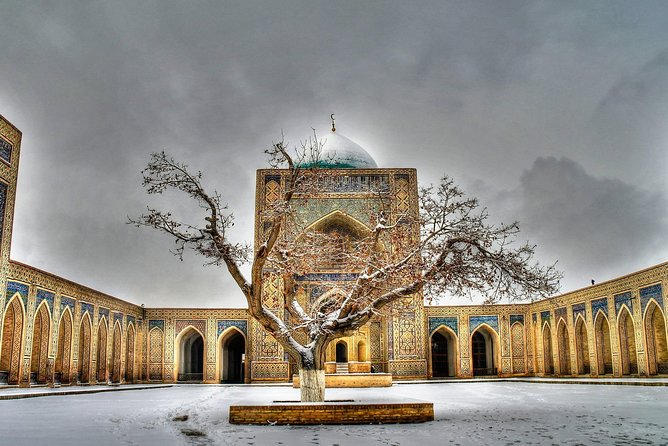
Right behind Lyabi Khause, you’ll find Chor Minor Madrasah. The name translates as four minarets, and the corners of the main madrasah building are decorated with four small minarets crowned with blue domes.
What makes this stop fun is the detail. The four minarets have different decors from each other, so you get a mini scavenger hunt without it feeling like homework.
You’ll have about 30 minutes, admission included. I’d use that half hour to walk around enough to see the different faces and rooflines, because the whole point of Chor Minor is visual variation in a small footprint.
Trading Domes: hexagonal market energy under one massive dome
Then you’ll hit the Trading Domes, the kind of stop that makes Bukhara feel like a living city. This complex is described as having a massive hexagonal orientation, with a spherical dome covering the marketplace.
Under that dome, the shops concentrate on crafts and goods like knives, jewelry, music instruments, and remembrances. It’s not just a photo opportunity, it’s a quick snapshot of how trade and daily life sit next to monumental architecture.
You’ll have about 30 minutes here with admission included. If you’re not in the mood for browsing, go in, do a quick look around, and spend your time absorbing the space and signage, then keep moving so you don’t lose momentum for the religious monuments ahead.
Po-i-Kalyan: how the Kalyan Minaret and Mosque work as a pair
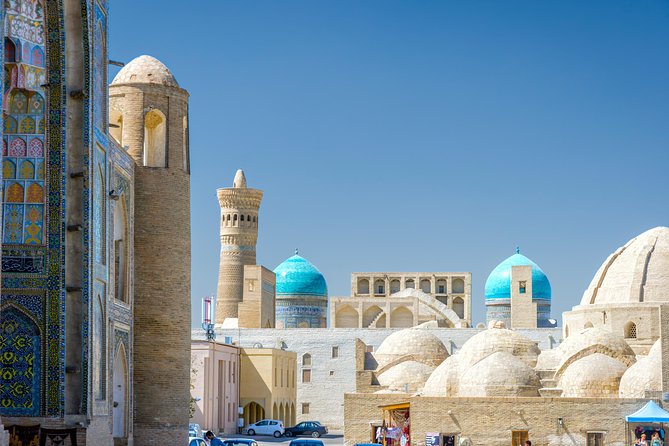
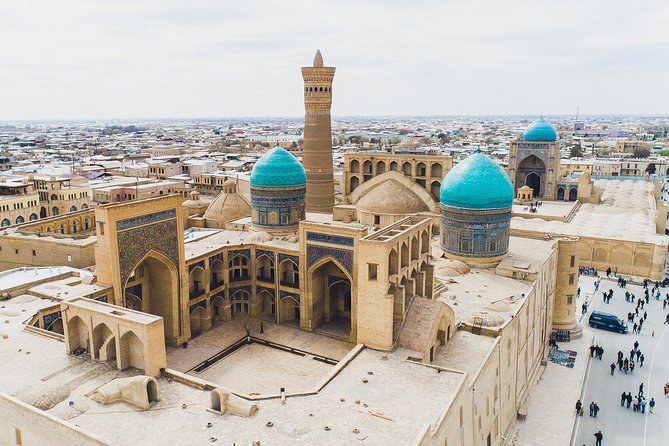
The Kalyan Minaret is one of Bukhara’s standout landmarks in the Po-i-Kalyan mosque complex. After that, you visit the Kalyan Mosque, which dates to the 15th century.
Even with only about 30 minutes allotted to each, this is a powerful pairing because the minaret and mosque explain how the city marked importance vertically and spiritually. The minaret acts like a visual compass, while the mosque is the center of worship.
I’d treat this as one of the moments to slow down slightly, even if the day is moving fast. Find a position where you can see the minaret in context, then shift attention to the mosque’s scale and layout.
Other single day runs in Uzbekistan
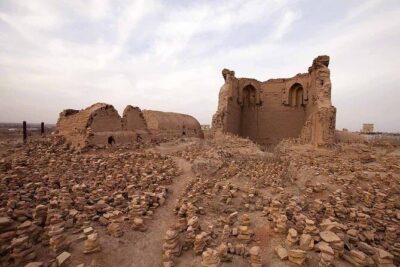
Mir-i-Arab and Ulugbek madrassas: when education is still part of the picture
You’ll next visit Mir-i-Arab Madrasa. This one matters because it’s described as still an acting institution, where future imams and religious mentors receive education.
Then the tour moves to Ulugbek Madrasa, built in 1417 by Ismail Isfagani and Najmeddin Bukhari. The structure is noted for harmonious proportions and impressiveness even with relatively little decoration, which helps you appreciate design choices beyond surface detail.
You’ll have about 30 minutes at each stop, with admission included. What I like about this part of the day is that you’re not only studying buildings. You’re seeing how a place designed for learning still functions for learning.
Abdulaziz-Khan Madrasah and the Ark Fortress: power on a hill
After the madrassas, your route shifts toward political weight. Abdulaziz-Khan Madrasah was built in 1651 to 1652 and is described as the last large madrasah in Bukhara.
This building is said to have a typical composition with a four-ayvans yard, but with an unusual divergent fan of hudj groups after the side ayvans, plus cupola buildings on the central axis. In plain terms, it sounds like the geometry tells a story, not just the building’s size.
Then you’ll visit the Ark of Bukhara, also called the citadel. It served as a residence of Bukhara khans, and archaeological notes say the site goes back to the 4th century BC. You’ll also hear how repeated building and destruction created a roughly 20-meter artificial hill, with upper layers built later on top of earlier ones.
You’ll have about 30 minutes at each. This is one of those moments when I recommend you focus on what makes it different from the madrassas: the Ark is about rule, residence, and long-term layering, not only religious education.
Bolo Haouz Mosque, Ismail Samani Mausoleum, and Chashma-Ayub: sacred spaces with different purposes
Your day continues with three very different kinds of sites, all tied together by sacred meaning.
First is Bolo Haouz Mosque, built in 1712, located on the opposite side of the Ark in the Registan district. It’s also listed as part of a UNESCO World Heritage Site, along with the other parts of the historic city. This helps you understand why the surrounding area matters as a whole, not as isolated monuments.
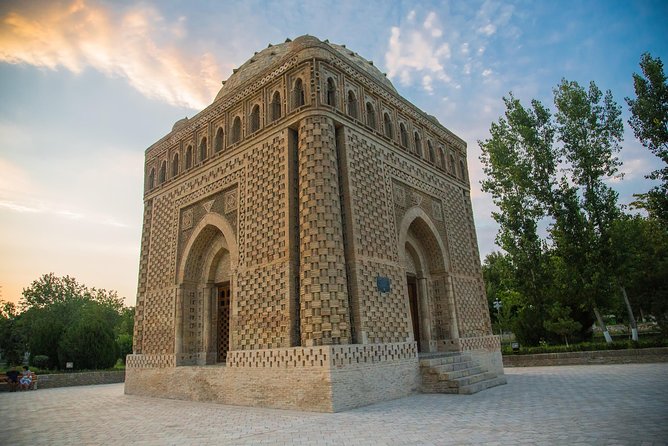
Next is the Ismail Samani Mausoleum, a 10th-century funerary building. It’s described as an iconic example of early Islamic architecture and specifically noted as the oldest funerary building of Central Asian architecture. You’ll also be told it sits in the north-western part of Bukhara, just outside the historic center.
Finally, you’ll reach Chashma-Ayub Mausoleum, which includes a holy spring and today includes a Museum of Water. Built on orders connected to Karakhanid rulers in the 12th century, it was rebuilt several times during the 14th to 19th centuries and completed during Tamerlane’s reign.
Each of these stops runs about 30 minutes, admission included. I like this sequence because it changes the lens: worship (mosque), remembrance (mausoleum), and sacred water and practical water knowledge (water museum). Even if the times are short, you leave with a more complete picture of what sacred spaces meant in daily life.
Price and value: is $249 fair for this fast, packed day?
At $249 per person, you’re buying a very specific package: train to Bukhara, flight back, lunch, entrance fees at the listed sights, plus all transportation and a private guide.
Here’s why I think it can be good value. The cost includes both long-distance legs, which are the parts that normally eat up time and planning. It also includes entrance fees for every sightseeing stop, which reduces the chance you lose time at each site sorting tickets.
The day is also structured to hit top sites in one go, which can be a big win if your Uzbekistan schedule is tight. If you only have a day and you want to see major Bukhara monuments without building the route yourself, the “everything handled” part is the value.
The tradeoff is that you pay in energy, not just money. It’s a long schedule with a late night return, so you need to decide if you want the convenience of a one day blitz.
Practical tips for a smoother, less stressful day
A tour that starts early and packs 13 major stops into a long day rewards good habits.
First, I’d treat the first connection as your most important moment. You’ll be transferring from your Tashkent pickup to the railway station area early, and then you’ll need to find your guide and driver at the Bukhara station. There have been cases where matching up wasn’t instant on arrival, so I’d double-check the meeting instructions before you go and keep your phone ready with offline access to any contact details.
Second, expect a pace that prioritizes monuments. The schedule is heavy, and some stops can include time for commercial areas like the Trading Domes. If you mainly want architecture only, keep your expectations realistic. You’ll still see the big landmarks, but this is not a minimalist, walk-and-photograph-only itinerary.
Third, bring patience for the logistics flow. The tour moves you from old city to airport after the sightseeing block, and you finish back in Tashkent around midnight. Plan for a relaxed next day so your body has time to recover.
Who should book this one day Bukhara tour from Tashkent
This tour fits best if you want a focused introduction to Bukhara and you like having a guide connect the dots. You’ll see mosques, madrassas, mausoleums, and the Ark, and you’ll do it in a way that’s designed for limited time.
It’s also a good match if you value included transportation rather than cobbling together rail and separate tickets. The tour’s private setup means it’s only your group, so you should find it easier to ask questions and move according to your needs during the day.
If you dislike long days, early departures, or lots of short stops, this may feel like too much. The tour notes a need for moderate physical fitness, which matters when you’re moving through a historic district for many hours.
Should you book this one day Bukhara tour?
I’d book it if you want maximum Bukhara in limited time and you’d rather trade some flexibility for a well-run plan. The blend of architectural icons and places that still relate to education and sacred practice is exactly what makes a one-day format worth it.
I would think twice if your schedule is fragile. The day runs from a very early station transfer through a late return, and you’ll need stamina for a full 12 to 16 hours of touring time.
Finally, if you book, go in with a simple mindset: this is a best-of Bukhara day. Your reward is seeing the big names, plus a sense of how trade and learning used to run side by side in the same city.
FAQ
How long is the Bukhara one day tour from Tashkent?
The tour runs about 12 to 16 hours.
What time does the tour start?
The meeting time is set for early morning, with a transfer to the Tashkent Railway Station at 06:30 and a scheduled start of 07:00.
How do I get to Bukhara?
You take the Afrosiyob high-speed train from Tashkent to Bukhara. It departs at 07:30 and arrives at 11:17.
How do you return to Tashkent?
After the full-day sightseeing, you are transferred to the airport for a flight back to Tashkent, with arrival around midnight.
What’s included in the price?
Included features are train tickets (Tashkent to Bukhara), flight tickets (Bukhara to Tashkent), entrance fees for the sightseeing stops, all transportation, and lunch.
Is this a private tour?
Yes, it is private, meaning only your group participates.
What if the high-speed train is unavailable?
On rare occasions when the high-speed train is unavailable, the tour replaces it with the most-comfortable class of regular train.
What is the cancellation policy?
You can cancel for a full refund up to 24 hours in advance. The experience can also be canceled due to poor weather, with an option for a different date or a full refund.
More Tours Around Uzbekistan
The Full Uzbekistan Review Pile
More of Uzbekistan we have reviewed
- Uzbekistan 6 days / 5 nights tour★ 5.0 · 3 reviews
- Tashkent Mountain Tour Amirsoy with Transport★ 3.5 · 3 reviews
- Private Tashkent City Tour★ 5.0 · 3 reviews
- Transfer Tashkent Airport / Railway Station – Hotel★ 3.5 · 3 reviews
- Tashkent: 3-Day Horseback Riding Tour in Chimgan Mountains★ 4.4 · 3 reviews
- Samarkand: Uloq-Kopkari (Buzkashi) Game Day Tour★ 5.0 · 3 reviews
Bukhara Old Town & Heritage Tours, compared.
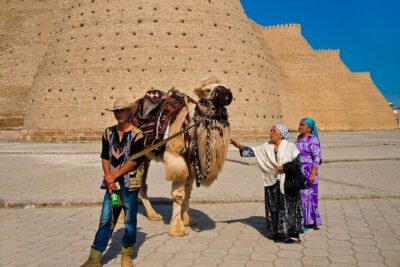 ★ 5.0Best of Bukhara: All Day Private Old Town TourFrom $6566 reviews
★ 4.9Best of Bukhara: All Day Private Old Town TourFrom $6462 reviews
★ 5.0Best of Bukhara: All Day Private Old Town TourFrom $6566 reviews
★ 4.9Best of Bukhara: All Day Private Old Town TourFrom $6462 reviews
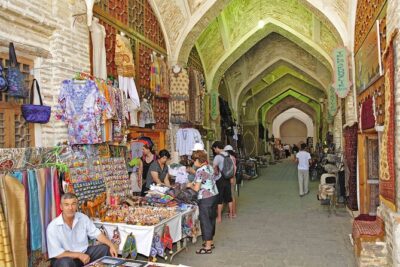 ★ 5.0Bukhara Full Day Old City Private TourFrom $8546 reviews
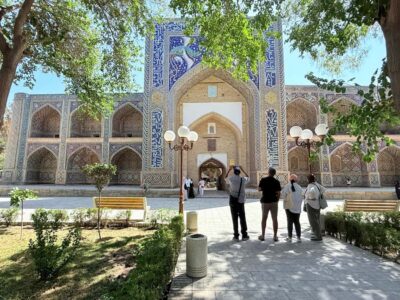 ★ 5.0Private Guided Tours in Bukhara with Several OptionsFrom $5034 reviews
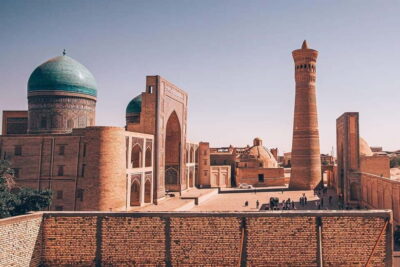 ★ 4.9All You Need To Know About Bukhara. A Walk In The TownFrom $5531 reviews
 ★ 5.0One-Day Private Tour in the Old Town of BukharaFrom $6724 reviews
 ★ 4.4Bukharian Bath in Ancient Hammam with MassageFrom $6719 reviews
 ★ 5.0Bukhara: Private Guided Walking Tour with Hotel PickupFrom $5011 reviews
Browse the lists this tour appears in