
Review · BUKHARA
Bukhara: Walking Tour with a Small Group
A half-day walk can still feel like a whole world. In Bukhara, this small-group tour strings together the city’s most important monuments, with professional English-speaking guides and stops you can actually picture. I especially liked how the route mixes ceremonial spaces, market domes, and Islamic education, so you understand how Bukhara worked, not just what it looks like. One thing to consider: entry fees are not included, and a handful of the biggest interior visits cost extra.
I also liked the small group size. With a maximum of 10 travelers, the guide can answer questions as you go, and the pace stays comfortable for a long walk through the Old City. If you get a guide like Sunny or Nuriddin, you’ll see why people rate this so highly, including flexible adjustments and clear explanations about Uzbek traditions. The main drawback is time, some visits are short by design, and Ark’s fortress area is shown from the outside only unless you add museum time.
In This Review
- Key Highlights to Know Before You Go
- Why This 4.5-Hour Walk Works in Bukhara
- Small Group, Real Guide, and the Answers You Actually Want
- Lyabi Khause Square: Where the City’s Social Life Starts
- Magoki-Attori Mosque and Carpet Museum: A Sacred Setting With Trade Connections
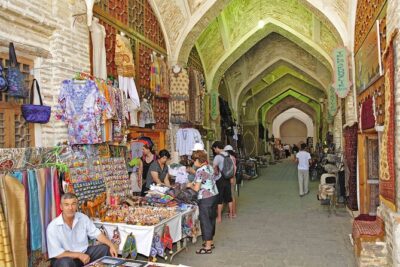
- Toki Telpakfurushon and Toki Zargaron: Market Domes That Explain the Economy
- Abdulaziz Khan Madrasah and Ulugbek Madrasah: Tile Work and Political Prestige
- Kalon Minaret and Mir-i-Arab Madrasa: When a City Teaches Through Stone
- Ark Fortress, Shown From the Outside: Worth Seeing, Optional to Go Deeper
- Bolo Hauz Mosque and Ismail Samani Mausoleum: Ending With the Most Moving Forms
- Price and Value: What $28 Covers, and What You Might Pay Extra
- How the Lack of Shopping Changes the Experience
- Who Should Book This Bukhara Walking Tour
- Should You Book It?
- FAQ
- FAQ
- How long is the Bukhara walking tour?
- What language is the tour offered in?
- How many people are in the group?
- What ticket type is used?
- Is entry included for all stops?
- Which major site is only viewed from the outside?
- Where does the tour start?
- Where does the tour end?
- Do I need to bring anything for the walking portion?
- What happens if the tour can’t run due to poor weather?
Key Highlights to Know Before You Go
- Professional guides, not trainees, with fluent English and room for your questions
- Max group size of 10, so you are not stuck behind a crowd
- A logical Old City route, built around madrasas, mosques, market domes, and mausoleums
- Many free stops, plus a clear mix of sites where entry fees are not included
- No shopping focus, though artisans workshops may appear as part of local life
- Outside view of Ark Fortress, with optional extra time for museum entry
Why This 4.5-Hour Walk Works in Bukhara
Bukhara is one of those cities where the details matter. The lanes, domes, minarets, and tiled facades look similar at first glance, then suddenly you start noticing how each place had a job in daily life. This tour is built to help you make those connections fast.
At $28 per person for about 4 hours 30 minutes, the value comes from what is included: a professional guide, small-group format, and online support, plus a route that hits the monuments you would otherwise struggle to order logically. You are not paying extra for a big bus ride or a long transfer. It is mostly walking inside the historic core, with stops timed so you can see, listen, and move on.
Your biggest “gotcha” is also simple. Meals, drinks, and entry fees are not included, and the tour includes several sites marked as not included. That does not make it bad, it just means you should plan mentally for a few paid interiors if you want them.
Small Group, Real Guide, and the Answers You Actually Want
This is a walking tour with a small group capped at 10. That matters in Bukhara, because the streets and entrances are not wide, and the most interesting parts are often inside courtyards or across small footpaths where spacing affects how much you see.
The guides are described as professional local guides, not trainees or language-course learners. In practice, the reviews highlight a strong theme: guides who are engaging, answer questions clearly, and adapt when the group has energy or curiosity. I like that because it changes the tour from a checklist into a conversation.
If you end up with Sunny, the feedback emphasizes her interactive teaching style. If you get Nuriddin, you get a similar pattern, with fluent English and a lot of depth, plus the kind of flexible choices that can add context to what you are seeing. Either way, the tone is practical, you get the why behind the architecture and the cultural habits behind the scenes.
Deeper into the Bukhara old town
- Best of Bukhara: All Day Private Old Town Tour
★ 5.0 · 66 reviews - Best of Bukhara: All Day Private Old Town Tour
★ 4.9 · 62 reviews - City Tour Around Bukhara
★ 5.0 · 55 reviews - Bukhara Full Day Old City Private Tour
★ 5.0 · 46 reviews
Lyabi Khause Square: Where the City’s Social Life Starts
The tour begins at Nodir Devonbegi Madrasah and then quickly lands at Lyabi Khause Square. This is the kind of place where Bukhara feels real, not staged. Lyabi House complex includes three major monuments: Kukeldash Madrasah, Nodir Divan Begi Madrasah, and Hanaka Nadir Divan Begi.
You get about 40 minutes here, and this is a smart first stop. It gives you orientation, both visually and mentally. Before you start moving into domes and mosques, you learn how the area is organized around public life and the built institutions that supported it.
Practical note: admission is free for this stop, which makes it easier on your budget early in the route. Also, it is long enough for photos and for your guide to explain what each building contributed, not just what century it belongs to.
Magoki-Attori Mosque and Carpet Museum: A Sacred Setting With Trade Connections

Next is Magoki-Attori Mosque and the Carpet Museum. You get around 20 minutes, and entry fees are not included. Even with the time limit, this stop can be memorable because it sits at the intersection of worship and craft culture.
Carpet traditions in Central Asia are never just about decoration. They connect to how homes are furnished, how families pass down skills, and how trade networks move materials and patterns. A museum stop like this helps you understand why craftsmanship matters, even if the tour itself is not trying to push shopping.
If you care about interiors and artifacts, treat this as one of the spots where paying entry might be worth it. If you are keeping a strict budget, just plan to view what you can without assuming every room is included.
Toki Telpakfurushon and Toki Zargaron: Market Domes That Explain the Economy
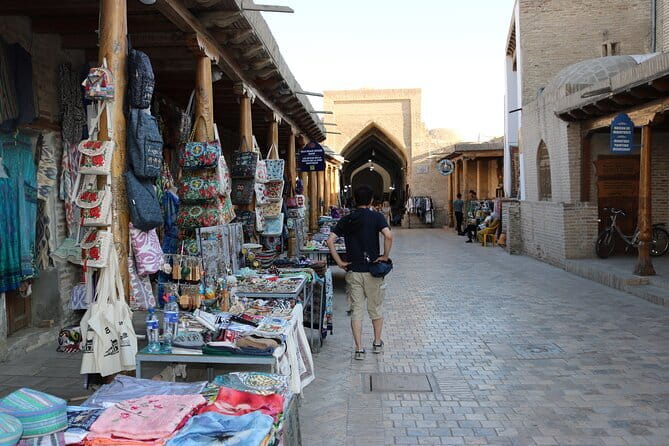
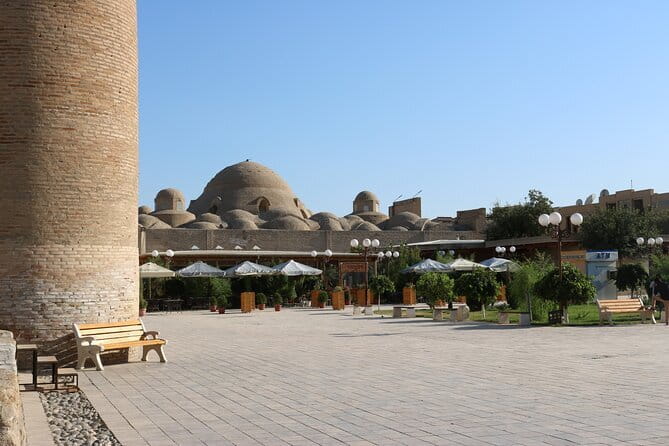
Bukhara’s market domes are not background scenery. They are a visual map of commerce, guild life, and everyday transactions. The tour makes room for two of them.
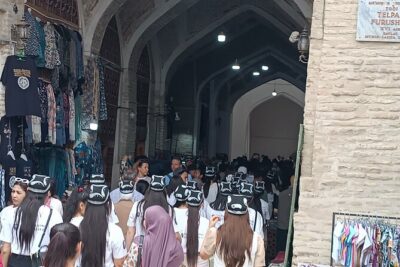
Toqi Telpakfurushon is next, with about 20 minutes and free admission. The name tells you the theme: a dome associated with hat sellers, and more broadly, the kind of specialized trade that once clustered in covered areas.
Then you visit Toqi Zargaron, also about 15 minutes, with free admission. This one is known as the Dome of Jewelers, dating back to the 16th century. If you want a quick mental picture of what “market power” meant in Bukhara, this is a strong stop because it ties architecture to a specific commodity.
What I like here is the way the tour shifts you from religious and educational spaces into the economic engine of the city. After these domes, the minarets and madrasas feel more connected, because you start seeing how wealth and learning supported each other.
Abdulaziz Khan Madrasah and Ulugbek Madrasah: Tile Work and Political Prestige

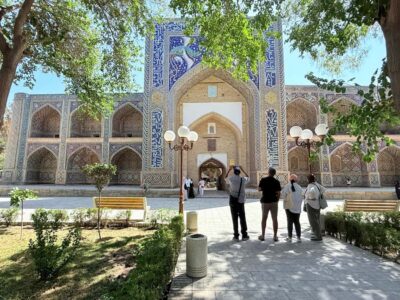
The route continues with Abdulaziz-Khan Madrasah and Ulugbek Madrasah. Abdulaziz Khan Madrasah is from 1652, built under Abdulaziz Khan, and it is noted for intricate tile work and decorative frescoes. You get about 20 minutes, and entry fees are not included.
Then Ulugbek Madrasah gives you around 15 minutes. It is described as one of the older buildings, built by Ulugbek, the grandson of Amir Timur.
These two stops are valuable because they show different layers of time. You are not just looking at one golden age. You are seeing how successive rulers used architecture to project learning, authority, and taste. Even if you only have a short visit, the guided explanation helps you read the design like a language, not just admire color.
Budget tip: since entry fees are not included for these, decide early if you want to prioritize interior access here or elsewhere. If you skip paid interiors at one stop, you can often enjoy the outside details just as much.
Other Uzbekistan walks at an easy pace
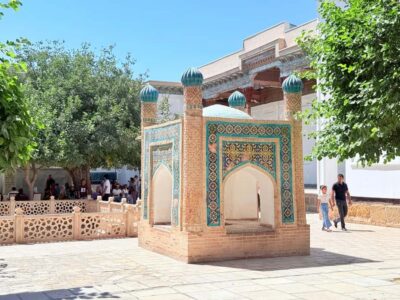
Kalon Minaret and Mir-i-Arab Madrasa: When a City Teaches Through Stone
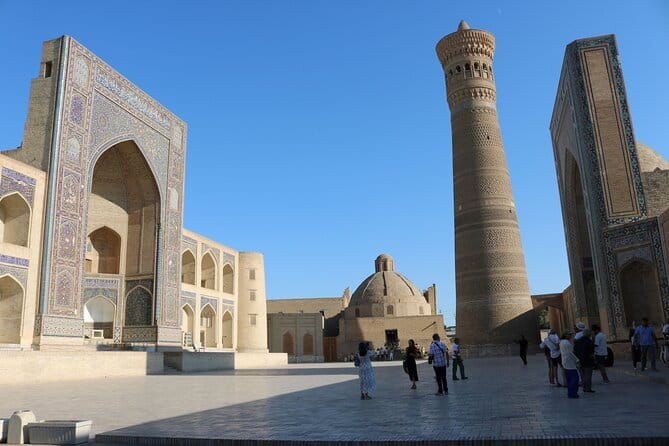
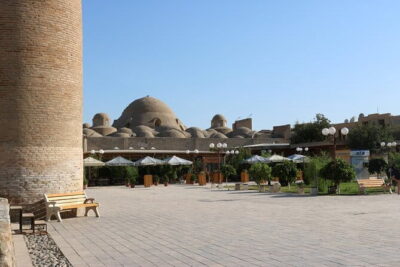
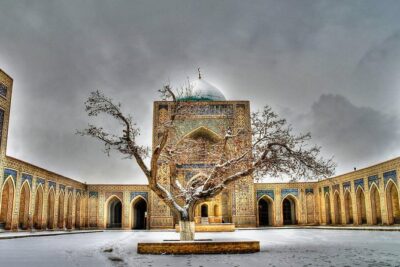
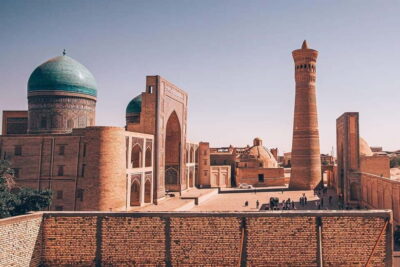
Now the tour hits the skyline. The Great Minaret of the Kalon is about 47 meters tall and dates to 1127, built by Karakhanid ruler Arslan Khan. You get about 20 minutes, free admission. This is one of those moments where your guide’s framing matters. A minaret is not only a tower, it is part of a larger complex and a statement about Islamic scholarship and community identity.
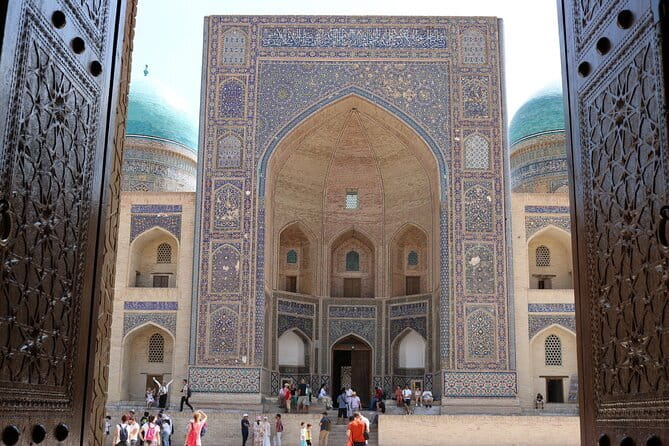
After that, you visit Miri Arab Madrasa with about 20 minutes and free admission. It was built in the early 16th century by Ubaydullah Khan and is named after his spiritual mentor, Sheikh Ab… (the name is truncated in the available details). Still, the point is clear: education and religious lineage were intentionally tied together.
Then you move to Poi Kalyan Mosque in the wider Poi Kalyan complex. It is about 15 minutes, and entry fees are not included.
This cluster is where the tour earns its reputation for depth. You go from minaret to mosque to madrasa and you start seeing the “system” of religious life as a built network, not isolated monuments.
If you like architecture but get bored by lecture-style tours, this section tends to work because you are always moving and always comparing what you see.
Ark Fortress, Shown From the Outside: Worth Seeing, Optional to Go Deeper
Ark Fortress is the tour’s biggest “time management” point. You get about 30 minutes for Ark, but it is shown from the outside only. The Ark museums are not included and would take extra time, about 1.5 hours.
That approach can feel limiting if you love museums. Still, it also keeps the rest of the tour on track, and the fortress exterior is still worth the time because it anchors the story of Bukhara as a seat of power. Ark is described as one of the oldest structures in Bukhara, dating back to the 5th century, and it served as a royal residence for emirs and a military stronghold.
If you want the full Ark experience, plan to add museum time on a separate visit or ask your guide how to fit it in without crushing the day. If you prefer to keep things moving and focus on the walking route, the outside view here is a good compromise.
Bolo Hauz Mosque and Ismail Samani Mausoleum: Ending With the Most Moving Forms
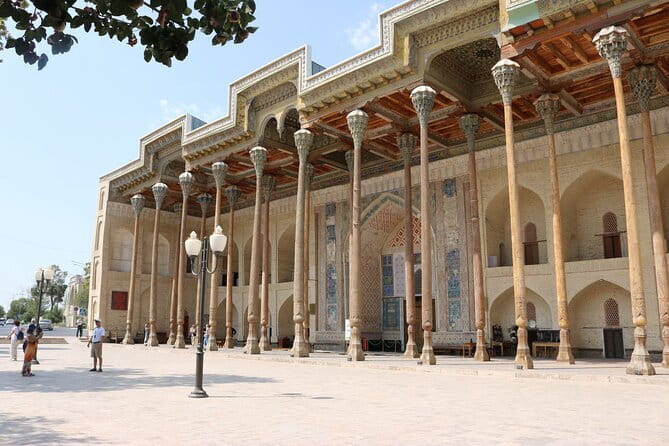
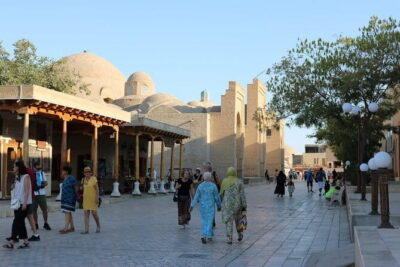
After Ark, the tour continues to Bolo Hauz Mosque, about 15 minutes, free admission. This is the type of place that helps you see Bukhara as a living religious city, not just an architectural museum.
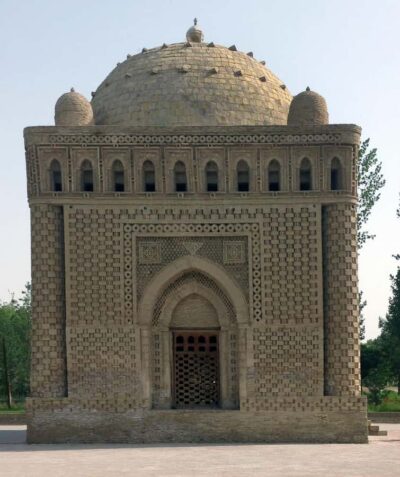
Then you finish at Ismail Samani Mausoleum with about 30 minutes. Entry fees are not included. The mausoleum is described as an iconic example of early Islamic architecture and the oldest funerary building of Central Asian architecture.
This finish is smart. You end in a space designed for memory and reverence, after seeing education and power. By the time you reach the mausoleum, the tile patterns and geometric forms feel different because your guide has already taught you what these structures are trying to communicate.
Also note a seasonal detail: during late autumn and winter, the tour ends at Bolo Khauz Mosque. So if you are traveling then, your final stop may shift. It is still designed as a wrap-up, just with the seasonal route adjustment.
Price and Value: What $28 Covers, and What You Might Pay Extra
The headline price is $28 per person for a walking tour lasting about 4 hours 30 minutes. You get a professional guide, small group, online support, and a mobile ticket.
Not included:
- meals and drinks
- entry fees (and specific stops are marked as not included)
What is useful is that many stops are marked as free, including:
- Lyabi Khause Square
- Toqi Telpakfurushon
- Toqi Zargaron
- Kalon Minaret
- Miri Arab Madrasa
- Bolo Hauz Mosque
And a few are explicitly not included in the details:
- Magoki Attori Mosque and Carpet Museum
- Abdulaziz Khan Madrasah
- Ulugbek Madrasah
- Poi Kalyan Mosque
- Ark (interior museums not included, outside view only)
- Ismail Samani Mausoleum
So the value is strongest if you like architecture and stories more than you need every paid interior. If you strongly prefer ticketed rooms and museums, your total spend will be higher, but the tour still makes sense because it gets you to the right places in the right order.
How the Lack of Shopping Changes the Experience
Many city tours in popular destinations quietly turn into shopping routes. This one is different. The tour explicitly notes it does not focus on shopping. Visits to artisans workshops are planned, but framed as local life and culture.
That is a big deal if you want the city, not a sales pitch. It means you can look at craftwork and understand it, without feeling forced to buy.
Keep your expectations flexible at workshops. You are going to see processes or practice, but the timing is not meant to replace a dedicated market day. It is there to add cultural texture to the monument-focused route.
Who Should Book This Bukhara Walking Tour
This tour is a good match if you:
- want an organized Old City route without planning every turn
- enjoy architecture, religious buildings, and the way education and commerce shaped the city
- like small groups and Q and A with a guide who can adapt
It is also a great fit for first-time Bukhara visitors. In a few hours you see the main clusters: Lyabi Khause, market domes, minarets and madrasas, plus the fortress story and the mausoleum ending.
If you only want one or two big ticket attractions, you might feel you are moving too fast. The short stop times are designed for variety, not deep museum immersion. Ark interior, for example, is intentionally left out to protect the route.
Should You Book It?
Yes, I would book this tour if you want a smart, efficient introduction to Bukhara with a real guide and a route that connects the dots. The best part is the structure: you are not just hopping from landmark to landmark. You are learning how Bukhara’s institutions, markets, and religious sites fit together.
Skip it only if you are traveling with a strict “I must do every interior” mindset. In that case, you may want a different format, or plan to pair this walk with a couple of add-on museum visits on separate time.
FAQ
FAQ
How long is the Bukhara walking tour?
It lasts about 4 to 4.5 hours, roughly 4 hours 30 minutes.
What language is the tour offered in?
The tour is offered in English.
How many people are in the group?
The maximum group size is 10 travelers.
What ticket type is used?
You get a mobile ticket.
Is entry included for all stops?
No. Meals, drinks, and entry fees are not included. Some stops are listed as free, while others are listed as not included.
Which major site is only viewed from the outside?
The Ark Fortress is shown only from the outside. The Ark museums require extra time and are not included in the standard route.
Where does the tour start?
It starts at Nodir Devonbegi Madrasah on Bakhowuddin Nakshbandi Str., Buxoro, Bukhoro Viloyati, Uzbekistan.
Where does the tour end?
It ends at Ismail Samani Mausoleum. During late autumn and winter, the tour ends at Bolo Khauz Mosque.
Do I need to bring anything for the walking portion?
This is a walking tour, so you should be ready for several hours of walking.
What happens if the tour can’t run due to poor weather?
If the tour is canceled due to poor weather, you are offered a different date or a full refund.
More Tours Around Uzbekistan

The Full Uzbekistan Review Pile
Keep Walking Bukhara
More of Uzbekistan we have reviewed
- Full-Day Private Guided Tour to Islamic 7 Saints of Bukhara★ 4.5 · 3 reviews
- Uzbekistan 8 Days Private Guided Tour★ 4.6 · 3 reviews
- A Complete Chapter To Old Bukhara★ 5.0 · 5 reviews
- 2 – Days Guided Tour of Samarkand and Bukhara from Tashkent★ 5.0 · 5 reviews
- Bukhara Walking Tour★ 5.0 · 4 reviews
- A Group Walking Tour Of Old Town★ 5.0 · 8 reviews
Bukhara Old Town & Heritage Tours, compared.
 ★ 5.0Best of Bukhara: All Day Private Old Town TourFrom $6566 reviews
★ 4.9Best of Bukhara: All Day Private Old Town TourFrom $6462 reviews
★ 5.0Best of Bukhara: All Day Private Old Town TourFrom $6566 reviews
★ 4.9Best of Bukhara: All Day Private Old Town TourFrom $6462 reviews
 ★ 5.0Bukhara Full Day Old City Private TourFrom $8546 reviews
 ★ 4.5Bukhara One Day Tour – Departure From TashkentFrom $24937 reviews
 ★ 5.0Private Guided Tours in Bukhara with Several OptionsFrom $5034 reviews
 ★ 4.9All You Need To Know About Bukhara. A Walk In The TownFrom $5531 reviews
 ★ 5.0One-Day Private Tour in the Old Town of BukharaFrom $6724 reviews
 ★ 4.4Bukharian Bath in Ancient Hammam with MassageFrom $6719 reviews
Browse the lists this tour appears in