
Review · BUKHARA
Bukhara: Private Guided Walking Tour with Hotel Pickup
Bukhara rewards slow walking. I love the hotel pickup and on-foot start, and I also love how the guide connects each monument to what you are actually looking at. You do need to plan for one drawback, this is a real walking tour in the old town, with some stops that are ticketed and walking time that can feel long if the weather is tough.
This is a half-day tour built around Bukhara’s core sights, usually 5 to 6 hours, and it ends at the Ismail Samani Mausoleum. I like that it is private, so you can ask questions and move at a pace that fits your group.
One more smart detail, the tour can be customized, and if a monument is under restoration the guide will suggest alternative stops so your route still makes sense.
In This Review
- Key things to know before you go
- Why this private walking tour works in Bukhara
- Meeting point and timing: 5-6 hours with real walking time
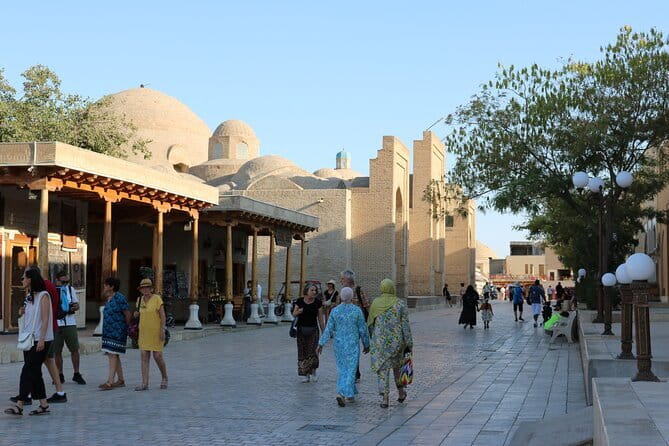
- Lyabi-Hauz Ensemble: start where Bukhara feels local
- Mosque and carpet museum moments at Magoki-Attori
- Taqi-Telpakfurushon Market: the trading dome break
- Ulugbek and Abdulaziz Khan madrasas: reading the tilework
- Poi Kalyan Mosque and minaret: the big visual payoff
- Ark Fortress and Bolo Hauz Mosque: power meets prayer
- Chashma-Ayyub and Ismail Samani: legends and early brick magic
- Price and value: $50 for a private half-day circuit
- What to know: tickets, lunch time, and weather reality
- Should you book this private guided walk?
- FAQ
- How long is the Bukhara private guided walking tour?
- Is hotel pickup included?
- Are meals included in the price?
- Are entrance fees included for the monuments and museum stops?
- Where does the tour start and where does it end?
- What happens if some monuments are under restoration or the weather is bad?
Key things to know before you go
- Private and guided, with hotel pickup on foot so you are not spending your time hunting for meeting points in the old city.
- A tight circuit of Bukhara’s most recognizable sites, from Lyabi-Hauz to the Samanids Mausoleum.
- Most entries are not included, but a couple of stops are listed as free, so you can save money if you plan ahead.
- Weather matters, and the tour is designed around time on foot with breaks possible at local cafes.
- Guides adapt to your needs, including families and bad weather situations, based on real experiences with guides like Sunny and Nuriddin.
Why this private walking tour works in Bukhara
Bukhara is one of those cities where the details are the point. You could rush through the monuments on your own, but you would miss why they sit where they do, who built them, and how the whole old-town layout fits together.
This tour is good value because it is not just a list of sights. You get a professional guide meeting you at your hotel, then walking you through a sequence of Islamic architecture, market spaces, and a fortress citadel. Even the shorter stops matter, because a good guide gives you a way to look at things like tile patterns, courtyard shapes, domes, and minaret proportions.
I also appreciate the human element that comes through in guide feedback. One guide, Sunny, was praised for being very knowledgeable about city culture and history, and for doing a tour that feels like a real day out, not a checklist. Another guide, Nuriddin, stood out for contacting you before the meeting to understand what you want to see, then adapting when the weather changed.
Meeting point and timing: 5-6 hours with real walking time
You start near the Nodir Devonbegi Madrasah on Bakhowuddin Nakshbandi Str., and you finish at the Ismail Samani Mausoleum. Plan on about 5 to 6 hours, and expect a steady rhythm of short visits, usually around 10 to 40 minutes each.
This timing is ideal for a first trip to Bukhara’s historical core. It is long enough to connect the story of the city, but not so long that you are exhausted after your first major day.
Comfort tip that matters here: the tour is designed as walking through the old town, and the provider explicitly says to take breaks at local cafes if needed. If you know you will need extra pauses, tell the guide early. In one family situation with rainy weather, Nuriddin even arranged a taxi to keep things workable, which is exactly the kind of flexibility you want on a walking itinerary.
Deeper into the Bukhara old town
- Best of Bukhara: All Day Private Old Town Tour
★ 5.0 · 66 reviews - Best of Bukhara: All Day Private Old Town Tour
★ 4.9 · 62 reviews - City Tour Around Bukhara
★ 5.0 · 55 reviews - Bukhara Full Day Old City Private Tour
★ 5.0 · 46 reviews
Lyabi-Hauz Ensemble: start where Bukhara feels local
Your first stop is the Lyab-i-Hauz area, a classic courtyard complex built around water and community space. You will see the Kukeldash Madrasah, the Nodir Divan Begi Madrasah, and the Hanaka Nadir Devanbegi.
This is a strong starting point because it shows you the “stage” for a lot of Bukhara life. The buildings around the pool courtyard make more sense once you understand that these spaces were designed for social and religious activity, not just sightseeing.
A practical note, the admission ticket is not included for this stop. That means you should be ready for an extra cost if you want full access inside.
Mosque and carpet museum moments at Magoki-Attori
Next up is the Magoki-Attori Mosque and the carpet museum. This is one of those stops where the architecture gives you instant wow, and the museum side helps you understand how textiles and trade connect to daily life.
The mosque is listed as part of the historical religious complex of Lyab-i Hauz, and it is a great bridge between sacred buildings and the city’s material culture. You get about 20 minutes here, so it is not long. The guide helps you focus your time on what to look for, since ticketed museum time can otherwise feel random.
Entry is not included here. If you care about carpets, come ready to ask questions about what you are seeing. A good guide can point out how styles and weaving traditions connect to regions and eras, which turns a quick museum stop into something you remember.
Taqi-Telpakfurushon Market: the trading dome break
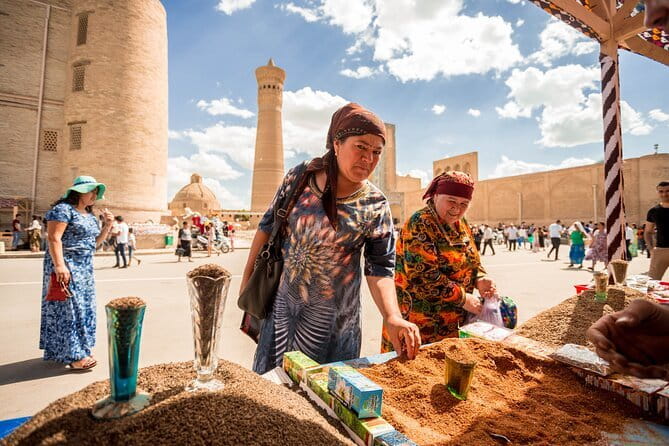
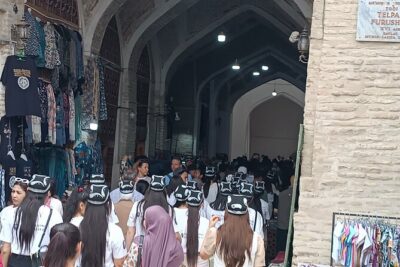
After the mosque and museum, you shift to commerce with the Taqi-Telpakfurushon Trading Dome. This is listed as free, and it is one of the easiest stops to enjoy because it feels active even when you are just standing there.
This part matters because Bukhara was never only about religious buildings. Markets shaped what the city became. A trading dome like this is designed to protect commerce while keeping it visible.
Time is short, about 20 minutes. I suggest using that time to look up and around. Notice the domed structure and how space is organized for movement.
Ulugbek and Abdulaziz Khan madrasas: reading the tilework
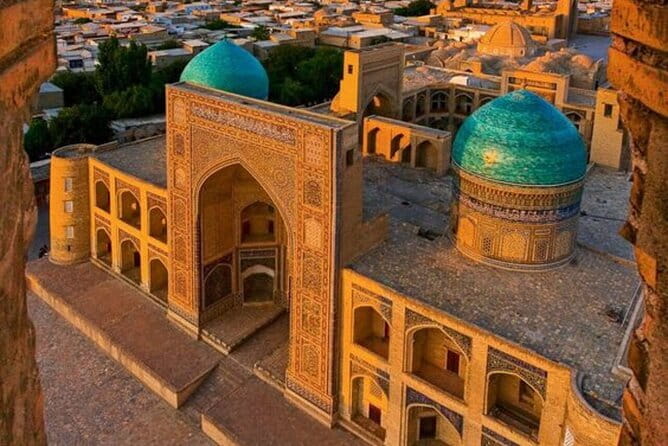
The tour then steps into the education-and-status world of madrasas. First is the Ulugbek Madrassah, described as one of the oldest buildings, built by Ulugbek, the grandson of Amir Timur.
Ulugbek’s name helps anchor the story for you. When your guide connects the madrasah to the intellectual tradition of the region, you can see why these buildings were built to last. Expect about 20 minutes, and again, entry is not included.
Then comes the Abdulaziz-Khan Madrasah, built in 1652. This one is especially worth paying attention to for the intricate tile work and decorative fresco details mentioned in the tour description. This is where you slow down a little. Even if you only get a short look, tile patterns can tell you a lot, from geometric rhythms to surface layering.
Admission is not included for this stop, so budget for it. If you are trying to manage costs, you can still enjoy the exterior and courtyards, but full appreciation often depends on getting in.
Other Uzbekistan walks at an easy pace
Poi Kalyan Mosque and minaret: the big visual payoff
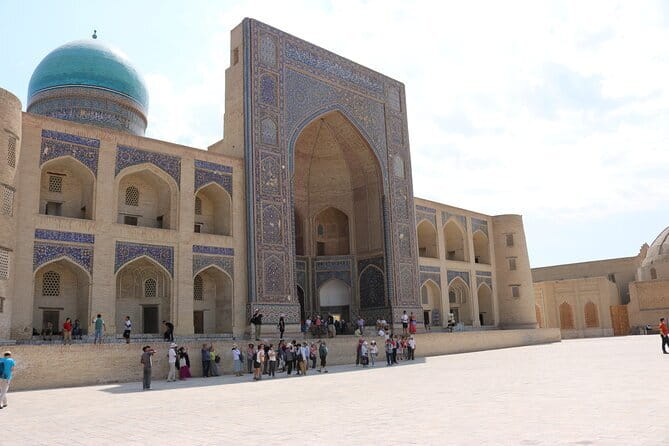
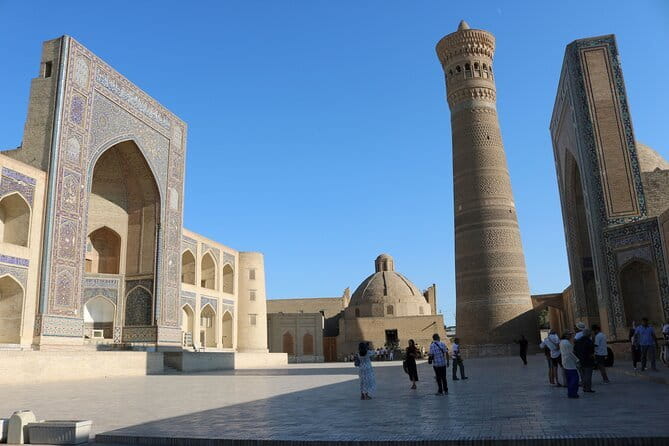
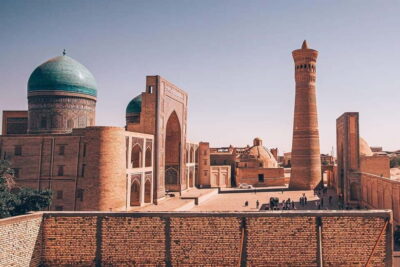
The Poi Kalyan complex is the heavy hitter: Kalyan Mosque, the Kalyan Minaret, and the Mir-Arab Madrasah. You get about 40 minutes here, with admission not included.
This stop is the kind of monument you remember even after you leave Bukhara. The minaret is a key landmark, and when you see it as part of the whole complex, it makes more sense. A guide also helps you understand how these complexes functioned as both religious centers and city symbols.
Here is a practical way to use your time. Do a quick exterior sweep first, then go back for details like doorways, arch shapes, and the way the complex organizes space. If restoration work affects one view, your guide should be able to point you to the best alternate angles so you do not feel robbed.
Ark Fortress and Bolo Hauz Mosque: power meets prayer
Next is the Ark of Bukhara, the citadel of the Emir of Bukhara. It is a large earthen fortification in the northwestern part of contemporary Bukhara, and your time here is very short, about 1 minute on the schedule.
Even with the brief time, the Ark matters because it reminds you this city had rulers and defenses, not just scholars and worship. Think of it as the political spine behind the religious buildings.
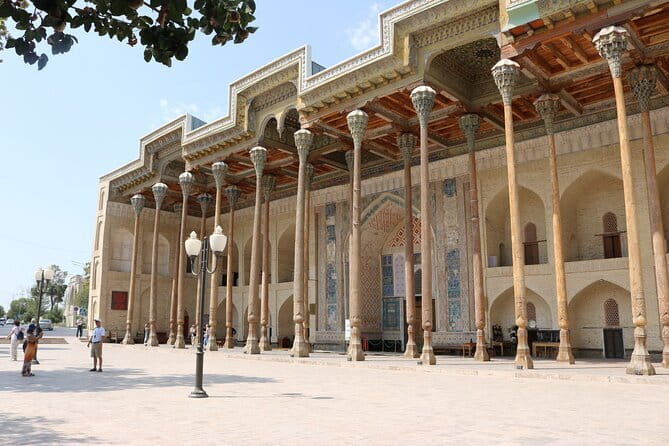
Then you visit Bolo Hauz Mosque, listed as free. The description frames it as an 18th to 20th century mosque, and it is about 20 minutes.
I like this stop because it gives a change of pace. You are going from courtyards and fortification energy back to a place of worship where the feeling shifts. It is also a free stop, which makes it a nice value add when you are budgeting entry fees.
Chashma-Ayyub and Ismail Samani: legends and early brick magic
You finish strong with two of Bukhara’s most meaningful spiritual stops.
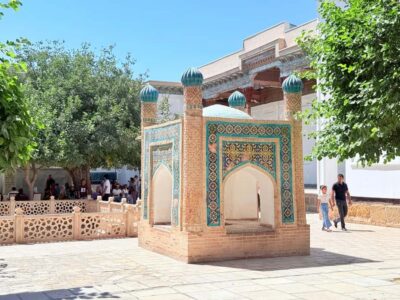
Chashma-Ayyub Mausoleum is tied to the legend of Prophet Ayyub (Job) and a sacred spring. You get around 10 minutes. This is a quick stop, but it is worth it if you like stories that explain why places matter. The sacred spring angle also helps you understand why water themes show up repeatedly in Bukhara’s layout.
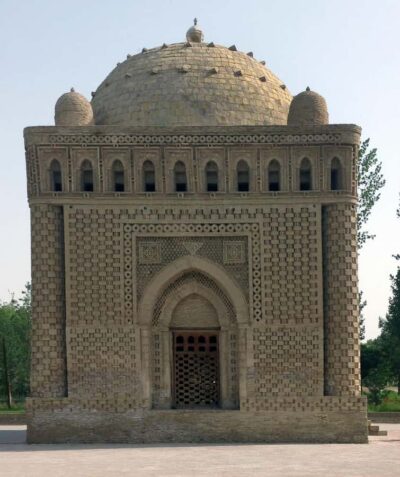
Then comes the Ismail Samani Mausoleum, one of the most important early Islamic architecture sites in the city. It is a 10th-century masterpiece with intricate brickwork and a distinctive cubic design. Your time here is about 10 minutes, and it is also where the tour ends.
This is the perfect last stop because it brings everything down to craftsmanship. You get a clear example of how early brick design can be visually powerful, even without needing endless scale. If you want a souvenir for your brain, this is it: picture the cubic form, then look at the brick pattern and how light plays across it.
If a monument is under restoration, do not panic. The tour notes that some monuments might be closed, and your guide will suggest alternative stops so you still leave with the full arc of the day.
Price and value: $50 for a private half-day circuit
At $50 per person, this tour can be a bargain or just okay, depending on your travel style.
Here is why it can feel like a good deal:
- It is private, so you are not sharing your guide with strangers.
- You get hotel pickup and a structured route through major landmarks.
- Entry fees are not included, which often means you are not paying for what you might skip. Instead, you choose what to enter.
Where you should be careful:
- Most stops list admission as not included, so your final cost could rise if you plan to go inside everything.
- Lunch is not included. The tour mentions free waiting time available for lunch, so you can plan your own meal, but it is still on you.
If you are traveling with a friend or two, check whether the provider’s group discount applies to your booking, since that can make the per-person cost even better.
From a comfort perspective, the private setup is what you are really paying for. You get someone who can pace you, explain quickly, and keep the route logical when you do not have time to research every building yourself.
What to know: tickets, lunch time, and weather reality
Let’s make the practical stuff simple.
Tickets: Entry fees are not included for most stops, while a couple are listed as free (like Toki Telpakfurushon and Bolo Hauz Mosque). If you want museum time, especially at Magoki-Attori with the carpet museum, assume you will pay extra.
Lunch: Lunch is not included, but the tour includes free waiting time. That means you can stop for a meal without your guide rushing you, as long as you communicate timing.
Weather: This tour requires good weather. If it is canceled due to poor weather, you will be offered another date or a full refund. On bad days that still allow walking, the guide can help with comfort breaks. Based on real experiences, that flexibility can include arranging a taxi when weather makes walking harder, especially for groups with kids or elderly family members.
So, bring practical basics: closed-toe shoes, water, and a light layer. You do not need to be fancy. You just need to be comfortable enough to enjoy the monuments instead of counting minutes until the next break.
Should you book this private guided walk?
Book it if you want a clean, logical route through Bukhara’s key sights with a guide who can explain what you are seeing. This is especially worth it for first-time visitors, people short on time, and anyone who prefers not to figure out the old-town layout alone.
Skip or adjust your plan if you:
- hate walking through historic centers and know you will need frequent rest stops
- want a completely self-paced, no-ticket-planning day (because many stops are not included with admission)
- are traveling on a very tight schedule where a weather-dependent tour would be risky
If you do book it, do one small thing that makes the tour better: tell your guide what you care about most, architecture, markets, or the legends behind the sites. Guides like Sunny and Nuriddin were praised for adapting and responding to what people want to see, and that is the difference between seeing Bukhara and understanding it.
FAQ
How long is the Bukhara private guided walking tour?
The tour typically lasts about 5 to 6 hours, and it can be customized.
Is hotel pickup included?
Yes. Your guide meets you at your hotel, and pickup is done on foot for this walking tour.
Are meals included in the price?
No. Meals are not included, but there is free waiting time available for lunch breaks.
Are entrance fees included for the monuments and museum stops?
No. Entry fees are not included for the listed stops. Some stops are noted as free, but most admissions are not included.
Where does the tour start and where does it end?
The tour starts at Nodir Devonbegi Madrasah on Bakhowuddin Nakshbandi Str., and it ends at the Ismail Samani Mausoleum.
What happens if some monuments are under restoration or the weather is bad?
If monuments are under restoration, your guide will suggest alternative stops so you do not miss out. The experience requires good weather, and if it is canceled due to poor weather, you will be offered a different date or a full refund.
More Tours Around Uzbekistan

The Full Uzbekistan Review Pile
Keep Walking Bukhara
More of Uzbekistan we have reviewed
- Full-Day Private Guided Tour to Islamic 7 Saints of Bukhara★ 4.5 · 3 reviews
- Uzbekistan 8 Days Private Guided Tour★ 4.6 · 3 reviews
- A Complete Chapter To Old Bukhara★ 5.0 · 5 reviews
- 2 – Days Guided Tour of Samarkand and Bukhara from Tashkent★ 5.0 · 5 reviews
- Bukhara Walking Tour★ 5.0 · 4 reviews
- A Group Walking Tour Of Old Town★ 5.0 · 8 reviews
Bukhara Old Town & Heritage Tours, compared.
 ★ 5.0Best of Bukhara: All Day Private Old Town TourFrom $6566 reviews
★ 4.9Best of Bukhara: All Day Private Old Town TourFrom $6462 reviews
★ 5.0Best of Bukhara: All Day Private Old Town TourFrom $6566 reviews
★ 4.9Best of Bukhara: All Day Private Old Town TourFrom $6462 reviews
 ★ 5.0Bukhara Full Day Old City Private TourFrom $8546 reviews
 ★ 4.5Bukhara One Day Tour – Departure From TashkentFrom $24937 reviews
 ★ 5.0Private Guided Tours in Bukhara with Several OptionsFrom $5034 reviews
 ★ 4.9All You Need To Know About Bukhara. A Walk In The TownFrom $5531 reviews
 ★ 5.0One-Day Private Tour in the Old Town of BukharaFrom $6724 reviews
 ★ 4.4Bukharian Bath in Ancient Hammam with MassageFrom $6719 reviews
Browse the lists this tour appears in