
Review · UZBEK CRAFTS
Master Class – Uzbek Bread (Khiva)
Warm bread skills in just 45 minutes. You learn the traditional process and you wear heat-protective clothing before you get anywhere near the hot steps. I love the hands-on baking and the fact you eat what you make, but the class may feel light on deeper bread history if that is what you came for.
This starts at Tea house Mirza Boshi in Khiva and ends back there, so you stay close to the action instead of hauling yourself around. You get tea, you use the baking equipment, and you leave with bread made by you. It is private, meaning it is only your group, but that also means the experience is what your group makes of it.
At $15 per person, it is not a massive time commitment, and it is not trying to be a full-day production. You should treat it like a practical workshop with real food payoff. If you want lots of talking and storytelling, you might have to ask, because the focus is on doing.
In This Review
- Key things I’d watch for (before you book)
- Khiva bread class: why this is a smart use of your time
- Where it starts: Tea house Mirza Boshi, and why the location matters
- The heat part: protective clothing and how the class keeps you safe
- What you do in the 45 minutes: dough, ornaments, and bread maker steps
- Flower ornaments and bread patterns: small detail, big meaning
- Tea and tasting: what you gain beyond the recipe
- Value and price: is $15 fair for this kind of lesson?
- Who this bread master class suits best
- Tips to get more out of your Uzbek bread session
- Quick reality check: the main downside to consider
- Should you book the Master Class – Uzbek Bread (Khiva)?
- FAQ
- Where is the master class meeting point?
- How long does the Uzbek bread master class last?
- Is this experience private?
- What is the price per person?
- What is included in the experience?
- What should I do during the baking process?
- Will I eat the bread I make?
- Do I need a physical ticket?
- Who provides the experience?
- Can I cancel for a full refund?
Key things I’d watch for (before you book)
- You work the dough and the shaping steps, not just watch.
- Heat-protective clothing is part of the experience, so you can participate comfortably.
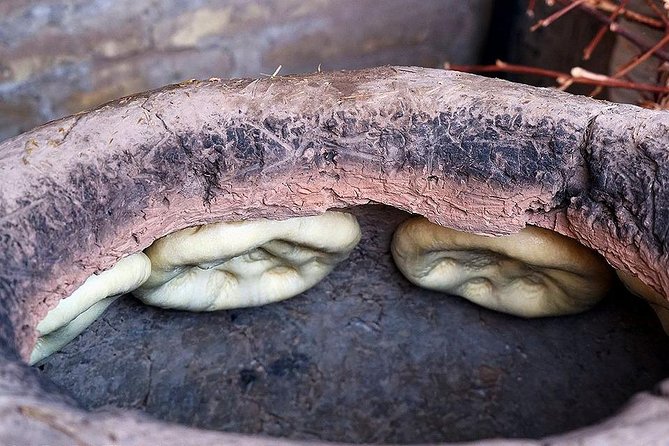
- Flower ornaments and hanging bread in the bread maker are key moments of the class.
- Tea is included, and the bread you make is part of the meal.
- It is short, about 45 minutes, so it moves quickly.
- Private means your group only, which usually makes the pace feel more personal.
Khiva bread class: why this is a smart use of your time
Khiva can be gorgeous and a bit repetitive. You walk past walls, arches, doorways, and more doorways. After a while, even the best architecture starts to blur. This is a nice reset because it pulls you into something physical and edible, instead of another building photo.
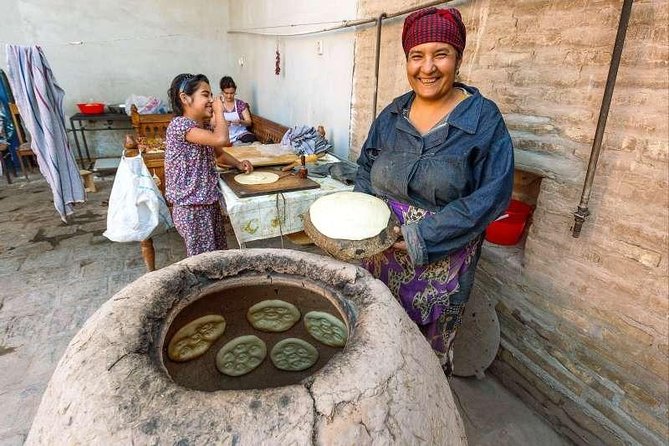
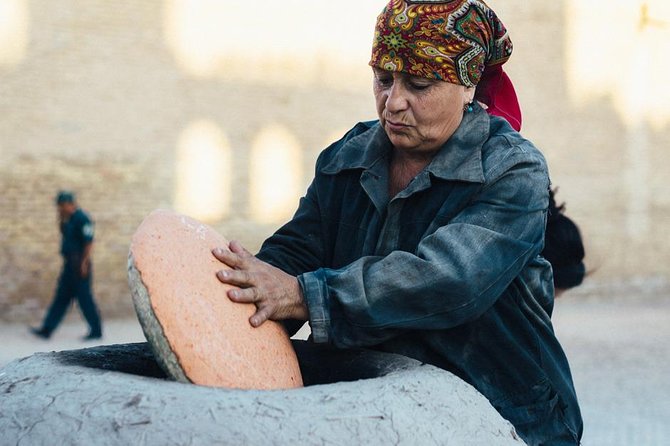
In this master class, you focus on one craft: traditional Uzbek bread. The experience is built around participation. You help with the process, you shape and decorate the bread (including flower ornaments), and you get hands-on with the steps that turn dough into something ready for the heat. Then you eat it, guided by the team so your bread does not turn into a science experiment.
The tone is practical. That is good news if you like learning by doing. It is a possible downside if you expect a long lecture about bread origins, regional varieties, or the cultural role of bread in Central Asia. You will get the technique side. You might not get a deep history side.
Where it starts: Tea house Mirza Boshi, and why the location matters
The activity meets at Tea house Mirza Boshi in Khiva. That matters because you are already in the heart of where people linger, sip tea, and eat. You do not need to plan extra transport or build a separate day around it.
Starting and ending at the same spot also keeps your day smoother. You can fit this class into a travel rhythm that already includes market stops and walking routes. In a place like Khiva, where distances are not huge but the walking can add up, shaving off logistics is a real value.
Once you arrive, you will be welcomed into the bread-making flow. And because it is private, you are not stuck with a big mixed schedule of strangers. You can ask questions, and the team can keep an eye on what you are doing.
Still weighing it up? Here are other Uzbekistan tours we have written up.
- Transfer: Bukhara – Khiva via Ancient Fortresses
★ 4.5 · 101 reviews - Daytrip From Khiva To Ancient Fortresses
★ 4.6 · 60 reviews - Aral Sea Adventures (2 day)
★ 5.0 · 30 reviews - Guided Tour To Old Fortresses
★ 5.0 · 25 reviews
The heat part: protective clothing and how the class keeps you safe
One thing I like about this class is that it takes the hot steps seriously. You will wear heat-protective clothes before you join the baking process. That lets you participate without feeling like you are hovering at the edge of danger.
Real talk: baking bread is not just “mix and wait.” There are hot surfaces and quick motions. The protective clothing helps you focus on technique, not fear. It also makes the class feel more inclusive for visitors who have never baked before.
If you are worried about comfort, this is where the experience is thoughtful. You do not have to stand back while everyone else does the exciting part. You can join the process, decorate, and help with the steps that come next.
A quick mindset tip: treat it like a workshop, not like a show. When you follow instructions closely, the heat will feel manageable and the bread-making sequence makes sense.
What you do in the 45 minutes: dough, ornaments, and bread maker steps
This is a short class, about 45 minutes. So you should expect a focused sequence, with minimal downtime. The goal is simple: you learn the secrets behind traditional Uzbek bread preparation, and you actively help make it.
Here is what you can expect to be doing:
- Participating in the bread preparation with help from the professional team
- Wearing protective clothing for the hotter steps
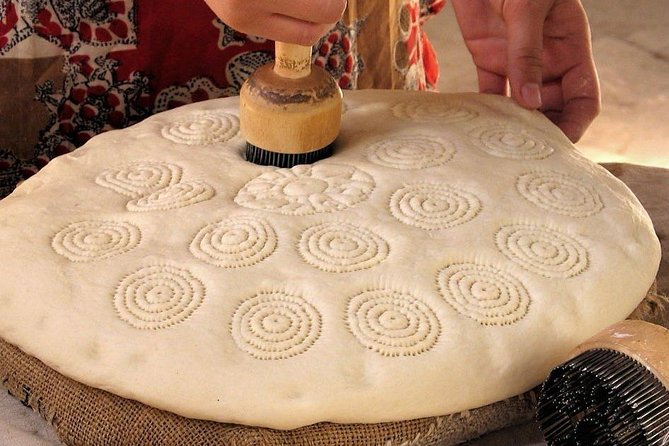
- Filling flower ornaments as part of the bread shaping
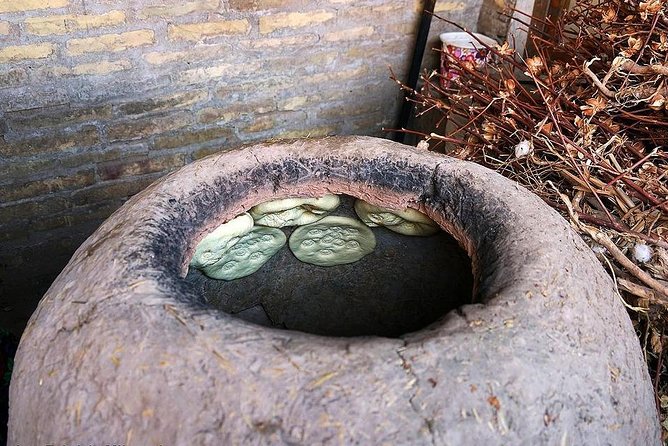
- Hanging or placing the bread in the bread maker as instructed
- Eating the bread you helped prepare, with guidance from the team
The best part is the transformation you witness in real time. Dough becomes shaped bread, then becomes something that smells like proper comfort food. And because you are involved, the final result feels earned, not purchased.
The class is not trying to turn you into a master baker overnight. It is built to give you a clear mental map of how the process works, so you can appreciate what you see later in bakeries and markets.
Flower ornaments and bread patterns: small detail, big meaning
The bread shaping includes filling flower ornaments. Even if you are not sure what style you are making, you will likely notice two things.
First, the ornament steps force you to slow down. You are doing something careful and visible. That is exactly what makes this class more memorable than a “watch someone bake” demo.
Second, bread patterns matter. In Uzbek bread culture, the look of the bread is part of the identity of the loaf. The ornament shapes can change the visual character and make each batch look distinct. It is a reminder that bread is both food and design.
If you enjoy craft work, you will probably have fun with this portion. If you are the type who gets stressed by precision, breathe and go step by step. The team helps you, and the goal is your participation, not perfection.
Tea and tasting: what you gain beyond the recipe
Tea is included. That might sound minor, but it changes the experience. It shifts the class from “kitchen activity” to “Khiva moment,” with a pause to enjoy what you made.
You also eat the bread you prepared. That is the real payoff. Plenty of food classes end with a snack or a photo. Here, the bread is part of your meal flow.
A practical tip: give yourself a few minutes to taste before you start comparing it to anything you have eaten elsewhere. Uzbek bread has its own textures and aroma profile. If you take the first bite while you are still thinking about how you shaped it, you will understand the craft faster.
Also, because you are learning technique, you may start noticing how heat, timing, and shaping affect the end result. That is one of the best “silent lessons” of this kind of class.
More Uzbekistan workshops to book
Value and price: is $15 fair for this kind of lesson?
$15 per person for a private 45-minute bread class is, in my view, a fair price if you want hands-on learning and a meal result. This is not a long tour with heavy transportation costs. It is centered on staff time, equipment use, and the bread you make plus tea.
What makes the value reasonable:
- You actively participate, instead of passively watching
- You get protected participation for the hot steps
- Equipment and tea are included
- The bread made by you is included
What could make it feel expensive:
- If you want lots of explanation about the bread’s history and cultural background, the session may not deliver that in depth
- Because it is short, there is limited time for a long Q and A
So the value depends on your expectations. If you come hungry, curious, and ready to get your hands involved, the price feels like it fits. If you want an extensive talk session, you might feel like you paid for bread rather than storytelling.
Who this bread master class suits best
This class fits best for:
- People who love hands-on food experiences more than museum-style listening
- Visitors who want something short that still feels authentic and personal
- Travelers who are a bit tired of constant walking and want a break that still uses local skills
It is also a great option if you have limited time in Khiva. You do not need a full afternoon. You get a complete arc in about 45 minutes, and then you can head back to exploring.
If you are traveling with kids, this could work well for the shaping parts, as long as they are comfortable following instructions around hot areas and wearing protective clothing. The private format can also help keep attention focused.
If you are a hardcore history seeker, you might be happier adding this to your day and getting the broader cultural context from other conversations. Think of the class as technique and taste, not a lecture.
Tips to get more out of your Uzbek bread session
You will have the best time if you show up ready to participate. A few ways to make this work in real life:
- Come with curiosity, not perfectionism. Bread-making is hands-on and a little messy by nature.
- Watch the team’s steps closely before you copy them. The process is easier once you understand the order.
- Ask one clear question. Since the time is tight, one good question beats ten rushed ones.
- Expect heat. The experience provides protective clothing, but you still should move carefully and listen to instructions.
- Plan to taste slowly. You will learn more from your own loaf if you take a moment to notice texture and aroma.
Also, keep your expectations aligned with the format. It is practical. It teaches you by doing. When you treat it that way, the whole experience clicks.
Quick reality check: the main downside to consider
The main consideration is this: the class is short and focused on baking. That means it may not satisfy your craving for deep explanation about bread history, regional details, or extended storytelling.
One way to prevent disappointment is to decide what you want from it before you arrive. If your goal is hands-on craft plus something delicious to eat, you are in the right place. If your goal is a long narrative lesson, you may want to pair this with other ways of learning about Khiva’s food culture.
If you handle that expectation gap, you will likely leave happy, with both bread knowledge and bread taste.
Should you book the Master Class – Uzbek Bread (Khiva)?
Book it if you want a short, private, hands-on food experience in Khiva. At $15, with tea included and bread made by you, it is a good value for the time. The heat-protective clothing and active steps like ornament shaping make it feel hands-on in a way that many “food experiences” do not.
Skip it, or adjust your expectations, if you mainly want long explanations or deep background. This class is practical, not academic. It is designed to teach you how bread is prepared through participation, and then get you eating.
If you like learning by doing, I think you will enjoy this one. You will go home with a new skill you can actually picture, and you will remember the smell of fresh Uzbek bread long after the walking fatigue fades.
FAQ
Where is the master class meeting point?
It starts at Tea house Mirza Boshi in Khiva, Xorazm Region, Uzbekistan, and ends back at the same meeting point.
How long does the Uzbek bread master class last?
The duration is about 45 minutes.
Is this experience private?
Yes. It is a private tour or activity, so only your group participates.
What is the price per person?
The price is $15.00 per person.
What is included in the experience?
Tea is included, along with use of the baking equipment and the bread you make.
What should I do during the baking process?
You participate in preparing the traditional Uzbek bread, including shaping and adding flower ornaments, and then baking as guided by the team.
Will I eat the bread I make?
Yes. You eat the bread yourself, with help from the team.
Do I need a physical ticket?
No. The ticket is mobile.
Who provides the experience?
The provider is Sayyah Uzbekistan.
Can I cancel for a full refund?
Yes. Free cancellation is available up to 24 hours in advance for a full refund. If you cancel less than 24 hours before the start time, you do not get a refund. Confirmation is received at booking.
Workshops Worth The Afternoon
The Full Uzbekistan Review Pile


More of Uzbekistan we have reviewed
- Best of Khiva: Exclusive Private Tour!★ 5.0 · 3 reviews
- Traditional Khiva Cooking Class with Market Visit & Lunch★ 5.0 · 4 reviews
- Ayaz Kala & Toprak Kala private fortress daytrip from Khiva★ 3.5 · 6 reviews
- Private Daytrip to Muynak and Nukus★ 5.0 · 10 reviews
- Best of Khiva: Exclusive Private Tour!★ 5.0 · 9 reviews
- Private Transfer & Photo‑Stops: Ayaz‑Kala & Toprak‑Kala”★ 4.6 · 6 reviews
Uzbek Craft, Pottery & Culture Masterclasses, compared.
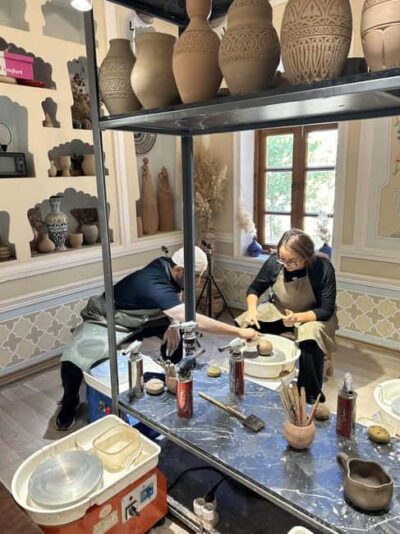 ★ 5.0Tashkent: Uzbek Culture, Food, Crafts & Pottery MasterclassFrom $8524 reviews
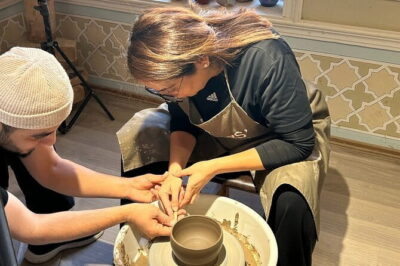 ★ 5.0Tashkent: Cultural Exploration & Pottery MasterclassFrom $8524 reviews
 ★ 5.0Legends and Crafts: Suzani Masterclass & Cultural ImmersionFrom $9011 reviews
 ★ 5.0Samarkand City Tour from Silk Paper Factory to Registan SquareFrom $904 reviews
 ★ 5.0Samarkand: Uloq-Kopkari (Buzkashi) Game Day TourFrom $1703 reviews
Browse the lists this tour appears in