
Review · KYZYLKUM
A Night In The Kyzylkum Desert [1] From Khiva
Desert stars start your sleep plan. This private 2-day trip from Khiva chains together seven ancient Khorezm fortresses and then gives you an overnight near Ayaz-Kala in the Kyzylkum Desert, where the sky turns into real stargazing country. I love the way the day is packed with fortresses in a logical route, so you learn without wasting time. I also love that an audio-guide comes with the drive, which helps you make sense of what you’re seeing. One thing to consider, the yurt overnight is extra, and desert camps can come with real-world bugs.
Because the price is per group (up to 4), it can be good value if you’re traveling with the right people. The total cost depends on the optional yurt fee (USD 50/day with dinner and breakfast) plus small fortress entry costs for some sites (often USD 1 or USD 2), but you are getting private transport in an air-conditioned vehicle and hotel pickup in Khiva.
In This Review
- Key highlights that make this trip work
- Why the overnight in the Kyzylkum Desert changes everything
- Price and logistics: what USD 399 really covers
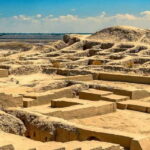
- Day 1: seven Khorezm fortresses around Ayaz-Kala
- Ayaz-Kala: frontier fortress and a legend in the same breath
- Toprak Kala: palace city capital, with finds you don’t usually see
- Kyzyl Kala: square-ish fortress logic and a fire-worship route
- Guldursun Kala: cycles of building, ruin, restoration, and Mongol destruction
- Koi Krylgan Kala: the odd one, a round fortress called the Fortress of Lost Rams
- Jonbos Kala: a triangle fortress with military details
- Duman Kala (Ellikkala tumani to’za bo’g ofi): the best-preserved section story
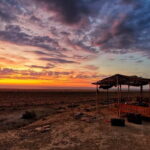
- Yurt night near Ayaz-Kala: stars, desert life, and practical comfort limits
- The guide factor: why service quality matters on remote tours
- Day 2: second look at Ayaz-Kala, then time inside Ichan Kala
- Who should book this desert fortresses night (and who should skip)
- Should you book A Night In The Kyzylkum Desert from Khiva?
- FAQ
- Is hotel pickup and drop-off included?
- What time does the tour start?
- How long is the experience?
- Is the yurt overnight included in the price?
- Are fortress entry tickets included?
- Is this a private tour?
- What is the minimum age?
- Can I cancel for a full refund?
Key highlights that make this trip work
![A Night In The Kyzylkum Desert [1] From Khiva - Key highlights that make this trip work](https://6.uzbekistaninsider.com/wp-content/uploads/a-night-in-the-kyzylkum-desert-1-from-khiva-1.jpg)
- Seven fortresses, not just one site, so you see different fortress shapes, eras, and defensive design choices.
- Overnight near Ayaz-Kala in the middle of the Kyzylkum Desert, aimed at night skies and desert life.
- An audio-guide supports the long drive, so the route feels guided, not random.
- Karakalpakstan desert culture moments, including camels around the camp and milk from local families.
- Olimjon-led service that people remember, including humor, help with transfers, and great photo tips.
Why the overnight in the Kyzylkum Desert changes everything
![A Night In The Kyzylkum Desert [1] From Khiva - Why the overnight in the Kyzylkum Desert changes everything](https://6.uzbekistaninsider.com/wp-content/uploads/a-night-in-the-kyzylkum-desert-1-from-khiva-2.jpg)
A lot of desert tours stop at sunset and send you back to a city. This one keeps you out there after dark. That matters because the fortresses are only half the story. The other half is time, silence, and weather changes you can feel once you’re away from traffic and street lights.
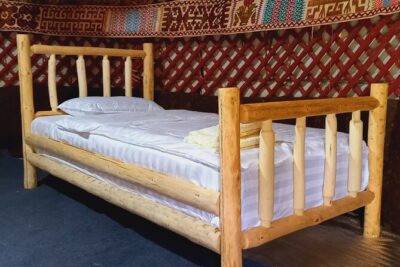
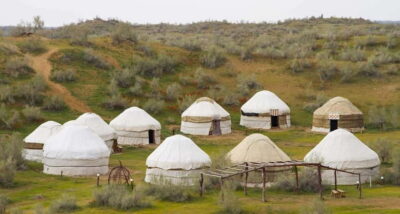
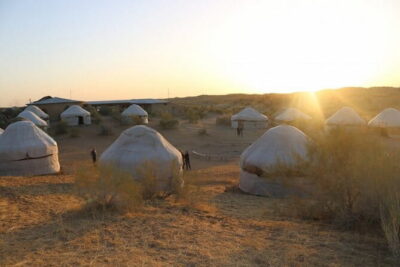
You’ll sleep in a yurt camp located near the Ayaz-Kala area. The experience is designed around desert night beauty, and you’re specifically set up for stargazing. The tour description also points to daily-life details: traditional Karakalpakstan ways of living in the desert zone, plus camels wandering around and the chance to drink milk from local families.
If you’re expecting pure hotel comfort, temper that mindset. You are choosing something more like real frontier living, with the good side (sky, stars, atmosphere) and the rough side (camp conditions). One past guest flagged cockroaches at night as a downside, so treat the camp as desert reality and plan accordingly.
Price and logistics: what USD 399 really covers
The headline price is USD 399 per group, for up to 4 people, and the trip runs about 2 days. The biggest practical win is that you get private transportation, pickup and drop-off in Khiva, and an air-conditioned vehicle for the driving time between sites.
At full group size, that breaks down to roughly USD 100 per person for the core service. Then you add the extras that are not included:
- Yurt overnight (USD 50/day), with dinner and breakfast
- Fortress tickets, where some stops have small fees (often USD 1 or USD 2)
- Your total also depends on how many of the sites on your route require paid tickets
So the value equation is simple: this is cost-effective when you have 2 to 4 people sharing the private transport. If you’re traveling solo, you’ll still get a private setup, but your per-person cost rises because it’s priced by group.
The tour starts at 8:00 am and runs as a private activity, meaning only your group participates. You also get a mobile ticket.
More nights out in the Kyzylkum
- From Khiva To Aral Sea 2-Days One Night In Yurt Stay
★ 4.6 · 20 reviews
Day 1: seven Khorezm fortresses around Ayaz-Kala
Day 1 is a full day of archaeology-on-the-road. You’ll start from Khiva in the morning and visit fortress after fortress, each one showing a different way people defended settlements and organized daily life near desert edges.
The time here is intentional. By the end of the day, the fortresses stop feeling random. You start seeing patterns: frontier walls, watchtowers, sacred spaces, and the way main streets led directly into places where community rituals happened.
Ayaz-Kala: frontier fortress and a legend in the same breath
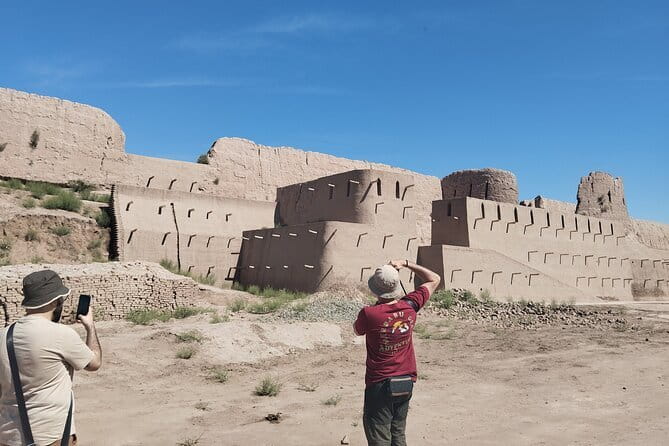
Ayaz-Kala is the first stop and a favorite for a reason. Archaeologists date it to the 2nd century AD, during a Kushan Empire heyday. The fortress is also tied to folk legends about a legendary warrior-slave named Ayaz, which makes your visit feel like more than dry stones.
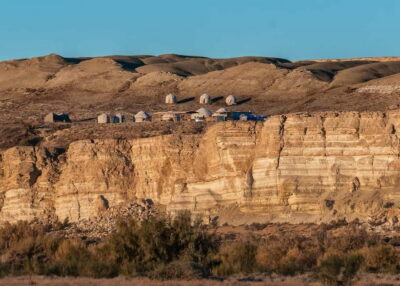
On the ground, what helps is the setting. It’s described on colorful cliffs of the Sultauizdag eastern spurs in the Kyzylkum Desert region. That gives you natural viewpoint changes as you walk, so you keep getting new angles of walls and ruins.
Admission is free for this stop, which is a nice bonus.
Toprak Kala: palace city capital, with finds you don’t usually see
Toprak Kala is known as an ancient palace city and capital connected to Chorasmia around the 2nd/3rd century CE. The site is also famous for discoveries like wall paintings, coins, and archives.
This is the stop that makes the day feel less like “look at rocks.” You’re seeing a place that held administration, wealth, and written record culture. It’s part of the Fifty fortresses oasis idea in modern Uzbekistan, so you’re connecting one ruin to a broader desert settlement system.
The ticket situation here is not included, so plan for a small extra cost if the site requires it.
Kyzyl Kala: square-ish fortress logic and a fire-worship route
Kyzyl Kala is smaller and close to a square shape. The fortification system includes a double vallum and watchtowers at the corners, pointing to layered defense. The central detail I’d focus on is how the main street leads to a temple of fire-worshippers, where Zoroastrian priests held rites.
You can think of this stop as a city plan lesson in ruins. Residential areas are described as divided by the central street into family sections, which helps you picture how everyday life fit inside a defensive wall.
This site also lists an admission ticket as not included.
It’s also tied to a specific research moment, with a Khorezm expedition headed by S.P. Tolstov discovering and studying the fortress beginning in 1938. Even without the lab setting, knowing that the site was actively studied adds credibility to what you’re seeing.
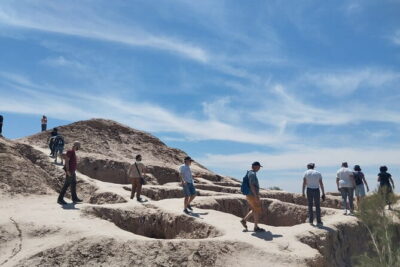
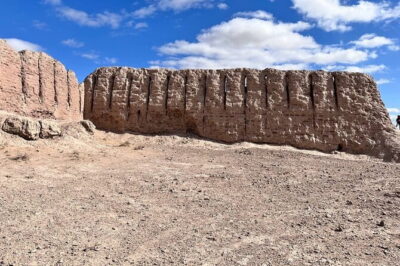
Guldursun Kala: cycles of building, ruin, restoration, and Mongol destruction
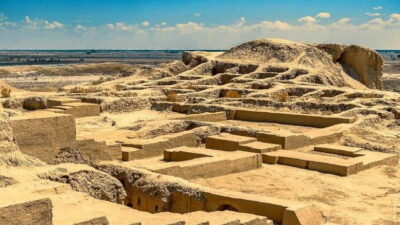
Guldursun Kala is dated to the 2nd to 1st centuries BC, with rectangular fortifications over a very large area. Adobe walls are lined with two rows, plus built-in loopholes, so it’s a very practical defense design.
What I like here is the timeline feel. It’s described as falling into ruins in the 5th century BC for unknown reasons, then being restored in the first half of the 12th century as an important Khorezm outpost, and then destroyed again by Mongol invaders in the 13th century.
That gives you a sense of how frontier sites got reused, abandoned, and re-imagined. It’s not one snapshot. It’s a long story told through broken walls.
Admission is listed as free for this stop.
Koi Krylgan Kala: the odd one, a round fortress called the Fortress of Lost Rams
Most fortresses you’ll see in this region are square or rectangular in concept. Koi Krylgan Kala breaks the rule. It’s described as having a round citadel and a protective structure that forms a correct circle around it, with external fortifications and towers.
The name Fortress of Lost Rams adds a story flavor. Archaeologists found it in 1938 during the Khorezm expedition, which is the same year mentioned for other major discoveries in the region, helping you feel like you’re stepping into a wave of 20th century archaeology.
Admission is free for this stop, so it’s also good value in the practical sense.
Jonbos Kala: a triangle fortress with military details
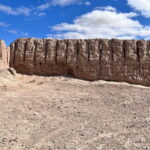
Jonbos Kala is described as a regular triangle oriented to the cardinal directions, with sizes of 200 by 170 meters. The walls are almost 10 meters high, and you also get clues about why it survived better than some other ruins, with sand drifts helping preserve the façade.
What makes it more than shape trivia is the defense logic. There is an outer wall and another wall behind it to strengthen fortification. The thickness values are given, plus narrow embrasures that signal military function.
Admission is free here, and it’s a great stop if you like geometry and “why would they build it this way” thinking.
Duman Kala (Ellikkala tumani to’za bo’g ofi): the best-preserved section story
The last stop on Day 1 is listed as Ellikkala tumani to’za bo’g ofi, with details describing Duman Kala as having three adjacent sections. There’s a square western enclosure with corner towers, a smaller square citadel, and a northern enclosure that no longer survives in full.
The western citadel is described as the best-preserved portion. That’s useful to know because it tells you where to look first if you feel rushed. When you arrive on-site, start with the most intact section, then work outward to imagine the rest.
Admission is listed as free for this stop.
Yurt night near Ayaz-Kala: stars, desert life, and practical comfort limits
![A Night In The Kyzylkum Desert [1] From Khiva - Yurt night near Ayaz-Kala: stars, desert life, and practical comfort limits](https://6.uzbekistaninsider.com/wp-content/uploads/a-night-in-the-kyzylkum-desert-1-from-khiva-4.jpg)
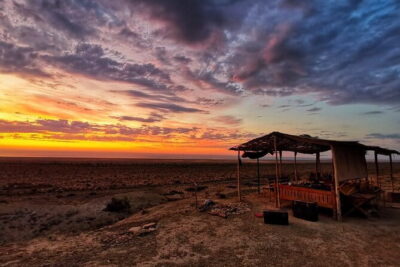
After the fortress run, you move to the yurt camp near Ayaz-Kala. This is the “why” of the whole trip. You’re not just sightseeing, you’re staying in the desert zone long enough to notice night changes and star visibility.
The tour description highlights a few culture elements:
- Traditional Karakalpakstan desert life
- Local traditions
- Camels around the camp
- Milk from local families
That kind of contact is often the difference between a photo-only stop and an experience that actually lands.
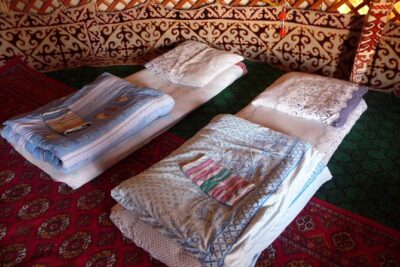
What about comfort? The yurt overnight is USD 50/day and includes dinner and breakfast. That means you’re not managing meals on your own. Still, a camp is a camp. The most honest caution from the supplied feedback is the cockroach issue at night in at least one account, so if you’re sensitive to bugs, pack for that reality and keep expectations grounded.
For photography and stargazing, the camp timing matters more than anything. You’re in the open desert zone, so your best results come after the day cools and the sky clears. Keep your camera ready, and don’t wait until the moment you think it should be dark.
The guide factor: why service quality matters on remote tours
![A Night In The Kyzylkum Desert [1] From Khiva - The guide factor: why service quality matters on remote tours](https://6.uzbekistaninsider.com/wp-content/uploads/a-night-in-the-kyzylkum-desert-1-from-khiva-5.jpg)
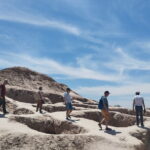
This kind of trip lives or dies by the people driving it. In the feedback you shared, the name Olimjon comes up again and again. The consistent theme is help and attention: he supports transfers, helps with planning, recommends local dishes, and makes the day feel relaxed even when you’re traveling far from Khiva.
Olimjon also gets praised for humor and for taking great pictures. That matters because remote sites can be tricky to photograph well. Even if you don’t ask him to shoot for you, having a driver who knows the light and angles can save you time and frustration.
If you want the best version of the experience, treat your guide like a resource. Ask what hour gives you the best photos at Ayaz-Kala, or what to pay attention to while you walk each fortress.
Day 2: second look at Ayaz-Kala, then time inside Ichan Kala
![A Night In The Kyzylkum Desert [1] From Khiva - Day 2: second look at Ayaz-Kala, then time inside Ichan Kala](https://6.uzbekistaninsider.com/wp-content/uploads/a-night-in-the-kyzylkum-desert-1-from-khiva-6.jpg)
Day 2 starts with a return visit to Ayaz-Kala, with a deeper fortress explanation. This time, the focus is on the broader timeline: the site is described as built between the 4th century BC and the 7th century CE, overlooking the Kyzylkum Desert from a hilltop.
The gateway design is where you’ll want to slow down. There’s a square gateway at the southern end of the axis, described as typical for Khorezm frontier fortresses. The approach of enemies is noted to run parallel to the southeast walls, making attackers vulnerable to attacks from above. Two rectangular towers defend the massive gateway and the gate leads into a small chamber overlooked by high walls where bowmen could shoot if the first gate was breached.
That kind of detail turns a walk into a lesson about how people planned for threats. It also helps you connect what you saw the day before. You start seeing repeated defensive choices across multiple sites.
After you check out from the yurt, you head back to Khiva and get free time to explore Ichan Qala on your own.
If you want a smart short list inside the complex, the tour suggests Juma mosque, Kunya Ark citadel, Mohammed Amin Madrasah, Kalta Minor, and Stone Palace. Even if you don’t hit all five, aim for at least two, because the point is to use your Day 2 time for the classic sights you can’t see from the desert.
Who should book this desert fortresses night (and who should skip)
![A Night In The Kyzylkum Desert [1] From Khiva - Who should book this desert fortresses night (and who should skip)](https://6.uzbekistaninsider.com/wp-content/uploads/a-night-in-the-kyzylkum-desert-1-from-khiva-7.jpg)
I think this is a strong match if you want:
- Architecture and frontier design in a hands-on way
- A trip that mixes ruins with living desert culture
- Small-group travel, because it’s private up to 4 people
- Stargazing built into the plan, not added on as a maybe
You might want to skip or adjust expectations if:
- You need hotel-level comfort and bug-free nights
- You get impatient with long driving days between remote sites
- You dislike paying small extra fees on top of a base price (some fortress tickets are not included)
The minimum age listed is 10 years old. That can make the experience work for older kids who enjoy ruins and staying up for the night sky, but it may feel long for younger ones.
Should you book A Night In The Kyzylkum Desert from Khiva?
![A Night In The Kyzylkum Desert [1] From Khiva - Should you book A Night In The Kyzylkum Desert from Khiva?](https://6.uzbekistaninsider.com/wp-content/uploads/a-night-in-the-kyzylkum-desert-1-from-khiva-8.jpg)
Book it if you want a memorable mix of seven fortress stops plus a real desert overnight, with private transport and audio support so you’re not just bouncing between ruins. The price is also easier to justify when you’re traveling as a full group up to four, since you’re splitting the private logistics.
Don’t book it if you’re mainly after city sightseeing, or if you expect a bug-free camp with hotel-style amenities. Also note that some fortress entry fees and the yurt cost are extras, so price comparisons should include those.
If your goal is stargazing, frontier forts, and Karakalpakstan desert life near Ayaz-Kala, this is one of the more purposeful ways to do it from Khiva.
FAQ
Is hotel pickup and drop-off included?
Yes. The tour includes hotel pickup and drop-off in Khiva, and you also get private transportation.
What time does the tour start?
The meeting point start time is 8:00 am.
How long is the experience?
The duration is listed as 2 days (approx.).
Is the yurt overnight included in the price?
No. The yurt overnight costs USD 50/day and includes dinner and breakfast, but it is not included in the base price.
Are fortress entry tickets included?
Some fortress sites include free admission, but others say tickets are not included. The listed small fees for paid sites are USD 1 or USD 2.
Is this a private tour?
Yes. It is a private tour/activity, and only your group participates. The group size is up to 4.
What is the minimum age?
The youngest age the provider can accommodate is 10 years old.
Can I cancel for a full refund?
Yes, you can cancel for a full refund if you cancel at least 24 hours in advance of the experience start time.
After Dark In Uzbekistan
The Full Uzbekistan Review Pile
More Yurt Nights By Aydarkul
More of Uzbekistan we have reviewed
- Best of Khiva: Exclusive Private Tour!★ 5.0 · 3 reviews
- Traditional Khiva Cooking Class with Market Visit & Lunch★ 5.0 · 4 reviews
- Ayaz Kala & Toprak Kala private fortress daytrip from Khiva★ 3.5 · 6 reviews
- Private Daytrip to Muynak and Nukus★ 5.0 · 10 reviews
- Best of Khiva: Exclusive Private Tour!★ 5.0 · 9 reviews
- Private Transfer & Photo‑Stops: Ayaz‑Kala & Toprak‑Kala”★ 4.6 · 6 reviews
Kyzylkum Desert Yurt Camps & Aydarkul, compared.
 ★ 5.0Yurt stay and Hiking in the Nurata Mountains tour – 2 daysFrom $22935 reviews
 ★ 3.8Yurt Camp Tour with Night from BukharaFrom $21535 reviews
 ★ 4.6From Khiva To Aral Sea 2-Days One Night In Yurt StayFrom $68820 reviews
 ★ 4.6Desert Adventure from Samarkand: Yurt Camp & Aydarkul EscapeFrom $20016 reviews
 ★ 4.5Desert yurt camp and Mountain tour – 3 daysFrom $32515 reviews
 ★ 5.02 Days of Tour in Yurt Camp and AydarkulFrom $19015 reviews
 ★ 4.5Desert Yurt Camp tour – 2 days (shared)From $20613 reviews
 ★ 4.42 Days Private Safari Tour from BukharaFrom $24511 reviews
Browse the lists this tour appears in