
Review · SAMARKAND
Samarkand City Tour from Silk Paper Factory to Registan Square
A fairy tale city, with stops that make sense. This guided Samarkand route strings together handmade silk paper, royal-era architecture, and the visual punch of Registan Square. You’ll see how the Silk Road city built an identity through craft, science, and power, all in one 6 to 7 hour loop.
I really like two things about this experience. First, you get an English speaking guide who helps you connect what you’re seeing to the bigger story, without bogging you down. Second, the day is built around practical pacing, with transport handled in an air-conditioned vehicle so you spend more energy on photos and questions, less on logistics.
One thing to plan for: entrances add up. The tour price does not include monument tickets (listed as $33 per person), so check your total before you budget. Also, the recommended dress code matters at religious sites, so pack accordingly.
In This Review
- Key things you will notice on this tour
- Why Samarkand feels like a time machine (without feeling rushed)
- Price and what you should budget before you book
- Starting at Gur-i Amir, then heading straight to silk paper craft
- What to watch for at the paper center
- Ulugh Beg Observatory: astronomy that belongs to Samarkand
- A small drawback to expect
- Shah-i-Zinda: a spiritual burial complex you can actually walk through
- Practical tips so it doesn’t feel like a checklist
- Bibi Khanym Mosque and Saray Mulk Khanum
- One consideration for comfort
- Amir Temur Square and the Gur-Amir mausoleum
- Registan Square: the big payoff, with calligraphy everywhere
- Photo strategy that saves time
- Dress code and photo rules that keep the day smooth
- How I’d judge the guide quality on a day like this
- Who this tour is best for (and who should reconsider)
- Weather matters
- Should you book this Samarkand city tour?
- FAQ
- How long is the Samarkand City Tour from Silk Paper Factory to Registan Square?
- What is included in the tour price?
- Are lunch and entrance tickets included?
- How much are the entrance tickets for monuments?
- Is pickup offered, and where does the tour start?
- Is this a private tour?
- What are the rules for photos and videos?
- What dress code should I follow at the landmarks?
- What is the cancellation policy?
- What happens if the tour is canceled due to weather?
Key things you will notice on this tour
- Samarkand Handmade Paper Centre shows how mulberry paper was made and why it was known for durability and insect resistance
- Ulugh Beg Observatory ties astronomy to the Temurid era, built by Ulugbek, Amir Temur’s grandson
- Shah-i-Zinda is a spiritual burial complex spanning centuries, not just a quick photo stop
- Bibi Khanym Mosque connects the architecture to Saray Mulk Khanum, Temur’s chief wife
- Registan Square is the big visual payoff, with Islamic designs and calligraphy across multiple facades
- Phone photo rules are clear: camera equipment may cost extra, while phone cameras are free
Why Samarkand feels like a time machine (without feeling rushed)
Samarkand can hit you like a movie set, but the best visits make it feel logical. This route does that by moving from craft and science to royal power and public religion, step by step. You start with a local tradition that dates back to how the city supported communication and record-keeping on the Silk Road.
Then you shift to astronomy and royalty, which matters because Samarkand was not only about trade. It was also about knowledge and authority. By the time you reach Registan, you’re not just looking at gorgeous tile work, you’re seeing how the city used architecture to announce who ruled and what people believed.
The pacing also helps. Travel between stops is short, about 10 to 15 minutes each, so you don’t spend the whole day sitting in traffic. You also get enough time at each location to move at a human pace, ask questions, and still get your best photos.
Price and what you should budget before you book
At $90 per person, this is priced like a guided half-day with transport. The “value” here is not just that someone drives you around. It’s that you’re buying organization plus an English speaking guide, and that can turn monuments from scenery into something you actually understand.
That said, your total day cost will likely be higher than $90 because monument entrance tickets are not included. The tour lists entrance tickets as $33 per person. So budget around $123 per person for core entry fees.
There are also photo and video charges. If you use photography cameras, the listed charge is $5 USD. Phone camera use is free, so if you want to save money, a modern phone is your best friend. Finally, lunch is not included, so you’ll want either a quick plan near the end of the day or willingness to use the time set aside for eating.
If you’re comparing value, think this way: you’re paying to remove friction (transport and guide) while paying separately for the sites themselves and your meal.
Other ways to walk Samarkand, compared
- Samarkand: Historical Monuments Guided Walking Tour
★ 4.8 · 446 reviews - Private Samarkand City Tour With Transportation
★ 5.0 · 149 reviews - A City Tour Of Samarkand: The Pearl Of The East
★ 5.0 · 133 reviews - Samarkand: Historical Monuments Group Walking Tour
★ 5.0 · 29 reviews
Starting at Gur-i Amir, then heading straight to silk paper craft
The day begins near the Gur-i Amir complex, which is a smart place to start because it anchors the route in Temurid-era Samarkand immediately. Even if you’re not focused on tombs, it gives you a foundation for the rest of the day. You’ll be heading toward the sites that symbolize the same “power meets culture” story.
The first major stop is the Tourist village of Konigil and the Samarkand Handmade Paper Centre. This is where you learn something practical and surprisingly specific: in the 8th century, people in Samarkand made silk paper from mulberry. That’s not just a fun fact. The point is that the city’s craft tradition was tied to how durable materials supported daily life and travel-era communication.
You also learn why Samarkand’s mulberry paper became famous. It was known for being resistant to insects and durable. Production later died out in the 18th century, so what you’re seeing now is a revived craft tradition shaped around history.
What to watch for at the paper center
- You’ll likely spend around 40 minutes here, so don’t expect a long workshop. Treat it like a strong overview with chances to ask how the process works.
- Bring a small curiosity mindset. If you ask questions about mulberry paper and why it mattered, the stop feels much more alive.
Ulugh Beg Observatory: astronomy that belongs to Samarkand
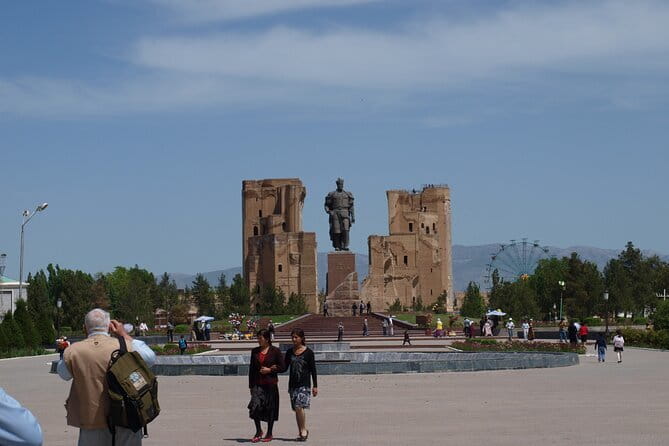
Next comes the Ulugh Beg Observatory, connected to Amir Temur’s grandson, astronomer-king Ulugbek. This stop is a good counterpoint to the more spiritual and royal sites. It shifts the tone from belief and power to measurement and thinking.
The observatory was built in the 15th century, and that timing matters. Samarkand was a hub where learning could be tied to leadership. When you visit, try to imagine the city as a place where rulers invested in knowledge. That context makes the observatory feel like a statement, not just a building.
You’ll have about 30 minutes at this stop. That’s enough time to appreciate the place and capture key photos, as long as you keep moving with your guide and don’t get stuck waiting for the perfect moment.
A small drawback to expect
Admission tickets are not included here, so if you arrive ready to pay at the gate, you’ll avoid any stress. Also, this stop can feel less visually dramatic than Registan, so give yourself permission for it to be a quieter chapter of the day.
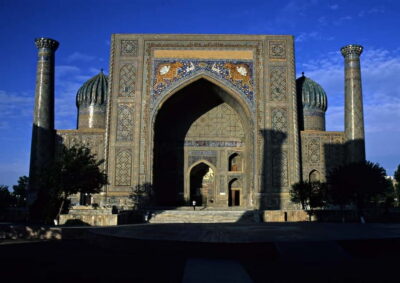
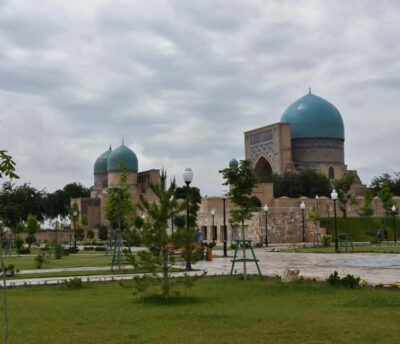
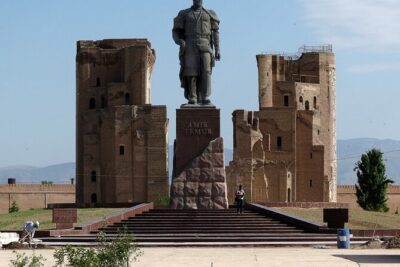
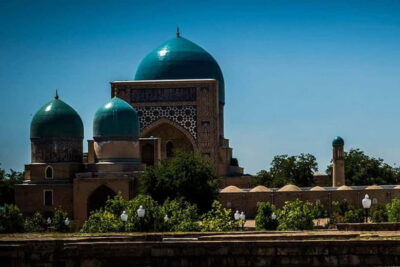
Shah-i-Zinda: a spiritual burial complex you can actually walk through
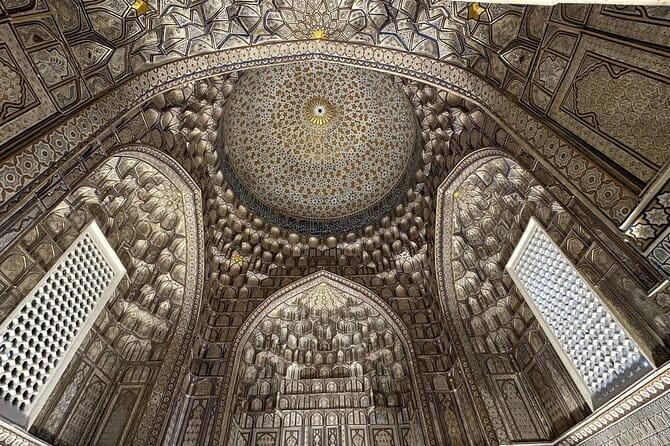
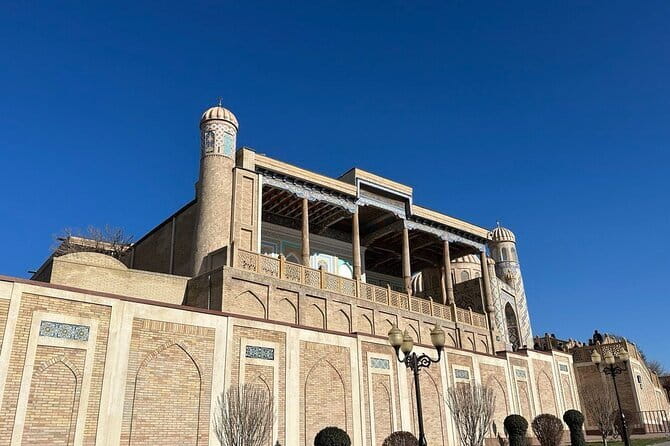
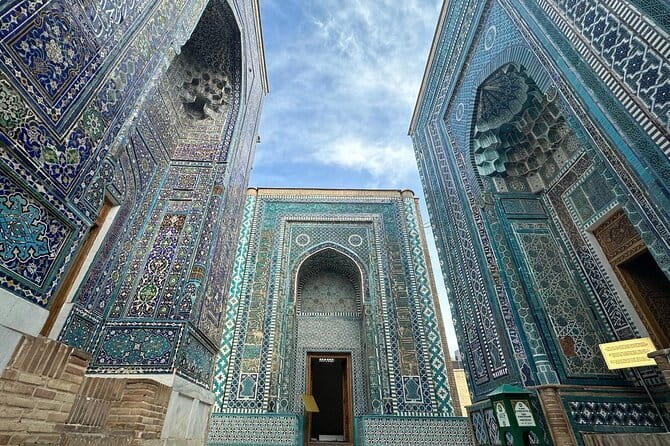
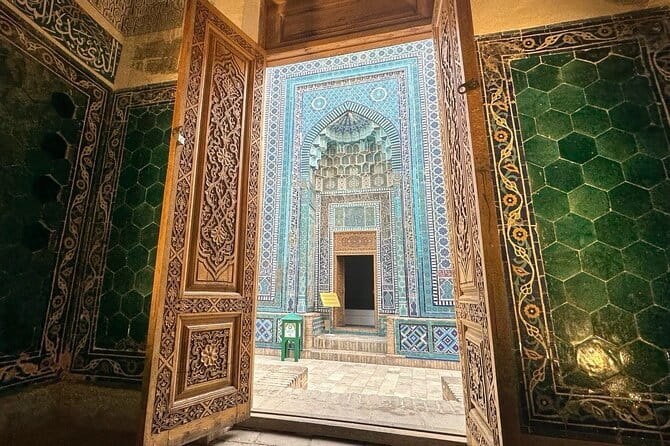
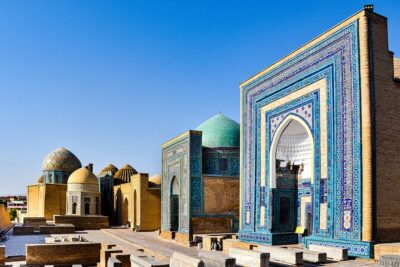
Then the route turns spiritual at Shah-i-Zinda. The name means alive king in Uzbek, and the complex includes burial places of royal persons and nobles. The timeframe spans from the 12th to the 20th centuries, which is why it feels layered as you walk through.
This is one of those places where “time spent” often matters more than “minutes on the clock.” With about 50 minutes here, you should be able to do the slow walk, take in the tile and structure, and absorb the atmosphere. It’s also described as one of the most spiritual places in Uzbekistan, so keep your pace respectful.
Practical tips so it doesn’t feel like a checklist
- Wear comfortable shoes. The focus is on moving through the complex.
- Keep an eye on your guide for the moments that explain the religious meaning of what you’re seeing, not just the architecture.
- Follow the dress code closely. Shoulders and knees should be covered, and women should be ready to cover hair with a headscarf or shawl.
Bibi Khanym Mosque and Saray Mulk Khanum
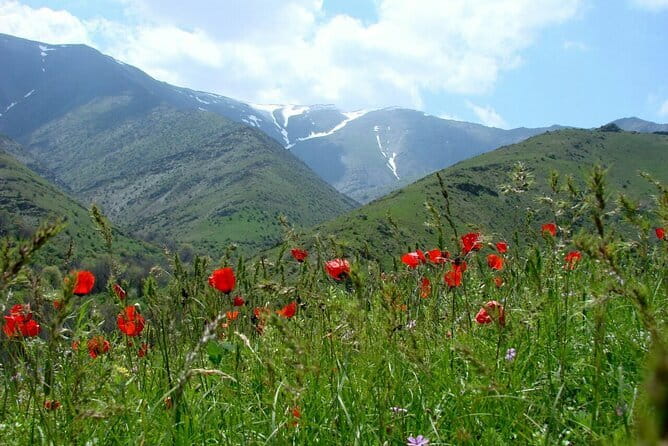
After Shah-i-Zinda, you’ll visit the Bibi Khanym Mosque from the 15th century. This stop has a strong story behind it: the mosque was built in honor of Saray Mulk Khanum, Temur’s chief wife.
That detail changes how the building feels. You’re not only seeing grand religious architecture. You’re seeing how a leading figure in the ruling family used monumental construction to shape public memory. It’s a great moment to connect the earlier Temurid-era themes to something deeply religious.
Time here is around 40 minutes, which is enough for photos and a slow read of the main features your guide points out. Still, don’t plan to sprint. This mosque rewards unhurried walking.
One consideration for comfort
This stop is religious, and the recommended clothing rule applies. Plan what you’ll wear before you go, not after you arrive.
Amir Temur Square and the Gur-Amir mausoleum

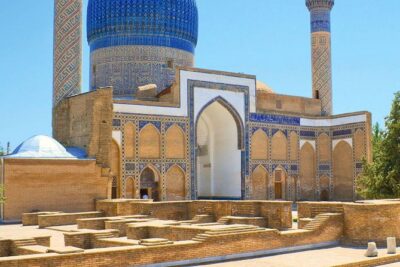
Next you’ll move through Amir Temur Square to the Gur-Amir mausoleum, described as the tomb of the king. The complex is from the 15th century, and it’s the kind of place where the details are the story. The day’s route circles back to key authority markers, so it feels like Samarkand is tightening its focus around you.
You should get about 40 minutes at this stop. Because it’s a tomb complex, keep your behavior quiet and your movements slow.
Even though this is not the first stop at the mausoleum complex area, it still ties the visit together. You started near Gur-i Amir, and now you understand why it matters within the wider Temurid landscape you’re seeing today.
Registan Square: the big payoff, with calligraphy everywhere
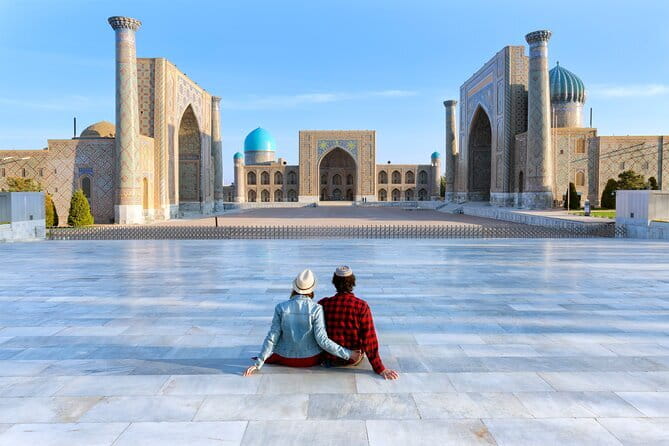
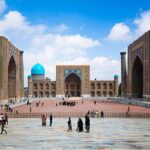
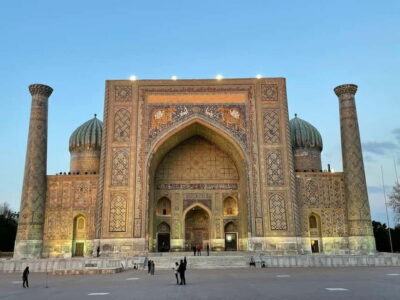
Finally, you reach Registan Square, the architectural centerpiece. Registan means sandy place in Uzbek, but the view you get is anything but sandy. It’s a visual explosion of Islamic designs and calligraphy etched into the facades of the mosques and madrassahs.
The square includes ensembles from the 15th to the 17th centuries. That range matters, because the space feels like it grew over time rather than being a single snapshot. You can often tell where the artistic “voice” changes, even if you can’t name every element.
Time at Registan is about 1 hour, which is just right if you want both photos and a real look. This is the moment to slow down and decide what matters most to you:
- Do you want the widest possible views of the whole square?
- Or do you want to focus on calligraphy details and facade patterns?
Photo strategy that saves time
Registan is visually busy. Start with a few wide shots first, so you lock in the overall impression. Then spend the second half of your hour on closer details. If you’re relying on a phone camera, you’re in the clear for free phone photos, while camera equipment may have that $5 USD charge.
Dress code and photo rules that keep the day smooth
This tour is built around religious sites, so the dress code is not optional fluff. The recommended rule is: cover shoulders and knees. Avoid tight, revealing, or transparent clothing. For women, you should cover your hair with a headscarf or shawl when you enter holy places.
If you show up with the right clothes, your visit goes faster because you spend less time negotiating at the entrance. If you show up without the right clothes, you might end up borrowing or waiting, which steals the best part of your day.
Photography rules are also pretty straightforward. Photo and video charges apply for photography cameras at $5 USD. Phone camera use is free. If you care about budget, this is a simple lever you can pull.
How I’d judge the guide quality on a day like this
The tour format relies on the guide. With multiple monuments packed into 6 to 7 hours, a good guide makes the difference between looking and understanding. The experience highlights an English speaking guide, and the value shows up in the way you connect:
- why mulberry paper matters to a Silk Road city,
- why Ulugbek’s astronomy fits the Temurid era,
- why Shah-i-Zinda is treated as spiritual rather than touristy,
- and why Registan feels like a designed public stage.
The tour also notes you can go at your group’s pace and customize it for a private group. That means if you’re more into crafts and science than architecture, you can steer the time slightly. If your group wants more time on inscriptions at Registan, you can ask for it.
Who this tour is best for (and who should reconsider)
This fits best if you want a guided overview with transport and you like turning big monuments into a coherent story. It’s also ideal if you want to see both craftsmanship and major architecture in one day without building the route yourself.
It’s less ideal if:
- you hate paying separate entrance fees,
- you want a long, slow museum-style visit at just one site,
- or you dislike walking through religious complexes.
Weather matters
The experience says it runs best in good weather. If the day is canceled due to poor weather, you’ll be offered another date or a full refund. If your travel dates are flexible, that’s reassuring.
Should you book this Samarkand city tour?
I’d book it if your goal is a strong first-time Samarkand day with a guide who ties craft, science, religion, and royal architecture into one route. The price is reasonable once you factor in transport and the English speaking guide, and Registan is worth the final payoff.
Skip it or re-plan if your budget is tight and you don’t want to add the $33 per person entrance fee and possible $5 USD camera charge. Also, if your group is extremely sensitive to dress code rules, plan outfits before you go.
If you want an efficient, meaningful Samarkand day, this one delivers.
FAQ
How long is the Samarkand City Tour from Silk Paper Factory to Registan Square?
It lasts about 6 to 7 hours, including driving time between sightseeing stops and lunch time.
What is included in the tour price?
The tour includes an English speaking tour guide for the day trip and an air-conditioned vehicle.
Are lunch and entrance tickets included?
No. Lunch is not included. Entrance tickets to monuments are also not included.
How much are the entrance tickets for monuments?
Entrance tickets are listed as $33.00 per person.
Is pickup offered, and where does the tour start?
Pickup is offered. The meeting point is at Amir Temur Mausoleum Gur-i Amir Complex, Oqsaroy 1, Bustonsaroy kochasi 1/4, Universitetskiy Boulevard, Samarqand, Samarqand viloyati, Uzbekistan. The tour ends back at the meeting point.
Is this a private tour?
Yes. Only your group will participate.
What are the rules for photos and videos?
Photo and video charges are listed as $5 USD for photography cameras. It is free if you use phone cameras.
What dress code should I follow at the landmarks?
It’s recommended to cover shoulders and knees. Women should cover their hair with a headscarf or shawl when entering holy places. Avoid tight, revealing, or transparent clothing.
What is the cancellation policy?
Free cancellation is available. You can cancel up to 24 hours in advance for a full refund.
What happens if the tour is canceled due to weather?
The experience requires good weather. If canceled due to poor weather, you will be offered a different date or a full refund.
The Full Uzbekistan Review Pile

Samarkand, A Few More Ways

More of Uzbekistan we have reviewed
- Penjikent Day Trip From Samarkand★ 5.0 · 3 reviews
- Samarkand: Cooking class with local family★ 5.0 · 3 reviews
- Samarkand: city tour★ 4.7 · 3 reviews
- Bird Watching Tours in Samarkand★ 3.6 · 3 reviews
- Samarkand City Tour from Silk Paper Factory to Registan Square★ 5.0 · 4 reviews
- Shakhrisabz Private Day Tour from Samarkand★ 5.0 · 4 reviews
Samarkand City & Monument Tours, compared.
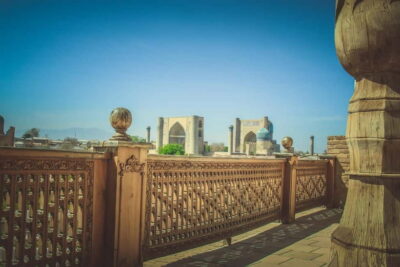 ★ 4.8Samarkand: Historical Monuments Guided Walking TourFrom $20446 reviews
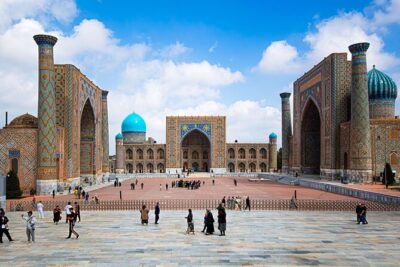 ★ 5.0Private Samarkand City Tour With TransportationFrom $54149 reviews
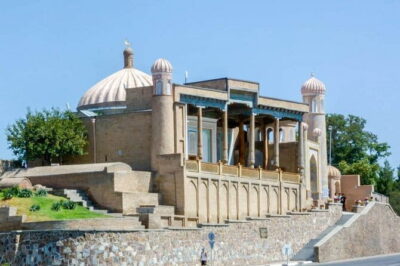 ★ 5.0A City Tour Of Samarkand: The Pearl Of The EastFrom $16133 reviews
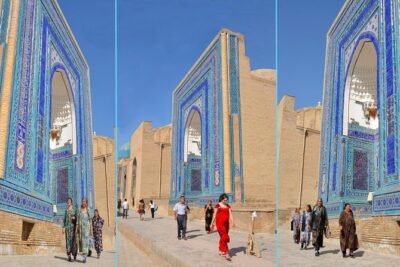 ★ 5.0Guide / excursion service in SamarkandFrom $2557 reviews
 ★ 5.0Samarkand: Historical Monuments Group Walking TourFrom $1229 reviews
 ★ 5.0Private Guided Tour Samarkand city history and cultureFrom $6522 reviews
 ★ 5.0Ancient and Modern Tour in Samarkand with TransportFrom $4015 reviews
 ★ 5.0Samarkand day tripFrom $7113 reviews
Browse the lists this tour appears in