

Review · SILK ROAD
Uzbekistan Silk Road
Timeworn streets, sudden grandeur, and real bazaar life. This Uzbekistan Silk Road route strings together the big-name cities, then fills the gaps with human stories, mosque details, fortress corners, and market rhythms. I like that Silk Road cities are treated as living places, not just photo stops.
I also like the practical setup: you travel with professional licensed local guides for the main days, and you do not spend your time pricing tickets, hunting addresses, or figuring out what comes next. Even better, entrance tickets and site fees are included for the program, which keeps the day-to-day simpler.
The one drawback is that the schedule is busy. You have an internal flight day, a long overland transfer day, and a high-speed train ride back, so this is best for people who enjoy moving and seeing a lot rather than slow afternoons.
In This Review
- Key highlights you will feel on the ground
- Why this Uzbekistan Silk Road loop works so well
- Tashkent day: Chorsu Bazaar and Khasti Imom before you head west
- Khiva’s Ichan Kala: the UNESCO open-air museum you actually walk
- The 450 km road to Bukhara: desert, river, and a better sense of distance
- Bukhara’s religious and civic core: Lyabi-Hauz to the Ark citadel
- Shakhrisabz and Ak-Saray Palace: seeing Tamerlane’s story earlier
- Samarkand’s Registan and Gur-Emir: the stop that feels like a goal
- Shakhi-Zinda, Ulughbek Observatory, and the Afrosiab return train
- Price and logistics: what $1,230.77 buys you, and what you still plan yourself
- Who this tour suits best (and who might feel it is too much)
- Should you book this Uzbekistan Silk Road tour?
- FAQ
- What is included in the tour price?
- Are international flights included?
- Which cities does the itinerary cover?
- How long is the tour?
- Is this a private tour?
- When and where does the tour start?
Key highlights you will feel on the ground
- Tashkent Khasti Imom first stop with the Tillya Sheykh Mosque and a Quran said to be among the oldest preserved versions, connected to Caliph Osman’s legacy
- UNESCO Ichan Kala in Khiva as an open-air museum layout, with Kunya Ark Fortress, Juma Mosque, and the Kalta Minaret
- A real travel day through Amu-Darya and Kyzilkum on the 450 km route to Bukhara, with a lunch box along the way
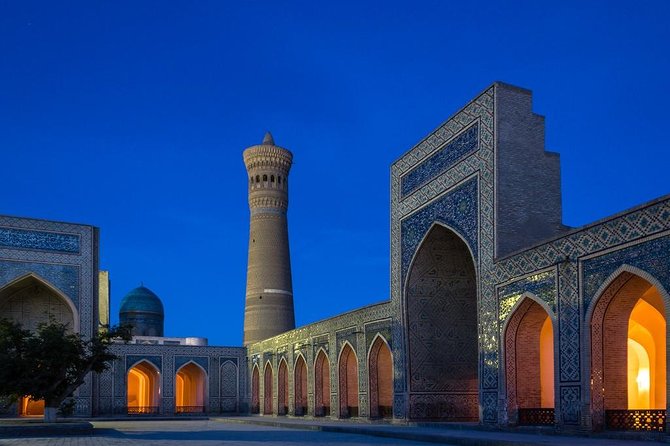
- Bukhara’s Kalyan Minaret (47 m) plus the Kalyan Mosque, linked by a small bridge near one of Central Asia’s best-known monuments
- Samarkand’s Registan and Tamerlane tombs, then Shakhi-Zinda decoration and the Ulughbek Observatory remains
Why this Uzbekistan Silk Road loop works so well
Uzbekistan is not short on monuments, but the trick is how you connect them. This itinerary does that in a very human way. You start in Tashkent with a market-and-mosque introduction, then you move outward into the older, walled cities where architecture does the talking. By the time you reach Samarkand, the names like Registan, Gur-Emir, and Ulughbek stop feeling like trivia and start feeling like a map of ideas.
I also appreciate the balance between “showpiece” sites and places that feel lived-in. Khiva’s Ichan Kala reads like a walkable storybook, while Bukhara’s squares and mosques give you daily-life context. If you want a tour that mixes grand scale with actual street texture, this does that.
One more plus: it is arranged around efficient transport links. You do an internal flight to Urgench for Khiva access, then later you return from Samarkand to Tashkent by the Afrosiab high-speed train. You are not stuck spending every day in transit.
Tashkent day: Chorsu Bazaar and Khasti Imom before you head west
Your tour begins in Tashkent with a smooth first-day rhythm. You meet your guide and driver, you do a breakfast stop, then you start with the Khasti Imom complex. This is a strong entry point because it combines different eras in one place, from early Islamic significance to later mosque and madrassa layers.
The highlight is the Tillya Sheykh Mosque, a 16th-century site that preserves what is considered one of the oldest existing Qurans, marked with the blood of Caliph Osman. You also see the Barak Khan madrassa and the mausoleum Kafal Shashi, tied to a poet and philosopher of Islam connected to the 10th century. If you like your religious history with specific objects and names, this day delivers.
Then the pace shifts to a more everyday Uzbekistan feeling with Chorsu Bazaar. It is one of Tashkent’s major markets, and it helps you get your bearings fast. The day ends with Independence Square, which is a clear tonal contrast from the older religious complex, so you leave Tashkent with both depth and perspective.
Longer Silk Road itineraries we have read
- 2 Days Tour to Bukhara and Samarkand from Tashkent by train
★ 5.0 · 53 reviews - Magic Land Tour to Uzbekistan
★ 5.0 · 49 reviews - Uzbekistan 6 days private tour Tas-Khiva-Buk-Sam-Tas
★ 5.0 · 45 reviews - Uzbekistan Silk Road
★ 5.0 · 39 reviews
Khiva’s Ichan Kala: the UNESCO open-air museum you actually walk
Khiva is where many people get hit with the wow factor, and Ichan Kala is the reason. After breakfast you transfer to the airport and fly internally to Urgench, then it is a short road hop of about 30 km into Khiva. That planning matters because you arrive with time to explore the walled old city properly.
Ichan Kala is treated as an open-air museum and, honestly, that is the right mindset. You spend time in the central citadel area, then you expand into the fortress and mosque network. You will see Kunya Ark Fortress, the multi-columned Juma Mosque, and the Islam Hodja minaret. The list continues with the Bagbanli Mosque, the caravanserai, and the mausoleum of Seyid Allauddin, plus Tash Palace (Khauli), the Alla Kuli Khan madrassa, and the Kalta Minaret.
Two things make this stop especially rewarding. First, many structures are close enough to compare details in the same walking loop, so you start noticing patterns. Second, the tour gives you free time after the core viewing, which is key in a place like this, where it is easy to overplan and miss the simple street scenes.
The 450 km road to Bukhara: desert, river, and a better sense of distance
Day 3 is your longest “moving” day, and it turns the route into something more than a stack of monuments. You depart for Bukhara over about 450 km, traveling through the Amu-Darya river area and the Red desert region called Kyzilkum. This is not a sightseeing cruise, so manage expectations: the goal is to cross the geography that sits between the iconic cities.
You also get a lunch box along the way, which is a small detail but a big convenience. When you are traveling across Central Asia distances, lunch logistics can eat hours. Having that handled keeps you ready for Bukhara without the late-afternoon scramble.
When you arrive, you get hotel accommodation and the next day is devoted to Bukhara’s monuments. That pacing helps. You are not arriving and then immediately expected to sprint through everything. You can rest, reset, and then enjoy Bukhara at the slower, more intricate pace that it deserves.
Bukhara’s religious and civic core: Lyabi-Hauz to the Ark citadel
Bukhara feels like a city that still organizes itself around key spaces. The day centers on its main squares and mosque complex zones, and you spend real time at the Lyabi-Hauz pool area built around 1620. This is one of those places where architecture, water, and social life intersect. You do not just look, you feel how a public space works.
You then move to the madrassas and religious sites that anchor that public zone. On one side sits the Nodir Devan Beghi madrassa built around 1622, originally connected to caravanserai function. Nearby is the Kukeldash madrassa from about 1568 to 1569, described as the oldest and largest complex in the piazza area. It is a good moment to appreciate how Bukhara’s education and commerce were linked.
The Magoki-Attari mosque is another anchor, dating roughly from the 10th to the 12th centuries and then spanning later centuries too. Next comes the summer palace of Mokhi Xosa and the towering Kalyan Minaret, about 47 m tall. Nearby, the Kalyan Mosque connects to the minaret by a small bridge, which is the kind of practical detail that makes the architecture feel engineered rather than ornamental.
You wrap up with the Ark citadel, which adds a defensive and administrative layer to the religious and civic theme. Bukhara days like this make you understand why people describe the city as a whole system, not just a collection of monuments.
Shakhrisabz and Ak-Saray Palace: seeing Tamerlane’s story earlier
After Bukhara, the route pivots to Shakhrisabz, often called the green city, and it is a smart choice. Samarkand gets most of the fame, but Shakhrisabz is where you get an earlier chapter of the same big power story.
You transfer to Shakhrisabz and explore ruins with over two thousand years of history. The guide frames the city’s development across early Middle Ages influences and later growth despite conflicts between Samanid dynasties and Turks. This is useful context because it explains why the ruins look the way they do, rather than feeling like random leftover blocks.
The centerpiece is Ak-Saray Palace, the White Palace, built between 1379 and 1404, tied to Tamerlane’s legacy. You also visit the mausoleum of Doru Tilavat and the Mosque of Kok-Gumbaz. Shakhrisabz is a day where the reward is partly visual and partly historical. You come away with a clearer sense of what Samarkand later amplified.
Samarkand’s Registan and Gur-Emir: the stop that feels like a goal
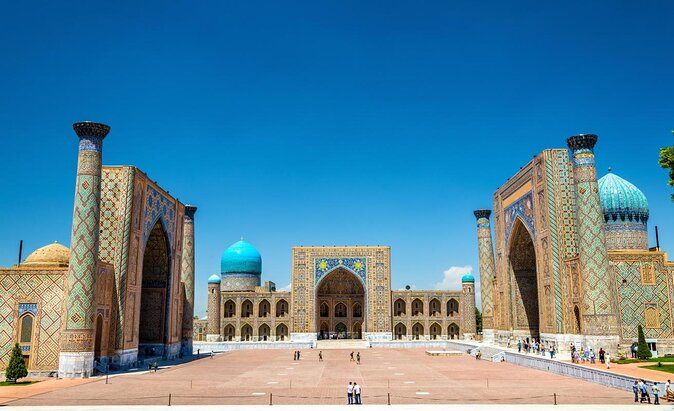
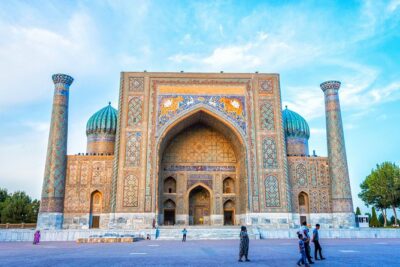
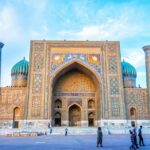
Samarkand days are usually the emotional peak, and this one follows that pattern. You dedicate the day to the city’s Tamerlane-era power center. Registan square is the symbol of Samarkand, and you see it ringed by monumental madrasas, including Ulughbek and Sher Dor.
What makes Registan so satisfying is the geometry. You can keep circling and each angle changes how the buildings frame the open space. It is a place where you stop thinking about “Did we see everything?” and start thinking about how the architecture controls your attention.
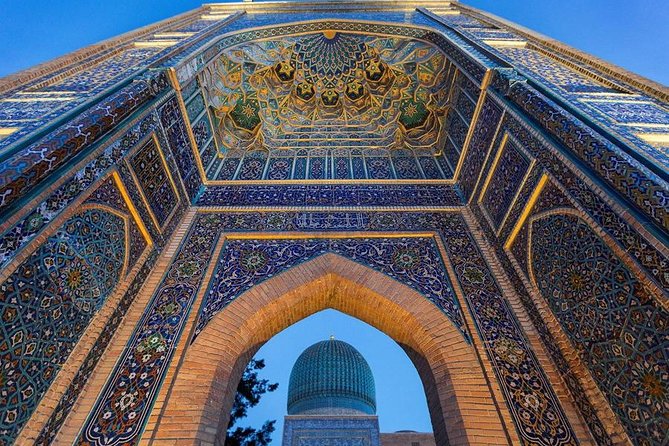
Then you go to the Gur-Emir mausoleum, a 15th-century site meaning tomb of the Emir. It is where Tamerlane and his followers are buried. This is not just a name on a map. The mausoleum anchors the whole empire story you heard in earlier days, so the “why” clicks after the “what.”
If you like a tour day with clear narrative payoff, this is the one.
Shakhi-Zinda, Ulughbek Observatory, and the Afrosiab return train
Day 7 keeps Samarkand from turning into one long museum checklist. You start at the Shakhi-Zinda complex, described as a unique jewel of 14th to 15th-century architecture. It is known for Islamic decoration, and it is a good contrast to the more open feel of Registan.
From there you move north to the remains of the Ulughbek Observatory, noted as one of the great archaeological discoveries of the 20th century. This part matters because it broadens the story beyond rulers and buildings into science and measurement. You also get free time for expenses, which can be practical if you want snacks, water, or souvenirs without rushing.
Then the day changes gears again. At 16:30 you transfer to the station, and at 17:10 you depart for Tashkent on the Afrosiab high-speed train. You arrive at 19:10 and head to your hotel. If you prefer not to waste your last evening re-planning transport, this is a smart finish.
There is even flexibility mentioned for replacing the train if needed, which is reassuring for anyone who worries about disruption.
Price and logistics: what $1,230.77 buys you, and what you still plan yourself
At $1,230.77 per person for about 8 days, you are paying for a structured route with lots included. The good value is in the time you save. This is not just guides and tickets. It also includes accommodation in twin or double shared rooms, all train tickets, private transportation, and site entrance fees across the program. Breakfast is included for 7 days, so mornings are handled.
Also included are the professional licensed local guide services for 7 excursions, which is a key difference between doing this independently and doing it with context. In places like Ichan Kala and Bukhara’s monument cluster, names, dates, and specific details help a lot. Otherwise, you can end up only seeing shapes and colors.
What is not included is also clear. Personal insurance is not included. Any charges in hotels for extra services are your responsibility. Photo and video taking fees are not included for professional camera use. And air tickets are not included. You still need to arrange flights to and from Uzbekistan on your own, plus you should budget for lunches and dinners since the data only guarantees breakfast.
One more small timing point to note: hotel check-in is standard at 14:00, so your day arrival planning is handled by the schedule. Day 8 includes an Old Tashkent stop, but the listed duration notes admission not included for that part.
Who this tour suits best (and who might feel it is too much)
This fits first-timers to Uzbekistan who want the “big five” experience without turning into a part-time trip planner. It is also ideal if you like guided context. Licensed local guides for the main excursions can turn architecture from pretty to meaningful.
It also suits groups who prefer private operation, since this is described as private, with only your group participating. Group discounts are mentioned, so it can be especially good value if you have friends who want to go.
I would not choose this if you want a slow, flexible vacation with lots of free days. The itinerary packs major cities with efficient transport, and you will be walking through major historic zones. You should be comfortable with long days and a steady pace, especially around the Khiva transfer day and the long Bukhara drive.
Should you book this Uzbekistan Silk Road tour?
If your dream version of the Silk Road is Tashkent to Khiva to Bukhara to Shakhrisabz to Samarkand, with UNESCO sights and major Tamerlane-era monuments handled in a clean route, I think this is a smart booking. The value comes from included entrance tickets, private transportation, and the high-speed train return.
Book it if you want structure and you appreciate details, from Qurans connected to early Islamic history to the 47 m Kalyan Minaret and Registan’s madrasas. Skip it only if you are chasing downtime over dates, or if you dislike itineraries with internal travel and long transfer days.
FAQ
What is included in the tour price?
The tour includes private transportation, entrance tickets to sites, museums, mausoleums as per the program, all fees and taxes, accommodation in twin or double shared rooms, all train tickets, and professional licensed local guide services for 7 excursions. Breakfast is included for 7 days.
Are international flights included?
No. Air tickets are not included. The itinerary includes internal travel, including an internal flight to Urgench and a high-speed train, but your flights to and from Uzbekistan are not included.
Which cities does the itinerary cover?
It covers Tashkent, Khiva (Ichan Kala), Bukhara, Shakhrisabz, and Samarkand. The tour also includes an Old Tashkent stop on the final day.
How long is the tour?
It is listed as 8 days, approximately.
Is this a private tour?
Yes. It is described as a private tour or activity, with only your group participating.
When and where does the tour start?
It starts at Tashkent International Airport, on Kumarik ko’chasi 13, at 7:30 am. The activity ends back at the meeting point.
The Full Uzbekistan Review Pile
Whole Country Itineraries

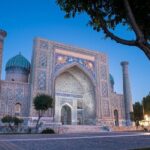
More of Uzbekistan we have reviewed
- Uzbekistan 6 days / 5 nights tour★ 5.0 · 3 reviews
- Tashkent Mountain Tour Amirsoy with Transport★ 3.5 · 3 reviews
- Private Tashkent City Tour★ 5.0 · 3 reviews
- Transfer Tashkent Airport / Railway Station – Hotel★ 3.5 · 3 reviews
- Tashkent: 3-Day Horseback Riding Tour in Chimgan Mountains★ 4.4 · 3 reviews
- Samarkand: Uloq-Kopkari (Buzkashi) Game Day Tour★ 5.0 · 3 reviews
Multi-Day Uzbekistan & Silk Road Tours, compared.
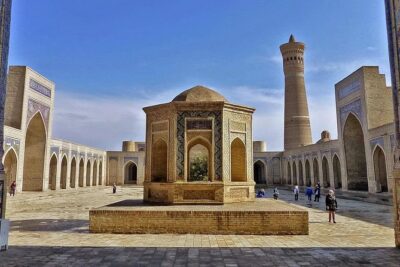 ★ 5.02 Days Tour to Bukhara and Samarkand from Tashkent by trainFrom $49953 reviews
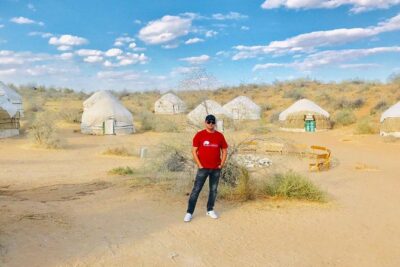 ★ 5.0Magic Land Tour to UzbekistanFrom $1,24749 reviews
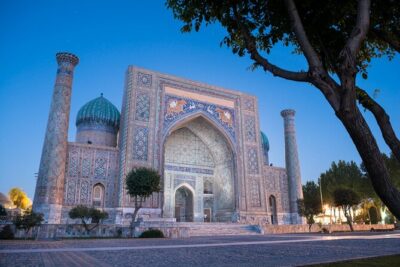 ★ 5.0Uzbekistan 6 days private tour Tas-Khiva-Buk-Sam-TasFrom $85045 reviews
 ★ 4.5Uzbekistan 8 Days Private Tour Tashkent-Urgench-Bukhara-Samarkand-TashkentFrom $97538 reviews
 ★ 4.5Uzbekistan 3 Day Private Tour Tashkent-Bukhara-Samarkand Bullet TrainFrom $50023 reviews
 ★ 5.0Colourful UzbekistanFrom $2,19715 reviews
 ★ 5.0Private Multi-Day Tour to Ancient Cities UzbekistanFrom $1,82215 reviews
 ★ 5.011-Day Tour: Magical Cities of Uzbekistan! Discover The Great Silk Road with us!From $1,60010 reviews
Browse the lists this tour appears in