
Review · SILK ROAD
Uzbekistan 3 Day Private Tour Tashkent-Bukhara-Samarkand Bullet Train
Bullet trains cut distance fast. This 3-day private Silk Road route strings together bullet train tickets included with guided visits to the big-hitters in Tashkent, Bukhara, and Samarkand, so you spend less time figuring out transit and more time looking closely at architecture.
I also like that you get licensed guides in each city, and the English-speaking guides highlighted in past bookings include Malika in Bukhara and Max in Samarkand. One consideration is the pace: the tour starts early (7:30 am at Toshkent Railway Station, Shimoliy) and the sightseeing days include several monument stops, so plan for long stretches on your feet, especially in warmer months.
In This Review
- Key highlights
- Meeting at Toshkent Railway Station (Shimoliy) at 7:30 AM
- The bullet train plan that keeps Tashkent, Bukhara, and Samarkand in sync
- Bukhara after arrival: Poi Kalyan, the Ark, Bolo Hauz, and the trading domes
- Poi Kalyan Mosque and the Kara-Khanid survivor
- Ark of Bukhara, the oldest core
- Bolo Hauz Mosque and the story behind the pool
- Maghak-i ‘Attari Mosque and layered religious pasts
- Trading Domes and Lyab-i Hauz square time
- Day 2 in Bukhara: morning freedom, then a smooth dash to Samarkand
- Samarkand’s Registan to Ulugh Beg Observatory run
- Registan: the city square and three medreses
- Gur Emir Mausoleum: Tamerlane’s legacy
- Shah-i Zinda: 44 tombs and a pilgrimage hillside
- Bibi Khanym Mosque: named after Timur’s wife
- Siab Bazaar and Ulugh Beg Observatory: everyday life plus science
- How the included entrance tickets save you time and cost
- Hotels, breakfasts, and staying comfortable between monuments
- Guides who actually help you read the monuments
- Price and value: what $500 includes, and what you still pay out of pocket
- Who should book this 3-day private Silk Road route
- Should you book it?
- FAQ
- What is the duration of the tour?
- Where does the tour start, and what time does it begin?
- Does the tour include bullet train tickets?
- Are entrance tickets included?
- Is this a private tour?
- What is the hotel arrangement?
- What should I budget for that is not included?
Key highlights
- Bullet train tickets included for the main intercity legs, no separate ticket hunting
- Private format with just your party, plus English-speaking guides noted for clarity and good communication
- Bukhara monument focus with Poi Kalyan, the Ark, Bolo Hauz, and Lyab-i Hauz square time
- Samarkand big squares and tombs like Registan, Gur Emir, and Shah-i Zinda
- Entrance tickets included for the listed sites, with small extras for photo/video (cash at museums)
- Central 3 to 4 star or boutique hotels plus 2 breakfasts, handled for you
Meeting at Toshkent Railway Station (Shimoliy) at 7:30 AM
Your day begins at Toshkent Railway Station (Shimoliy), with a 7:30 am start time. That early timing is the tradeoff for a tight itinerary, and it is worth treating as part of the “value” you are paying for: you are buying time, not just sightseeing.
Pickup is possible if it is easier for you, but the tour also notes that some transfers are not included on the first morning and last evening (from the meeting point to your hotel or onward to the airport). If you want zero stress at the start and finish, check your exact pickup coverage when you confirm.
Practical heads-up: confirmation is usually received within 48 hours of booking, subject to availability, and you get a mobile ticket plus 24 hour customer service. The tour is private, meaning only your group participates.
The bullet train plan that keeps Tashkent, Bukhara, and Samarkand in sync
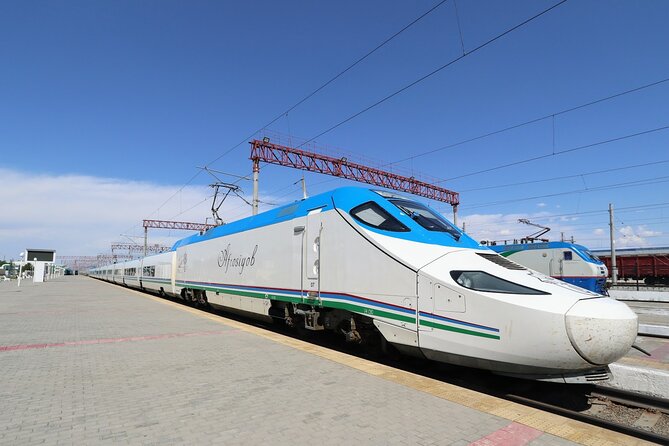
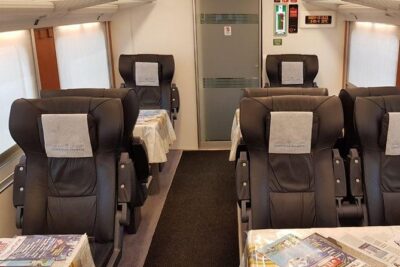
On Day 1, you take a high speed train from Tashkent to Bukhara. The timing shown is about 4 hours, subject to availability, which makes it the simplest way to connect these cities in a short window.
This is where the tour design really helps you. Instead of burning half a day on trains and transfers you did not plan, the schedule treats intercity travel like a fixed “between chapters” move. Then it immediately pivots into sightseeing.
Once you arrive in Bukhara, you get picked up at the Bukhara Railway station, and you are driven to the hotel for check-in. After that, you meet your guide and the monument circuit starts right away.
A lot of the logistics that can go sideways on your own trip are handled for you here: air-conditioned vehicle for local movement, guides in each city, and monument entry tickets.
Longer Silk Road itineraries we have read
- 2 Days Tour to Bukhara and Samarkand from Tashkent by train
★ 5.0 · 53 reviews - Magic Land Tour to Uzbekistan
★ 5.0 · 49 reviews - Uzbekistan 6 days private tour Tas-Khiva-Buk-Sam-Tas
★ 5.0 · 45 reviews - Uzbekistan Silk Road
★ 5.0 · 39 reviews
Bukhara after arrival: Poi Kalyan, the Ark, Bolo Hauz, and the trading domes
Bukhara is the kind of place where details reward you, and this route chooses stops that let you see different layers of the city fast.
Poi Kalyan Mosque and the Kara-Khanid survivor
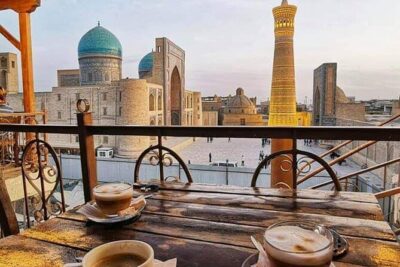
You begin with Poi Kalyan Mosque, focused on the Kalyan Minaret. It is described as the last surviving fragment of a Kara-Khanid era mosque built by Mohammad Arslan Khan in 1127, with the minaret standing at about 45.6 meters. The big takeaway is age and survival: you are looking at a structure that predates the Mongol conquests.
Ark of Bukhara, the oldest core
Next is the Ark of Bukhara, Bukhara’s oldest structure and a “royal town-within-a-town” where rulers lived for over a millennium. The framing here matters. You are not just touring a building, you are walking around the concept of a fortress-city that shaped daily life for generations.
Bolo Hauz Mosque and the story behind the pool
Then you move to Bolo Hauz Mosque, opposite the Ark in a paired layout (kosh). The name means above the pool, linked to an octagonal artificial pond (hauz). Even if you are not a scholar of Islamic architecture, this kind of naming link helps you read the space as intentional design, not random decoration.
Other Uzbekistan trips by rail

Maghak-i ‘Attari Mosque and layered religious pasts
A standout for many visitors is Maghak-i ‘Attari Mosque, described as the oldest mosque in Central Asia, and noted for brickwork architecture. It is also described as having served as a Buddas and Zoroastrian temple before becoming a mosque. That kind of layered use is exactly what makes Central Asia feel different from one-theme tourist stops.
Trading Domes and Lyab-i Hauz square time
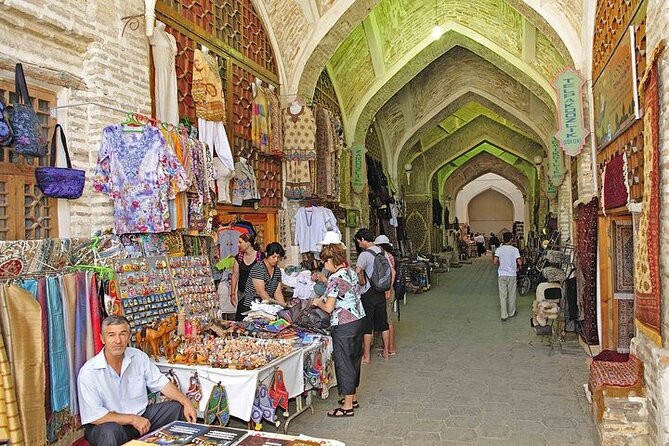
You also get time at the Trading Domes, a colorful bazar area with artisans’ workshops. Then you finish Day 1 around Lyab-i Hauz Ensemble, built in the 16th to 17th centuries and still functioning as a major square and rest area. The “square” stops are helpful because you get a moment to breathe and absorb the city’s rhythm after the denser clusters of tombs and mosques.
Possible drawback to plan for: Day 1 and Day 2 in Bukhara can feel hot and busy in summer. One past booking noted an afternoon walking segment in extreme heat and suggested shifting sightseeing earlier. Even if your exact timing varies, treat warm-weather walking as real, and plan water and shade breaks in your own pace.
Day 2 in Bukhara: morning freedom, then a smooth dash to Samarkand
Day 2 starts with morning free time for leisure, or an optional add-on to the Bukhara countryside. The optional set shown is Emir Summer Palace, Naqshbandi Mausoleum, and Samani Mausoleum, clustered into a roughly 4-hour block.
That free-morning design is a smart inclusion if you want flexibility. You can use it to slow down, shop around, or simply rest before the next city. This is also a practical way to manage jet lag, tired feet, and the reality that monuments can be a lot in a short time.
Later, you transfer toward Kagan (about 10 km) and take the bullet train from Bukhara to Samarkand, subject to availability. After arrival, you transfer to your hotel. The time shown for the arrival transfer phase is about 2 hours.
Samarkand’s Registan to Ulugh Beg Observatory run
Samarkand is where the itinerary becomes a visual highlight reel, but it is more than photo stops. Each place has a different “purpose” in the story: civic square, dynastic tomb, pilgrimage stairs, and scientific legacy.
Registan: the city square and three medreses
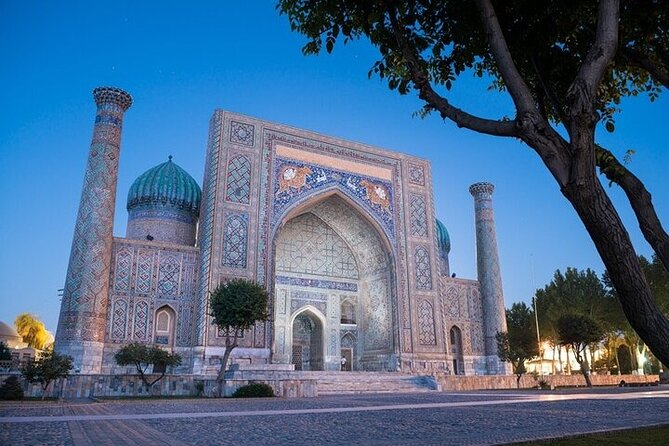
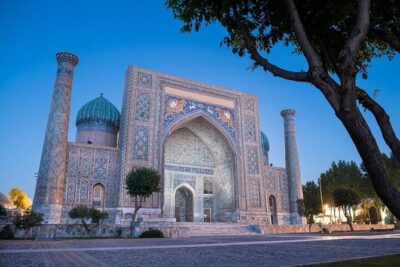
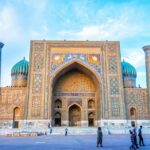
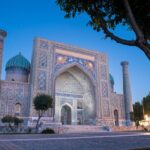
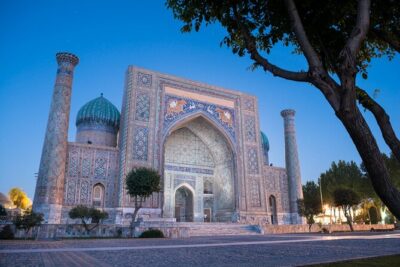
You start at Registan, described as the city square that became important after life moved from Afrosiab. The key detail is the reconstruction history, with the square surrounded by three medreses: Ulugbek, Sherdor, and Tillokori. This stop is a strong anchor because it shows how authority expressed itself through architecture and public space.
Gur Emir Mausoleum: Tamerlane’s legacy
Next is Gur Emir Mausoleum, tied to Tamerlane. The tour notes that there are few who match him in legacy, and that you can visit his tomb in the reconstructed complex from 1404 to 1405. If you want one place that ties political power to art and design, this is it.
Shah-i Zinda: 44 tombs and a pilgrimage hillside
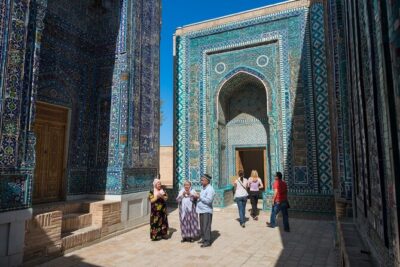
Then comes Shah-i Zinda, described as a complex on the southeastern mound of Afrosiab, built around a set of tombs and mausoleums. The tour description highlights the scale: 44 tombs in more than 20 mausoleums.
Even with a guided route, this area feels different from the “single monument” stops because it is essentially a whole hillside of ritual memory.
Bibi Khanym Mosque: named after Timur’s wife
You visit Bibi Khanym Mosque, built between 1399 and 1404, named after Temur’s wife. The tour description points out that it was erected on Timur’s order after his campaign, which helps you connect it to the era’s ambition and the role of monumental building projects.
Siab Bazaar and Ulugh Beg Observatory: everyday life plus science
After the major religious and dynastic sites, the itinerary adds Siab Bazaar, described as still impressive, with produce and handicrafts reflecting local talent and natural wealth.
Then you finish with Ulugh Beg Observatory. The description notes that only the foundations remain, and that Ulugbek was an astronomer, scientist, and architect. This last stop is a nice balance because the earlier sights lean heavy on religion and empire, while this one points to science and built learning.
How the included entrance tickets save you time and cost
The tour includes entrance tickets to monuments for the listed stops. It also specifically calls out small additional costs for photo and video charges, paid cash at museums, around $1 to 2 per site.
So the “extra budget” is small, but it is real. If you hate surprises, bring a little cash for these charges. Tips for guides and drivers are also not included, so you should plan that expense separately.
Hotels, breakfasts, and staying comfortable between monuments
You are booked for 2 nights in a high rated central 3 to 4 star or boutique hotel, with twin or double room options and breakfast included twice. The tour also provides an air-conditioned vehicle, which matters in summer and during long hot days.
One thing I would double-check before you go: room type. One past booking had stress because a twin request was not reflected correctly at the hotel, causing same-day changes. It is not the most common issue, but if you care about twin beds versus a double setup, confirm clearly during booking.
Also remember: the tour notes that transfers on the first day morning to your hotel from the meeting point, and transfers on the last day evening from the meeting point to your hotel or airport, are not included. You might still get pickup help depending on circumstances, but the listing itself treats those as separate.
Guides who actually help you read the monuments
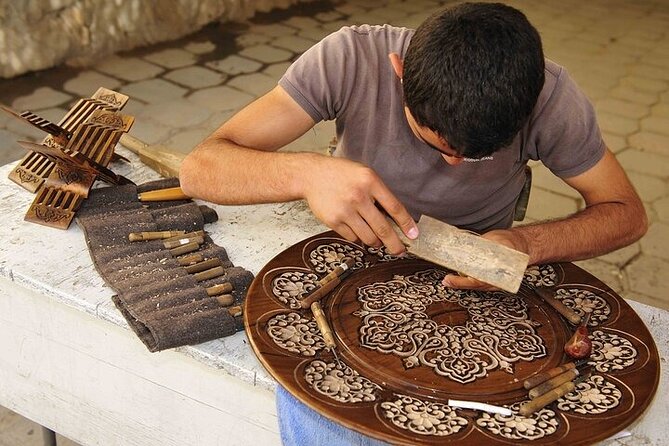
What makes this kind of itinerary work is not just where you go, it is how you understand what you see.
The experiences shared with this tour repeatedly emphasize strong English and smooth communication. Names that show up include Malika in Bukhara and Max in Samarkand, as well as Muhlio in Bukhara. Other highlighted guides in different runs include Amir and Dilshod, plus Beck (both praised for making the stops make sense and keeping the energy up).
There is also a pattern in the coordination support. One past booking credited Umid for fast responses and help with needs during the trip, and another credited Hussaine for rearranging plans when a visa delay forced a schedule change. If you like to travel with fewer worries, that kind of responsive support is a big part of the value here.
Price and value: what $500 includes, and what you still pay out of pocket
At $500 per person, this is not a budget backpacking deal. But it is also not just paying for a driver and a list of monuments. The included package covers a lot of the expensive, time-sensitive parts:
- Bullet train tickets for Tashkent to Bukhara and the round trip between Bukhara and Samarkand, and Samarkand to Tashkent (all subject to availability)
- Licensed guides in each city
- Entrance tickets for the listed sights
- Hotel for 2 nights in a central 3 to 4 star or boutique property
- Breakfast (2)
- Air-conditioned vehicle
- All fees and taxes
- 24 hour customer service
What you should budget separately:
- Photo and video charges at entrances, cash
- Tips for guides and drivers
- Single room supplement of $40 if you need solo accommodation
- Some transfers on the first morning and last evening, depending on how you handle hotel and airport logistics
If you are the kind of traveler who wants to see major Silk Road sites without spending your precious days on planning, ticketing, and meeting points, this price starts to make sense fast. The biggest reason is simple: the itinerary leans on trains and included entries, which are exactly the things that break a short trip when you plan them last minute.
One more practical note: this tour is often booked about 43 days in advance on average. If your dates are firm, it is wise to lock it in early.
Who should book this 3-day private Silk Road route
This tour fits best if you want:
- A focused Tashkent, Bukhara, Samarkand route with major monuments covered in limited time
- Private touring for your group, not a long bus with strangers
- Trains handled for you, so you spend less energy on intercity logistics
- A guide-led pace that helps you interpret places like Registan, Gur Emir, and Shah-i Zinda, not just walk through them
It may not be ideal if:
- You hate early starts, because the first morning begins at 7:30 am
- You prefer a slower rhythm, with more countryside time, or fewer sites packed into each day
- You want a luxury hotel experience, since the hotels are described as 3 to 4 star or boutique, and one booking noted the property was decent but not luxurious
Should you book it?
I would book this tour if your top goal is to see the headline Silk Road architecture with bullet trains included, trained local guides, and entrance fees handled, all in three days. It is also a smart fit for first-timers who do not want to get lost in the details of making transport and tickets line up.
I would hesitate if you need lots of flexibility during the day, dislike long monument circuits in hot weather, or you know you will be upset by minor booking mismatches like room type. If you do book, confirm room setup in advance and plan your cash for photo/video charges and your tipping budget.
FAQ
What is the duration of the tour?
The tour is listed as approximately 3 days.
Where does the tour start, and what time does it begin?
It starts at Toshkent Railway Station (Shimoliy) in Tashkent, with a start time of 7:30 am. It ends back at the meeting point.
Does the tour include bullet train tickets?
Yes. Bullet train tickets are included for Tashkent to Bukhara, Bukhara to Samarkand, and Samarkand to Tashkent, subject to availability.
Are entrance tickets included?
Yes. Entrance tickets to the monuments listed in the tour are included, with photo and video charges at museum entrances paid cash (about $1 to $2 per site).
Is this a private tour?
Yes. It is described as a private tour/activity, and only your group will participate.
What is the hotel arrangement?
You get 2 nights in a central high rated 3 to 4 star or boutique hotel, with a twin or double room option. Breakfast is included twice.
What should I budget for that is not included?
Tips for guides and drivers are not included. Photo and video charges are paid cash at museums, and single room supplement is listed at $40. Also, transfers on the first day morning to the meeting point and the last day evening from the meeting point to your hotel or airport are not included.
The Full Uzbekistan Review Pile
By Rail Across Uzbekistan


Whole Country Itineraries


More of Uzbekistan we have reviewed
- Uzbekistan 6 days / 5 nights tour★ 5.0 · 3 reviews
- Tashkent Mountain Tour Amirsoy with Transport★ 3.5 · 3 reviews
- Private Tashkent City Tour★ 5.0 · 3 reviews
- Transfer Tashkent Airport / Railway Station – Hotel★ 3.5 · 3 reviews
- Tashkent: 3-Day Horseback Riding Tour in Chimgan Mountains★ 4.4 · 3 reviews
- Samarkand: Uloq-Kopkari (Buzkashi) Game Day Tour★ 5.0 · 3 reviews
Multi-Day Uzbekistan & Silk Road Tours, compared.
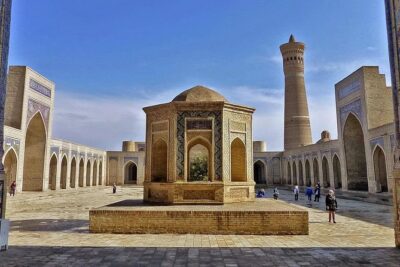 ★ 5.02 Days Tour to Bukhara and Samarkand from Tashkent by trainFrom $49953 reviews
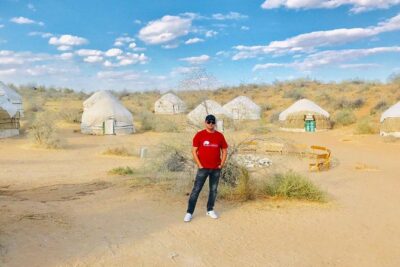 ★ 5.0Magic Land Tour to UzbekistanFrom $1,24749 reviews
 ★ 5.0Uzbekistan 6 days private tour Tas-Khiva-Buk-Sam-TasFrom $85045 reviews
 ★ 5.0Uzbekistan Silk RoadFrom $1,23039 reviews
 ★ 4.5Uzbekistan 8 Days Private Tour Tashkent-Urgench-Bukhara-Samarkand-TashkentFrom $97538 reviews
 ★ 5.0Private Multi-Day Tour to Ancient Cities UzbekistanFrom $1,82215 reviews
 ★ 5.0Colourful UzbekistanFrom $2,19715 reviews
 ★ 5.011-Day Tour: Magical Cities of Uzbekistan! Discover The Great Silk Road with us!From $1,60010 reviews
Browse the lists this tour appears in