
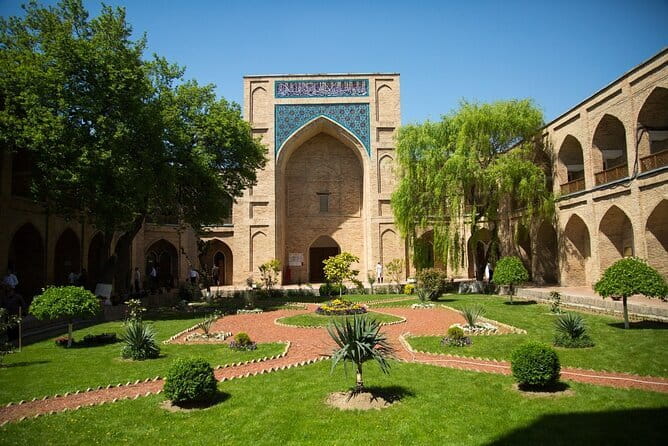
Review · SILK ROAD
Colourful Uzbekistan
Turquoise tiles and dessert drives. That mix is what makes this trip fun. You get the UNESCO old towns and a hands-on Plov cooking dinner with a local family, not just quick photo stops. My only caution is that long road days and hotel quality can vary, so go in with flexible expectations.
What makes this route work is the pacing: big-name sights in Khiva, Bukhara, and Samarkand, then the smaller cultural moments that actually explain how people live. You travel with a local English-speaking guide, in air-conditioned vehicles, and you’re in a small group capped at 15.
One possible drawback is comfort. There can be long transfers, and I’d plan for bumpy road segments based on what I’ve seen mentioned by past participants. Also, while the included hotels are described as middle class, one traveler flagged that the Tashkent hotel experience was less satisfying than the others.
In This Review
- Key highlights to expect
- Why this Uzbekistan loop is such a good value
- Tashkent start: airport meet-up and your first hotel night
- Khiva: Itchan Kala in daylight and Khast Imam’s religious treasures
- The Chorsu Bazaar and modern breaks in Khiva’s flow
- Bumpy road reality: the Urgench to Bukhara connection
- Bukhara: Sitorai Mohi Khosa and the “museum city” feel
- Bukhara’s key monuments: Kalon minaret, Samanid mausoleum, and Ark-Registan area
- A clever cultural detour in Bukhara: Shavkat Boltaev’s photo exhibition
- Shahrisabz: Timur’s White Castle ruins and the Silk Road valley
- Samarkand’s big three: Gur Emir, Registan, and Bibi Khanum
- Wine tasting and Uzbek dinners: Khovrenko winery in Samarkand
- Afrosiyob Museum, Ulugbek’s observatory, and manual paper making
- Shakhi-Zinda and the Plov cooking day with a local family
- Ending with a fast train back to Tashkent
- Price and logistics: what you pay for, and what you should watch
- Should you book Colourful Uzbekistan?
- FAQ
- How long is the Colourful Uzbekistan tour?
- What is the price per person?
- Which UNESCO World Heritage sites are included?
- Are flights and trains included in the trip?
- What meals are included?
- What cultural activities are included besides sightseeing?
- Are there optional performances during the trip?
- How many people are in the group?
- What is the cancellation policy?
Key highlights to expect
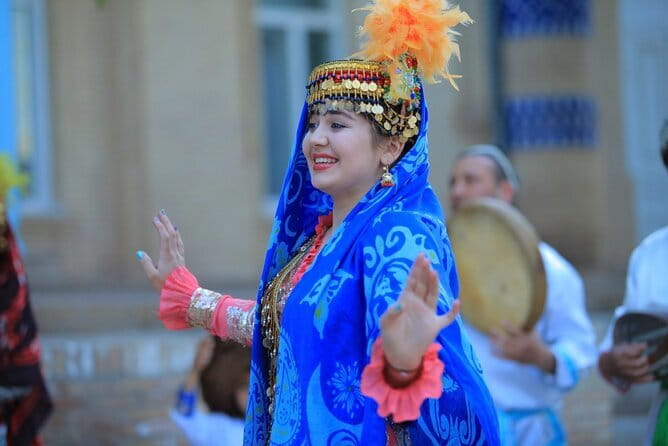
- UNESCO World Heritage stops across Khiva, Bukhara, and Samarkand, plus the Registan centerpiece
- Plov cooking with a local family in Samarkand, followed by a real sit-down dinner
- Wine tasting at Khovrenko winery in Samarkand, paired with samples of wines and cognacs
- Itchan Kala and Khiva monuments that feel like a living open-air museum
- Handmade paper visit in Samarkand at a factory run by the Mukhtarov brothers
- Small group size (max 15) and a local English-speaking guide
Why this Uzbekistan loop is such a good value
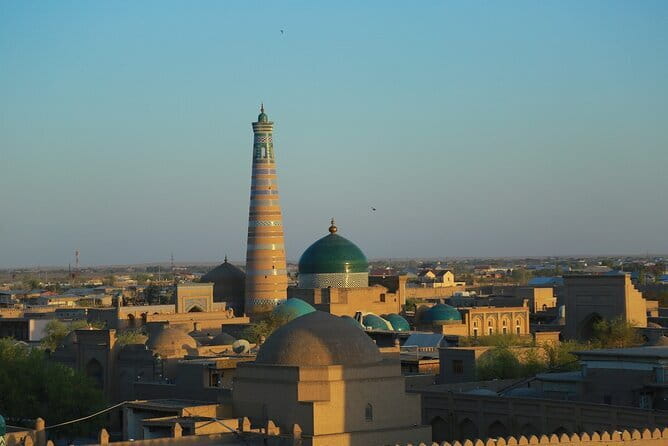
At $2,197 per person for about 9 days, this isn’t a budget DIY trip. But it can still feel fair value because the package is doing real work for you: domestic flight coverage, multiple entrance tickets, hotels, and several structured cultural activities.
You’re also getting transportation that would be time-consuming to line up yourself. There’s a domestic economy flight from Tashkent to Khiva, plus a fast train segment back toward Tashkent (Afrosiyob). Add in air-conditioned vehicle transfers between cities, and the trip stops being a logistics project.
The other value piece is how much of your time is spent on meaning, not just monuments. Yes, you’ll see the big Islamic architecture icons. But you’ll also cook Plov with locals, taste wine at a winery, and watch traditional paper production.
Tashkent start: airport meet-up and your first hotel night
Day 1 begins with a straightforward arrival. Your guide meets you at the international airport in Tashkent and escorts you to a hotel. You’ll have one overnight in Tashkent to settle in before the longer legs of the itinerary kick off.
This is a smart start for a first-time visitor because it reduces the stress of figuring out transport on arrival day. It also gives you a buffer for jet lag. If you’re prone to overplanning, the quiet value of this day is that it’s just getting you set up.
One note based on a past participant’s feedback: while hotels are described as middle class, the Tashkent hotel experience wasn’t loved by everyone. If you’re picky about lodging, it’s worth asking what hotel you’re assigned before you finalize anything.
Longer Silk Road itineraries we have read
- 2 Days Tour to Bukhara and Samarkand from Tashkent by train
★ 5.0 · 53 reviews - Magic Land Tour to Uzbekistan
★ 5.0 · 49 reviews - Uzbekistan 6 days private tour Tas-Khiva-Buk-Sam-Tas
★ 5.0 · 45 reviews - Uzbekistan Silk Road
★ 5.0 · 39 reviews
Khiva: Itchan Kala in daylight and Khast Imam’s religious treasures
Khiva is the star for many people, and this plan supports that. You start in the old-town area with Itchan Kala, the “open-air museum” feel comes from two things: the street layout and the continuing presence of old-world daily life.
You’ll walk through the historic center and see the kinds of details that are hard to catch from a bus window: turquoise tilework, carved decorations, and building scale that makes the city feel taller than it looks on maps. Expect donkey-cart streets and older mud-road textures to set the tone early.
Your Khiva sightseeing includes major landmarks such as Kuhna Ark, once the residence of the Khans, and the Juma Mosque, known for its artistic wooden columns, along with mausoleums and minarets. There’s also the Pakhlavan Makhmud Mausoleum, a pilgrimage site for locals, which gives the place an everyday importance beyond tourism.
Before you fully settle into Itchan Kala, Day 2 includes a stop at the Khast Imam historical complex in Khiva area: the Tilla-Sheikh Mosque, Barakkhan Madrasa, Kaffal Shashi Mausoleum, and the library that keeps the oldest Koran in the world. That’s the kind of stop that deepens the architecture tour, because it grounds the design in sacred objects and learning.
The Chorsu Bazaar and modern breaks in Khiva’s flow
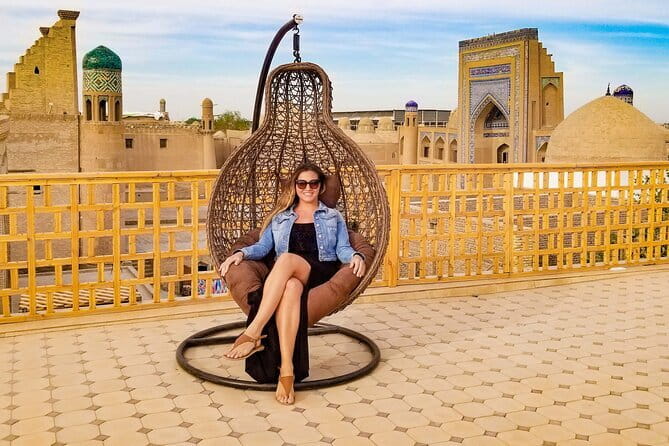
Khiva isn’t only old walls. You also get the Chorsu Bazaar experience, tied to the Great Silk Road crossroads idea. It’s a good place to pick up small items, test your bargaining comfort, and simply watch how commerce works in a city that still functions daily.
Later, there’s a lighter contrast: you walk through the modern town and visit Independence Square and Amir Timur Park. These breaks matter because they keep the day from turning into one long visual overload. You’ll be tired enough from walking, so it helps that there are open squares and park space between monuments.
If you’re the type who likes photos, this is also where you’ll get shots that show the city as a living place, not just a museum setting.
Bumpy road reality: the Urgench to Bukhara connection
From Khiva you fly to Urgench, then transfer about 35 km to Khiva for your hotel. That’s fine in theory, but it does remind you that you’re working across desert regions and distance between cities.
The itinerary then moves you onward toward Bukhara along the Silk Road route. One past participant described the highway stretch from Khiva to Bukhara as a nightmare and mentioned physical after-effects. I’m not going to scare you, but I will advise you to plan for a rougher ride than you might expect from a polished European-style coach tour.
Practical move: bring a cushion if you’re sensitive to long sitting, hydrate well, and don’t schedule anything demanding right after the long transfer day. If you know you have back or mobility issues, this is the leg where you should be most cautious.
Bukhara: Sitorai Mohi Khosa and the “museum city” feel
Bukhara is where the trip becomes slow and dreamy in a good way. You arrive from the Silk Road route and travel through desert and oasis country, with planned photo stops in picturesque locations. The guide talks about the country’s culture and traditions, including the idea of many ethnic groups across Uzbekistan.
You’ll also see Sitorai Mohi Khosa, the summer residence of the last ruling emir. This stop works because it connects architecture with power and lifestyle. You’re not only looking at religious structures, you’re also seeing how elites built comfort into their surroundings.
Then comes the real Bukhara magic, the kind people call a “museum city.” You spend time walking the old town: Lyabi Hauz complex, domed bazaars, and madrasas including those from Ulugbek and Abdul-Aziz Khan. On a good day, this feels like wandering inside a well-designed maze where every corner has a tile pattern worth slowing down for.
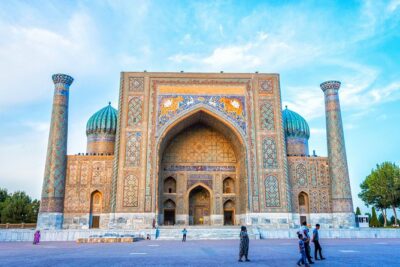
Bukhara’s key monuments: Kalon minaret, Samanid mausoleum, and Ark-Registan area
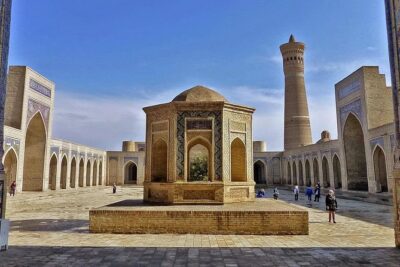
In addition to general walking, you get a focused highlight set. The small Samanid mausoleum and the Kalon minaret are absolute anchor points for Bukhara. Even if you’re tired from travel, these are the sights that make you stop without needing to be told.
You also get Ark and the Registan area as part of your sightseeing walk. The Ark gives you a sense of governance and city structure, while the Registan is the emotional “center” where architecture and public life overlap.
Shopping and browsing are built into the free-style time too. If you want to buy a small textile, ceramics, or something handmade, you’ll have chances to do it without losing the whole day to markets.
A clever cultural detour in Bukhara: Shavkat Boltaev’s photo exhibition
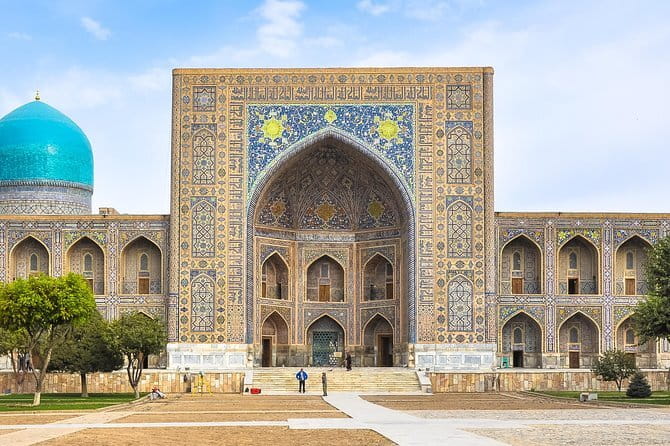
One of my favorite elements here is the inclusion of a photo exhibition. You’ll visit the studio/exhibition space of Uzbek photographer Shavkat Boltaev, housed in an old caravanserai. If the artist is around, you might even hear stories tied to specific images, which turns a passive stop into a conversation.
This is one of those additions that makes the itinerary feel more human. You’re seeing Bukhara not only through architecture, but through the way a local photographer frames place and memory.
You’ll end the Bukhara day with dinner in a local restaurant, giving you a traditional break after walking and sightseeing.
Shahrisabz: Timur’s White Castle ruins and the Silk Road valley
The trip pulls you into Shahrisabz, described as the green city, and tied to the Great Silk Road route through the Amudarya valley. You’ll hear about agriculture here, including cotton and fruit growing in oasis conditions, which helps you understand why cities like these could thrive.
You’ll visit Chor Minor, a symbol of Shahrisabz, and its four minarets design. Then you’ll see Ak Saray, the palace built by Timur (Tamerlane), sometimes translated as White Castle. Even with ruins remaining, the scale is the point, you’re meant to feel that this was built to impress.
This day is valuable because it balances your itinerary. After days of city centers and major Islamic monuments, Shahrisabz gives you a different kind of perspective: power, landscape, and the imprint of a historical ruler on a place.
Samarkand’s big three: Gur Emir, Registan, and Bibi Khanum
Samarkand is the part of the itinerary that most people picture when they think of Uzbekistan. You start with the Gur Emir mausoleum in Amir Timur’s mausoleum complex. It’s a strong anchor site, and it sets the tone for the architectural spectacle ahead.
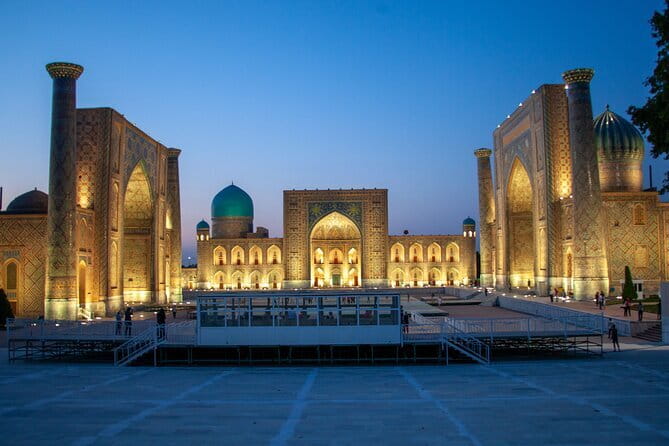
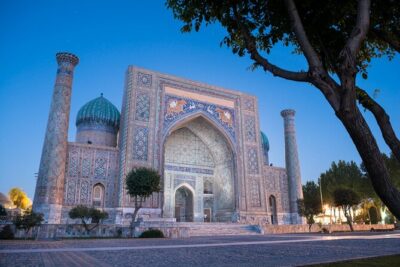
Then you hit Registan Square, the flagship. Three large madrasahs form the centerpiece, and the tilework and scale are the reason this square is famous. If you only had time to see one plaza in Samarkand, this would be it.
Next comes Bibi Khanum Mosque, once described as the once-largest mosque in Central Asia. It’s another architecture moment that reminds you this region’s artistic and technical skill was not a small thing.
Finally, you’ll walk through Siab Bazaar, which adds texture through noise, scents, and everyday trade. It’s a good way to keep the monumental sightseeing from feeling too staged.
Wine tasting and Uzbek dinners: Khovrenko winery in Samarkand
Yes, you get wine here. The itinerary includes a stop at the Khovrenko winery and wine museum, where you sample 10 varieties of Uzbek wines and cognacs. It’s not a nightclub style tasting. It’s structured enough that you can understand what you’re drinking and why it exists in this context.
This is a useful cultural counterpoint because it shows that the modern world exists alongside the Islamic architecture legacy. If you like tasting experiences, this day is one of the most memorable “do something” stops, not just look at something.
In the evening, you get typical Uzbek dishes in a typical Uzbek atmosphere, so your tasting doesn’t turn into one-off tourism. You can pair what you drank with what you ate, at least in spirit.
Afrosiyob Museum, Ulugbek’s observatory, and manual paper making
Day 8 is packed in a way that works, if you accept that your feet will get a workout. You start with Afrosiyob Museum to get a closer look at older Samarkand. Then you visit the tomb complex of St. Daniel and the Ulugbek observatory, described as once the largest research center in Central Asia.
This is the part of the trip that shifts from architecture-as-style to architecture-as-knowledge. It helps you see how cities were built around learning and astronomy, not only around religion and trade.
Then comes the standout practical craft: a tissue paper factory founded by the Mukhtarov brothers. The production is manual, and you can watch the process. Even if you don’t buy anything, you’ll leave with a new appreciation for how craft survives through careful repetition.
Shakhi-Zinda and the Plov cooking day with a local family
You’ll visit Shakhi-Zinda, a pilgrimage site with mausoleums clad in Timurid-style majolica and mosaic tiles. This is one of the places where the design can look almost unreal, yet you’re seeing it by walking through the complex.
Then comes the experience that people remember most for a reason: you prepare Plov with a local family. This is hands-on cooking, not a demonstration. You learn the rhythms of the meal, and you get to eat it as part of a typical dinner with locals.
For practical value, this is also where your guide’s explanations matter most. When you cook something, you ask better questions. You notice ingredients and timing. You understand why the dish is iconic beyond taste.
The itinerary also includes a farewell dinner element in Samarkand, so you have at least one real meal night that feels planned, not just “find food nearby.”
Ending with a fast train back to Tashkent
At 6:00 p.m., you take the Afrosiyob fast train to Tashkent. Then you transfer to your hotel and overnight in Tashkent, which gives you a clean landing before departure.
Day 9 is a simple wrap-up: check out, transfer to the airport, trip ends at the meeting point. For many people, that final day is where you’re most glad the itinerary is organized. It stops you from having to manage last-minute transport when you’re already tired.
Price and logistics: what you pay for, and what you should watch
The headline price is $2,197 per person for about 9 days. Here’s what you’re paying for that tends to justify the cost:
- Hotels: 8 nights in middle-class double rooms
- Transport: air-conditioned vehicles plus a domestic economy flight from Tashkent to Khiva
- Sightseeing: entrance fees included according to the itinerary
- Specific activities: paper factory, Plov cooking with a local family, wine tasting at Khovrenko, and multiple guided city days
- Guidance: a local English-speaking guide for the sightseeing program
- Train leg: the Afrosiyob fast train segment back toward Tashkent is scheduled within the route
What you should watch for is uneven comfort. I’d take seriously the warning about road travel between some cities, and I’d also ask about your Tashkent hotel assignment. Based on the feedback I’ve seen attached to this kind of package, the biggest frustrations usually come from comfort variables, not from the sights themselves.
Also remember: a few optional add-ons are not included, like the Khiva summer palace folklore show and the Samarkand El Merosi theatrical performance.
Should you book Colourful Uzbekistan?
If you want a structured first trip that covers the big UNESCO sites and includes hands-on culture (Plov cooking, paper making) plus at least one fun adult activity (wine tasting), this is a strong choice.
I’d especially consider it if you like tours where the guide matters. With a local English-speaking guide and a small group limit of 15, you’re less likely to feel lost or rushed.
Skip or adjust your expectations if comfort on long road days is a major concern, or if you’re picky about where you sleep in Tashkent. The core sights are the draw, so if you’re flexible on logistics details, the trip can feel worth every dollar.
FAQ
How long is the Colourful Uzbekistan tour?
It runs for 9 days approximately, starting in Tashkent and ending back in Tashkent.
What is the price per person?
The price is listed as $2,197.00 per person.
Which UNESCO World Heritage sites are included?
The tour includes UNESCO World Heritage site sightseeing in Bukhara, Samarkand, and Khiva.
Are flights and trains included in the trip?
Yes. There is a domestic flight from Tashkent to Khiva included. The itinerary also includes an Afrosiyob fast train from Samarkand to Tashkent at 6:00 p.m. on Day 8.
What meals are included?
Breakfast is included for 8 days, and dinner is included for 8 days, including a farewell dinner in Samarkand.
What cultural activities are included besides sightseeing?
You’ll join a cooking session where you prepare Plov with a local family. You’ll also do a wine tasting at the Khovrenko winery in Samarkand and visit a paper factory in Samarkand.
Are there optional performances during the trip?
Yes. There is an optional folklore show in Khiva for about $25 per person and an optional theatrical performance in Samarkand for 30 USD per person.
How many people are in the group?
The maximum group size is 15 travelers.
What is the cancellation policy?
Free cancellation is available. You can cancel up to 24 hours in advance for a full refund, but cancellations made less than 24 hours before the start time are not refunded.
The Full Uzbekistan Review Pile
Whole Country Itineraries


More of Uzbekistan we have reviewed
- Uzbekistan 6 days / 5 nights tour★ 5.0 · 3 reviews
- Tashkent Mountain Tour Amirsoy with Transport★ 3.5 · 3 reviews
- Private Tashkent City Tour★ 5.0 · 3 reviews
- Transfer Tashkent Airport / Railway Station – Hotel★ 3.5 · 3 reviews
- Tashkent: 3-Day Horseback Riding Tour in Chimgan Mountains★ 4.4 · 3 reviews
- Samarkand: Uloq-Kopkari (Buzkashi) Game Day Tour★ 5.0 · 3 reviews
Multi-Day Uzbekistan & Silk Road Tours, compared.
 ★ 5.02 Days Tour to Bukhara and Samarkand from Tashkent by trainFrom $49953 reviews
 ★ 5.0Magic Land Tour to UzbekistanFrom $1,24749 reviews
 ★ 5.0Uzbekistan 6 days private tour Tas-Khiva-Buk-Sam-TasFrom $85045 reviews
 ★ 5.0Uzbekistan Silk RoadFrom $1,23039 reviews
 ★ 4.5Uzbekistan 8 Days Private Tour Tashkent-Urgench-Bukhara-Samarkand-TashkentFrom $97538 reviews
 ★ 4.5Uzbekistan 3 Day Private Tour Tashkent-Bukhara-Samarkand Bullet TrainFrom $50023 reviews
 ★ 5.0Private Multi-Day Tour to Ancient Cities UzbekistanFrom $1,82215 reviews
 ★ 5.011-Day Tour: Magical Cities of Uzbekistan! Discover The Great Silk Road with us!From $1,60010 reviews
Browse the lists this tour appears in