
Review · SILK ROAD
Discover Uzbekistan – explore top destinations: Samarkand, Bukhara & Tashkent
Three cities, three days, one packed story. I love how this route ties together major Tashkent and Samarkand sights under one clear plan, and I also like that the hard parts are handled for you with high-speed train tickets, meals, and entrance fees included.
With a maximum group size of 8 and daily guidance, you get that calm, step-by-step feeling when navigating busy historic centers. Names like Sevinc in Samarkand and Outilla are the kind of guides who can make the details land fast, even when the day moves quickly.
The main drawback is the pace: this is a high-stop-count schedule, so you should expect a packed schedule with lots of time outdoors and brief photo windows.
In This Review
- Key highlights worth circling
- A 3-Day Route Through Tashkent, Bukhara, and Samarkand
- Day 1 in Tashkent: Amir Temur Museum to Courage Earthquake Memorial
- Day 2 in Bukhara: Lyabi-Hauz Courtyards, Po-i-Kalyan, and the Ark
- Day 3 in Samarkand: Registan Square, Shah-i-Zinda, and Siyob Bozori
- Getting Around: Pickup, Air-Conditioned Comfort, and the High-Speed Train
- Price Worthiness: What $999 Covers and What It Doesn’t
- How the Small Group Works (and Why It Matters for Photos)
- Pacing and Practical Tips for Moderate-Fitness Sightseeing
- Should You Book This Tashkent, Bukhara, and Samarkand Tour?
Key highlights worth circling
- A tight 3-city route that covers Tashkent, Bukhara, and Samarkand in about 3 days
- High-speed train in economy class (Tashkent to Bukhara to Samarkand and back)
- Entrance tickets plus 3 breakfasts and 3 lunches built into the price
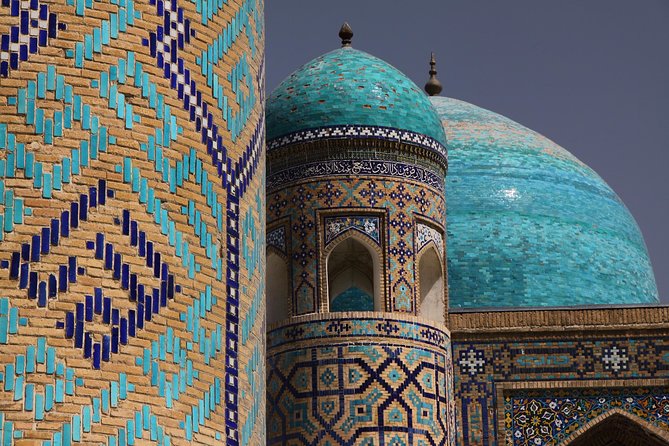
- Iconic Timurid-era stops at Registan and Gur-i Amir, plus the older mosque complexes around town
- Bukhara’s architectural “greatest hits” from Lyabi-Khauz to Po-i-Kalyan, the Ark, and Ismail Samani Mausoleum
- Small group size (up to 8), which usually means more attention and fewer coordination headaches
A 3-Day Route Through Tashkent, Bukhara, and Samarkand
If you only have a short window in Uzbekistan, this tour is designed for speed without going completely barebones. You’re not just ticking monuments. You’re moving through the main historic centers with enough time at each stop to understand what you’re looking at, and then move on before you start feeling bogged down.
The big value is the structure. With an air-conditioned vehicle, pickup offered, entrance tickets included, and meals scheduled (3 breakfasts and 3 lunches), you’re not constantly deciding where to go next or paying separately for key admissions. And because the train segments are included, you can stay focused on the sightseeing days instead of planning transport day-by-day.
One more practical point: this is a moderate-fitness experience. That doesn’t mean you need to be an athlete, but it does mean you should be comfortable walking and standing for multiple short visits across the day.
Day 1 in Tashkent: Amir Temur Museum to Courage Earthquake Memorial
Tashkent starts you off with a heavy dose of leadership, national identity, and memorial landmarks, which is a smart choice. It helps you get context for why the city’s major spaces are so visually symbolic before you jump into the more timeless historic ensembles later.
You begin at Amir Timur Museum (about 30 minutes). It’s a modern, domed museum focused on portraits and artifacts tied to the 14th-century ruler Tamerlane. The advantage here is pacing: museums can be overwhelming when you rush. This timing gives you enough room to look closely and not feel like you’re being dragged past everything.
Next comes Amir Temur Square (around 20 minutes). It centers on a huge equestrian statue and wide open esplanades. It’s a different kind of “history experience,” one that’s more about scale and perspective than artifacts.
Then you move into the city’s central civic spaces:
- Independence Square (Mustakillik Square) (about 30 minutes), a major focal point in Tashkent.
- Memorial Square (about 30 minutes), dedicated to soldiers who died during the Great World War.
- Courage Earthquake Memorial (around 20 minutes), a historical landmark tied to the earthquake memory of the city.
After those, you shift into Islamic architecture with Minor Mosque (about 30 minutes). Expect a white mosque and Islamic design details that are best appreciated slowly, especially when you’re not being rushed into another location immediately.
You finish day 1 at the Uzbekistan State Museum of Applied Art (about 30 minutes). This is a good close because it broadens you beyond monuments and into creative work. Even if you’re not a die-hard museum person, applied art museums often reward quick attention to materials, patterns, and objects you’d otherwise miss.
What to consider on Day 1: the stops are varied, so your day feels like a quick education in city identity. If you prefer one neighborhood for an entire day, this will feel like a lot of different moods in one go.
Longer Silk Road itineraries we have read
- 2 Days Tour to Bukhara and Samarkand from Tashkent by train
★ 5.0 · 53 reviews - Magic Land Tour to Uzbekistan
★ 5.0 · 49 reviews - Uzbekistan 6 days private tour Tas-Khiva-Buk-Sam-Tas
★ 5.0 · 45 reviews - Uzbekistan Silk Road
★ 5.0 · 39 reviews
Day 2 in Bukhara: Lyabi-Hauz Courtyards, Po-i-Kalyan, and the Ark
Bukhara is where the tour really leans into classic Central Asian city visuals: courtyards, domes, minarets, madrasas, and fortress walls. Day 2 has the kind of stop density you want on a short trip, because Bukhara’s highlights are packed close to each other and many of them are tied together visually.
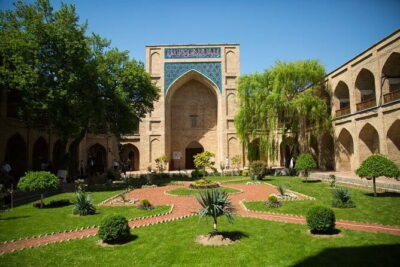
You start with Lyabi House Hotel as part of the broader Lyabi-Khauz ensemble (about 30 minutes). The core idea here is the architecture around a central water area, with major structures named for the complex: Kukeldash Madrasah in the north, khanaka and Nodir Divan-begi to the west, and additional monumental buildings around it. This is a great first stop because it gives you an immediate “Bukhara feel” before you zoom into individual monuments.
Then you visit Nodir Devonbegi Madrasah (about 20 minutes). It’s part of the same orbit around Lyabi-Hauz, and the madrasah plus nearby khanaka being connected to vizier Nadir gives you a clearer reason for why these buildings relate to each other.
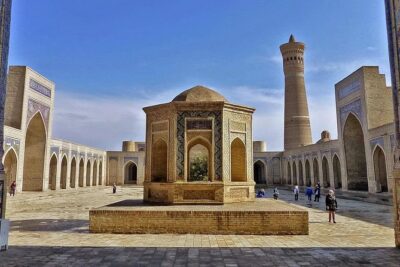
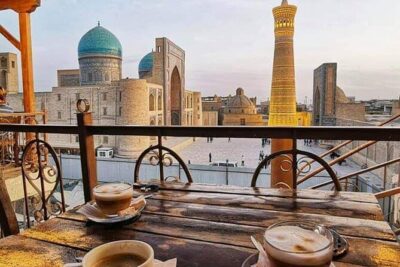
From there, the big skyline moment hits: Kalan Minaret (about 20 minutes) near the Po-i-Kalyan Mosque (about 20 minutes). The tour description frames Po-i-Kalyan as an outstanding monument dating back to the fifteenth century. The practical win is that you can appreciate minaret and mosque together as a single architectural story, not as separate “random stops.”
Next you move through several madrasas:
- Ulugbek Madrasah (about 20 minutes), founded in 1417.
- Mir-i-Arab Madrasa (about 30 minutes), considered one of the more interesting monuments of Bukhara.
Then you get the scale shift with Ark of Bukhara (about 1 hour). This is a massive fortress, and the longer time makes sense. You can’t really understand a fortress by sprinting past it. Give yourself the full hour, because it’s the kind of place that rewards walking and noticing structure changes rather than hunting for one perfect photo.
You also include Bolo Hauz Mosque (about 30 minutes), built in 1712, plus Ismail Samani Mausoleum (about 30 minutes). Mausoleums can be more visually intense in person than in photos, especially when you’re standing close and looking at proportions.
What to consider on Day 2: Bukhara’s highlights can make your feet tired quickly, because many visits are short and you move often. If you tend to run out of energy early, plan to keep your hydration steady and take advantage of any moments the guide gives you to slow down.
Day 3 in Samarkand: Registan Square, Shah-i-Zinda, and Siyob Bozori
Samarkand is the finish line, and the day is built like a highlight reel. You start with a major complex and end with street energy at a traditional bazaar, which is a nice contrast after two more architectural-heavy days.
Day 3 begins at Amir Temur Mausoleum Gur-i Amir (about 30 minutes). It’s described as a masterpiece of medieval East Islamic architecture. Starting here makes the rest of the day make more sense. You’re entering the Registan and nearby sites with a clearer idea of what the city’s power centers were aiming to communicate.
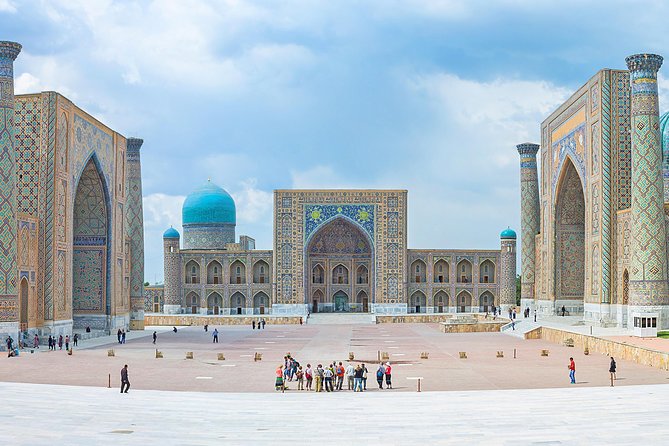
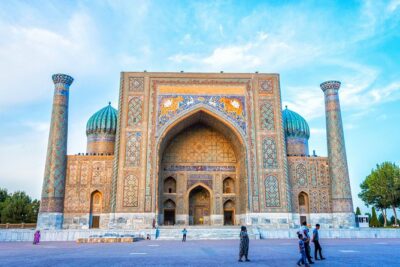
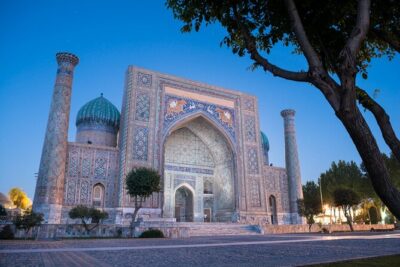
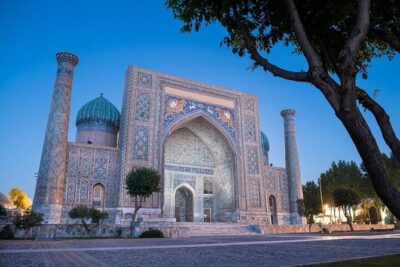
Next is Registan (about 30 minutes), called the heart of the ancient city of the Timurid dynasty. This is where you’ll feel the “big square” effect: it’s the kind of space where buildings around you feel like they’re competing for attention. It’s also where you get to see the ensemble logic, not just one building.
The tour then includes the three main madrasas connected to the Registan ensemble:
- Sher-Dor Madrasah (about 30 minutes), built on the Registan Square in 1619 to 1636.
- Ulugbek Madrasah (about 30 minutes), built by order of Ulugbek, Tamerlane’s grandson, in 1417 to 1420.
- Tillya Kori Madrasah (about 30 minutes), built in 1660 and described as the final building in the Registan ensemble.
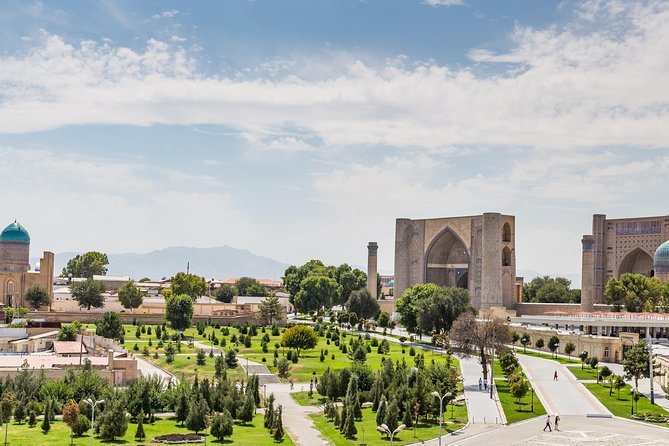
Then you move to Bibi Khanym Mosque (about 30 minutes), noted as one of the largest and most magnificent mosques in the Islamic world in the 15th century. You’re getting a shift from the square ensemble to a monumental mosque presence.
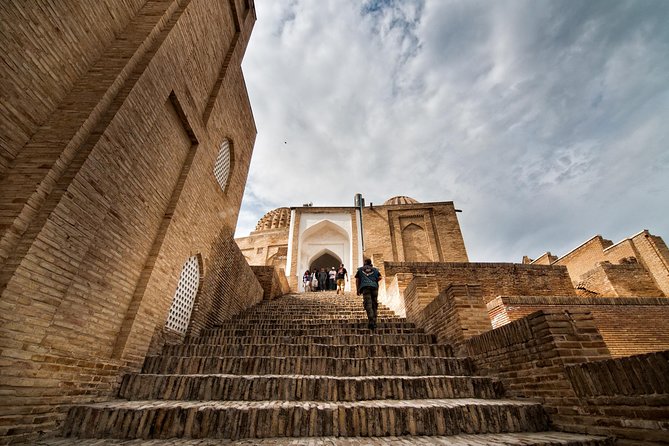
After that, you go to Shah-i-Zinda (about 30 minutes). It’s a complex of mausoleums from the 14th and 15th centuries. This stop is especially worth giving your eyes time to adjust, because complex sites often have layered entrances and spaces that don’t read as well from one quick angle.
Finally, you end with Siyob Bozori (about 30 minutes), described as the largest traditional bazaar in Samarkand. This is a useful close because it brings the trip back to daily life. Even if you don’t plan to buy anything, it helps you decompress after the formal architecture.
What to consider on Day 3: this is the busiest-feeling day. Between Registan and Shah-i-Zinda, you’re stacking visually similar historic spaces. I’d use the bazaar as your mental reset and slow down your pace there.
Getting Around: Pickup, Air-Conditioned Comfort, and the High-Speed Train
Logistics can make or break short trips. This one is built to protect you from transit fatigue.
You get pickup offered and use an air-conditioned vehicle, which matters because you’re moving between multiple stops each day. There’s also a mobile ticket, which is handy when you want less paperwork and fewer surprises at admissions.
The most important transport element is the train: included high-speed train tickets in economy class for the loop Tashkent to Bukhara to Samarkand and back. On a three-day schedule, that single inclusion saves you from spending precious time comparing schedules and booking transfers. It also keeps your travel days more predictable than doing everything by car.
One more small detail to keep in mind: the tour is listed as being near public transportation. That doesn’t remove the value of the organized vehicle, but it can be reassuring if you need to step out briefly for something personal.
Price Worthiness: What $999 Covers and What It Doesn’t
At $999 per person for about 3 days, the real question is what you’re buying beyond the route name.
Here’s what’s included:
- Entrance tickets for the listed sightseeing stops
- Air-conditioned vehicle
- Pickup offered
- High-speed train tickets (economy class) for the full city loop
- Breakfast (3) and lunch (3)
That combo is the reason this can feel like good value. When entrance fees, meals, and intercity trains are all bundled, the cost shifts from “travel budget planning” to “show up and walk.”
What’s not included also matters:
- Travel insurance
- Personal expenses
- Any fees related to trying traditional clothes for photos (if you choose to do that)
So for budgeting, you should expect to cover your own snacks, drinks, souvenirs, and any optional photo add-ons. If you like to keep meals simple and avoid extra activities, you’ll likely feel the price more evenly.
My practical take: if you’re the kind of traveler who hates booking trains, timing museum admissions, and figuring out where lunch fits, this package can genuinely help. If you want freedom to roam without structure, you may feel boxed in by the scheduled stop list.
How the Small Group Works (and Why It Matters for Photos)
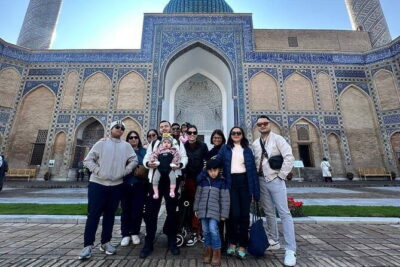
A max group size of 8 travelers is not just a nice number. In practice, small groups usually mean:
- quicker roll calls
- less waiting at each monument
- a better chance to ask questions without feeling like you’re interrupting a parade
Guides can also shape the day. In feedback tied to this specific trip, names like Sevinc in Samarkand and Outilla are associated with making the route feel smooth and understandable, not just fast. There are also references to planners such as Ibrohim and Izzatullo being responsible for booking ahead and keeping the logistics organized. Even if the style of guidance varies day to day, the key point is that someone is actively coordinating the day so you do not have to.
One cautious note: a small group does not automatically guarantee a relaxed pace. With this many stops across three cities, the schedule still decides your time. You’ll likely get good attention, but you won’t get unlimited linger time.
Pacing and Practical Tips for Moderate-Fitness Sightseeing
This tour is designed for moderate physical fitness. That usually translates into: expect standing in lines at admissions, short walks between sites, and a lot of time outdoors.
For the best experience:
- Wear comfortable walking shoes. You’ll be repeating short transitions all week.
- Treat each stop like a “scene,” not a full museum day. Aim to see the main things in each location during the allotted time, then move on.
- Save your longer photo sessions for places with the most open space, like Amir Temur Square, Registan, and the bazaar.
Also, keep expectations aligned with the format. Your biggest payoff comes from seeing how the pieces connect: Tashkent’s major civic and memorial spaces, Bukhara’s architectural ensemble logic, and Samarkand’s square and mausoleum complex storytelling.
If you prefer slow travel, build in a mindset shift. This is more like a guided cultural sprint than a leisurely wandering weekend.
Should You Book This Tashkent, Bukhara, and Samarkand Tour?
Book it if:
- you want a structured 3-day plan that covers the core highlights of Tashkent, Bukhara, and Samarkand
- you like the idea of train tickets, entrance fees, and meals handled
- you can handle a packed schedule and quick stop-by-stop sightseeing
Skip it or choose a slower option if:
- you want lots of free time for wandering without timing pressure
- you get easily drained by day-long transitions and brief visits
For many first-time visitors with limited time, this tour can be a smart way to see a lot without the hassle. If your goal is to make Uzbekistan feel real fast, with guided context and minimal logistics, it’s worth a look.
The Full Uzbekistan Review Pile
Whole Country Itineraries


More of Uzbekistan we have reviewed
- Uzbekistan 6 days / 5 nights tour★ 5.0 · 3 reviews
- Tashkent Mountain Tour Amirsoy with Transport★ 3.5 · 3 reviews
- Private Tashkent City Tour★ 5.0 · 3 reviews
- Transfer Tashkent Airport / Railway Station – Hotel★ 3.5 · 3 reviews
- Tashkent: 3-Day Horseback Riding Tour in Chimgan Mountains★ 4.4 · 3 reviews
- Samarkand: Uloq-Kopkari (Buzkashi) Game Day Tour★ 5.0 · 3 reviews
Multi-Day Uzbekistan & Silk Road Tours, compared.
 ★ 5.02 Days Tour to Bukhara and Samarkand from Tashkent by trainFrom $49953 reviews
 ★ 5.0Magic Land Tour to UzbekistanFrom $1,24749 reviews
 ★ 5.0Uzbekistan 6 days private tour Tas-Khiva-Buk-Sam-TasFrom $85045 reviews
 ★ 5.0Uzbekistan Silk RoadFrom $1,23039 reviews
 ★ 4.5Uzbekistan 8 Days Private Tour Tashkent-Urgench-Bukhara-Samarkand-TashkentFrom $97538 reviews
 ★ 4.5Uzbekistan 3 Day Private Tour Tashkent-Bukhara-Samarkand Bullet TrainFrom $50023 reviews
 ★ 5.0Colourful UzbekistanFrom $2,19715 reviews
 ★ 5.0Private Multi-Day Tour to Ancient Cities UzbekistanFrom $1,82215 reviews
Browse the lists this tour appears in