
Review · SILK ROAD
Cultural Treasures Of The Silk Road
Tashkent to Khiva feels like stepping into a storybook. This trip traces the Silk Road through historic cities and working crafts, with added time in the Fergana Valley for fruit, vegetables, silk, and artisan know-how. I especially like how the days mix big monuments with hands-on moments you can actually picture.
I also like the way the route keeps moving but still builds in pauses, like museum time in Tashkent and free wandering time in Khiva. The visit to places like the Khasti Imam complex, the paper-making work, and the cooking day with an Uzbek family turn history into daily life, not just stone and tiles.
One drawback to consider is the price. At $4,766 per person, this is a premium group tour, so you’ll want to be comfortable with a packed schedule and group pacing. There is also an optional folklore show tied to Khiva, which adds an extra cost if you choose it.
In This Review
- Key highlights
- From Tashkent airport to Khasti Imam, start with contrasts
- Fergana and Kokand, train time plus artisan training
- Samarkand by fast train, then UNESCO-scale energy
- Registan Square, Bibi Khanym, and a cooking day that sticks
- Shahrisabz and the drive to Bukhara, empire on the road
- Bukhara’s madrasas and the world of 1001 nights, with real community stops
- Khiva by desert road trip, then Ichan Kala on foot
- Ayaz Kala and Toprak Kala, the quiet side of Khorezm
- Price and value: what your $4,766 covers, and what it does not
- The guiding style: why Nodir and Sacha matter
- Who this tour is best for
- Should you book Cultural Treasures Of The Silk Road?
- FAQ
- What cities does this tour include?
- What transport is included between cities?
- Are entrance fees included?
- What kind of guide will I have?
- How many hotel nights are included?
- Are meals included?
- Is there an extra paid activity in Khiva?
- What is the cancellation window?
Key highlights
- Small group size (max 15) helps you keep track of plans and ask questions.
- Craft-focused stops include silk production and traditional ceramics in Rishtan.
- Samarkand with real variety, from Registan Square to a bazaar food walk and a family cooking dinner.
- Bukhara beyond the main sites, with a Jewish quarter synagogue visit and a dinner hosted at an old Jewish house.
- Khiva’s Ichan Kala walls plus day trips to mud fortresses like Ayaz Kala and Toprak Kala.
- Local English-speaking guides, with strong language ability praised in the guiding team (including Nodir and Sacha).
From Tashkent airport to Khasti Imam, start with contrasts
Most Silk Road tours begin with a fast orientation. This one starts with an easy transition, because you arrive in Tashkent late evening or in the morning depending on flight connections, then roll straight into a hotel stay with a guided transfer.
The next day is the real on-ramp: you’ll see how Tashkent can feel half post-Soviet and half oriental at the same time. In the Khasti Imam complex, you visit the area connected with the oldest version of the Koran kept there, plus you can explore the Tilla Sheikh Mosque, Barak Khan Madrasah, and the Kaffal Shashi Mausoleum. Then you head to the Chorsu Bazaar, a market with roots in the Middle Ages at the crossroads of caravan traffic along the Great Silk Road.
What I like for your first day is the mix of meaning and motion. It’s not only a tour of important buildings. You also get the soundscape of a bazaar and the feel of a living city, which helps the rest of the route land harder later.
Possible drawback: arrival days can be long, and the tour builds early momentum. If you’re sensitive to jet lag, plan for a slower pace in the evening and don’t force extra sightseeing beyond what’s on the schedule.
Fergana and Kokand, train time plus artisan training
After breakfast, you take a comfortable train at 08:07 through the Kamchik pass (2,268 m) to Kokand. The timing matters here. It gets you across a mountainous section efficiently, and you arrive around midday so you can use the day for visits instead of sitting in transit all afternoon.
In Kokand, the tour focuses on Islamic architecture, including the palace of Khudoyar-Khan and the Juma mosque. Then you continue to Rishtan, famous for centuries of ceramic craft. You learn how the blue and gold faience is made from ceramic master Rustam Usmanov, and this is where the tour really separates itself from the usual “look and move on” rhythm.
On day 4, you return to the craft side again in the Fergana Valley region: you travel to Margilan and visit the silk factory Yodgorlik to see how silk fabrics move from production steps to finished textiles. The tour calls silk here “white gold,” and that line makes sense once you see the process rather than only the final products.
For your planning: this part of the trip is hands-on, so wear clothes you don’t mind getting dusty if the workshop areas are active. Comfortable shoes matter more than fancy ones.
Longer Silk Road itineraries we have read
- 2 Days Tour to Bukhara and Samarkand from Tashkent by train
★ 5.0 · 53 reviews - Magic Land Tour to Uzbekistan
★ 5.0 · 49 reviews - Uzbekistan 6 days private tour Tas-Khiva-Buk-Sam-Tas
★ 5.0 · 45 reviews - Uzbekistan Silk Road
★ 5.0 · 39 reviews
Samarkand by fast train, then UNESCO-scale energy
Samarkand is where many people expect the biggest wow moments, and this tour delivers them in a smart order. You take a fast train from Tashkent to Samarkand in about two hours, then you’re already in the heart of the Silk Road story.
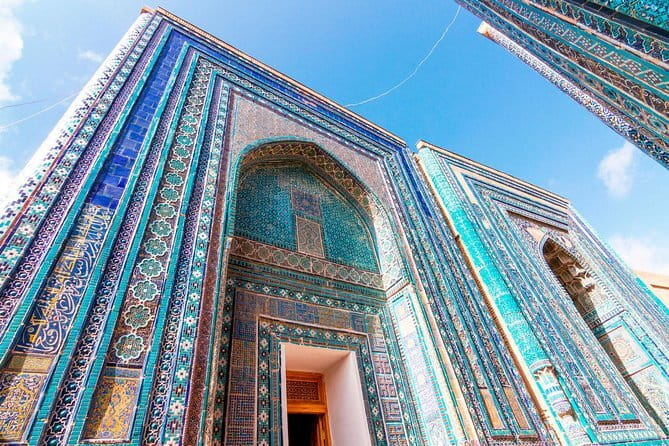
In Samarkand, you start with context through the Afrosiyob Museum, which helps you understand how the city shaped itself over time. Then you go to the Shahi Zinda complex, a set of mausoleums decorated in majolica and mosaic tiles, and that visual jump works well after travel.
Next comes a set of stops that give you different types of insight:
- The paper manufacturing factory in Samarkand, where you see traditional paper production from mulberry fibers.
- The Observatory of Ulugbek, tied to Amir Timur’s grandson, a reminder that this region wasn’t only about trade and empire, it was also about science and astronomy.
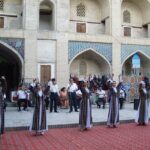
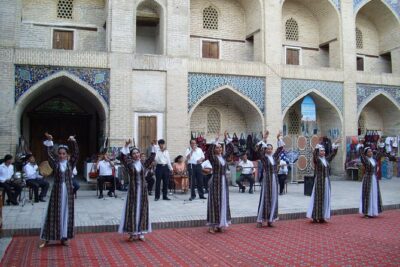
In the late afternoon, you add cultural color with a folklore program at the Theatre El-Merosi, where costumes move across historic periods from the Bronze Age to present-day.
Why this matters for you: a lot of Silk Road itineraries treat food and culture like side quests. Here, the tour builds cultural understanding into the flow, so the monuments connect to crafts, daily routines, and beliefs.
Possible drawback: Samarkand evenings can include theatre and dinner, so you won’t always have a totally free night. If you like full independence, you might feel the schedule more than you would on a slower private trip.
Registan Square, Bibi Khanym, and a cooking day that sticks
This is the highlight stretch, so it’s worth paying attention to what the tour does and doesn’t do. It doesn’t just stack monuments. It connects them to empire ambition and local life.
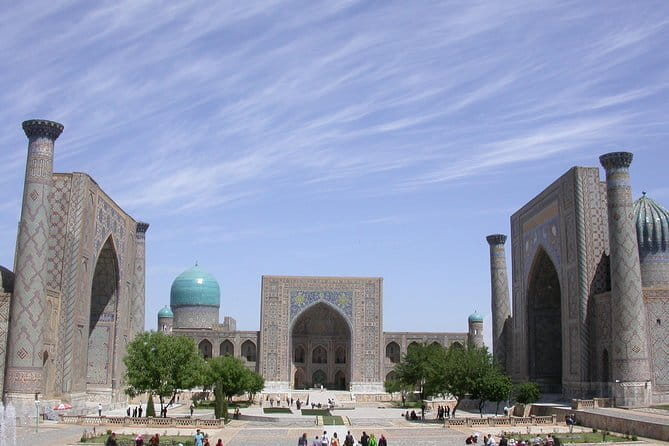
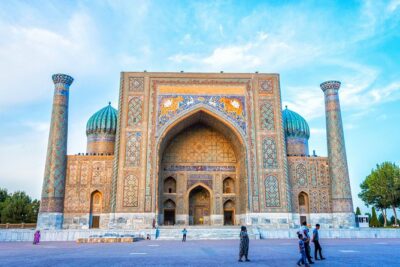
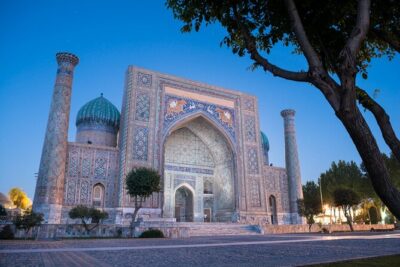
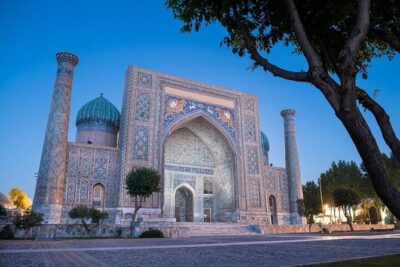
You visit the palace-like Gur Emir Mausoleum, then you get your main showstopper at Registan Square, with its three decorated madrasas. After that, you see the Bibi Khanym Mosque, described here as having once been the greatest mosque in Central Asia, plus you get time to walk through areas where souvenir shopping is common on the street network.
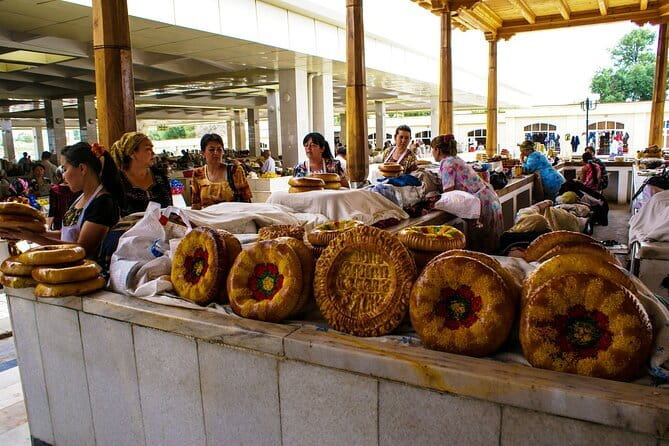
Then comes a move that I really value for your trip: you do a culinary walk through the bazaar, sampling raisins, apricots, and nuts, and you cook with an Uzbek family for a typical local dinner. This turns your time in Samarkand from sightseeing into lived experience.
If you’re curious about how people actually make meals and how recipes get talked through, that cooking day is the part you’ll remember on a quiet afternoon months later.
For value: if the tour cost feels high, it’s because these meals and this family time are built into the program, not left to guesswork.
Shahrisabz and the drive to Bukhara, empire on the road
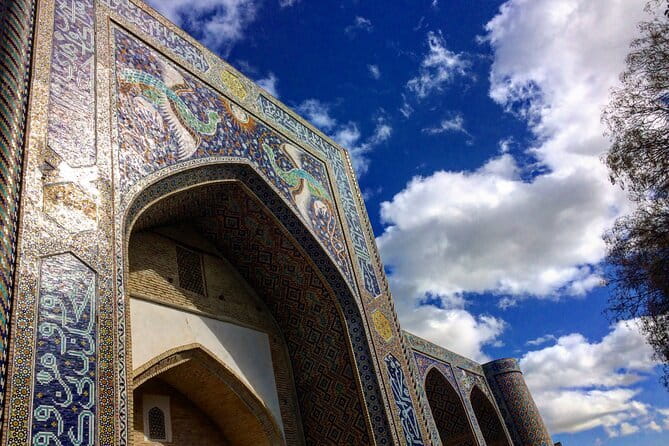
From Samarkand, you drive through mountain scenery to Shahrisabz, Amir Timur’s birth town. The tour frames his reach against Alexander the Great, and even if you don’t care about military comparisons, you’ll still get a sense of how monumental ambition shaped architecture in the region.
You also get time to wander the town and market, which helps you slow down after big Samarkand sites. This matters because the next stop is Bukhara, where the days can feel dense with heritage sites.
In the late afternoon, you travel on to Bukhara, an oasis town in the Kyzylkum desert area. Dinner follows at a local restaurant, and you settle in for three overnights, which gives you enough time to absorb Bukhara instead of rushing like it’s only a day trip.
Bukhara’s madrasas and the world of 1001 nights, with real community stops
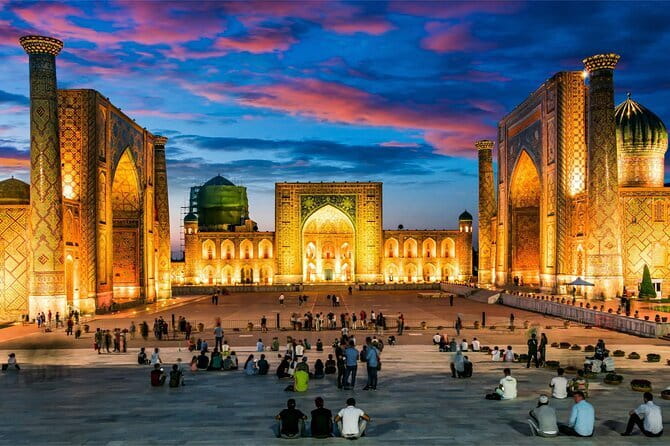
Bukhara can feel like a living museum, but the tour aims for the life inside the museum.
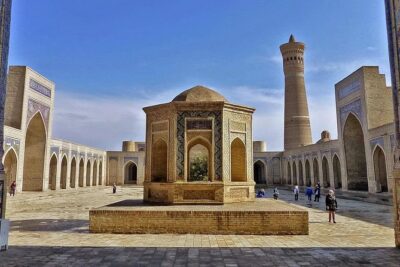
You start at the Mausoleum of Ismail Samani, then visit the Chashmai Ayub Mausoleum. After that you wander through the old town, with special emphasis on the idea that education and learning still happen in mosques and madrasas. You’ll visit complexes like the Miri Arab madrasa and the Lyabi Khauz architectural area with its trading domes and surrounding mosques and madrasas, plus the Khanaka dervish monastery.
Then the cultural mixing gets very tangible. You have dinner in an old Jewish house with a Bukharian family. A Susani embroiderer named Abdurahman shares about Bukhara embroidery, and you try the Emir’s Plov.
This is one of the most worthwhile sections of the entire trip because it turns Bukhara into a place made of multiple communities, not only one dominant theme.
Later, you visit Chor Minor madrasa, known for four minarets and building style comparisons to India. Then you go to the summer residence of the last Bukhara Emir, Sitorai Mokhi Khosa, with its poetic meaning tied to the moon and stars.
If you’re interested in spiritual history, you also visit the legacy site of Bahauddin Naqshbandi and the Naqshbandiya philosophy summarized as God in the heart, work in the hands.
You finish the Bukhara portion with time in the Jewish quarter, including a synagogue over 400 years old, plus a stop at a puppet workshop, and a dinner by Lyabi Khauz.
Possible drawback: Bukhara is intense. Plan to take your time in small moments, like slow bazaar walking or a calm break. If you rush from site to site, you’ll lose the feeling this route is built to create.
Khiva by desert road trip, then Ichan Kala on foot
After a journey through Kyzylkum desert and steppe, you reach Khiva. There’s a picnic on the way at an Uzbek roadhouse, which gives you a mid-journey break and makes the desert drive feel part of the experience rather than just transit.
In the evening, you check into the hotel and you can explore by yourselves. Dinner is included in a “princely” setting at the Toza Bog summer palace (noted as at least 8 people).
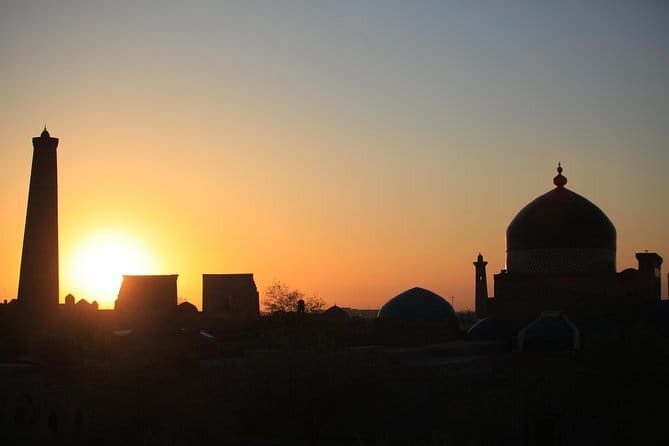
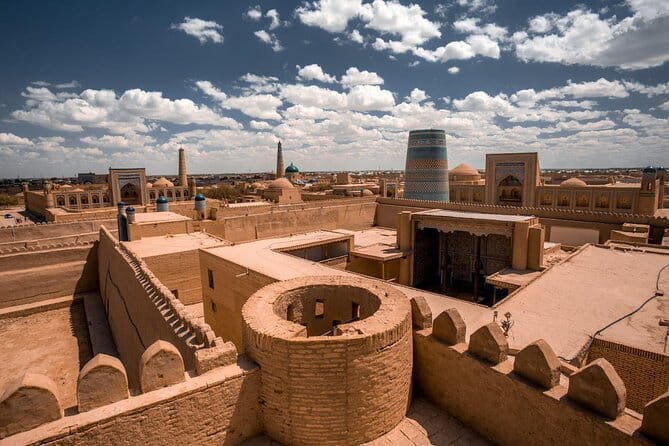
The next day is the classic Khiva experience: walking the old town Ichan Kala, surrounded by a massive wall with four entrances. You’ll see landmarks like Kunya Ark, the Medrasa of Muhammad Rakhim Khan, Mausoleum of Pakhlavon Makhmud, Medrasa and Minaret of Islam Khodja, the residence Tosh Khovli, and the Juma Mosque with its wooden beam ceiling held up by 212 columns with artistic carvings. You also see the area around Kalta Minor.
Why you’ll likely love it: Khiva’s old town is made for walking. It’s the kind of place where small streets help you understand how a wall city works, and where details like carved wood do more than decorate, they teach.
Possible drawback: you’ll be on your feet a lot. Comfortable walking shoes and socks you trust are worth it. If you need frequent seated breaks, pace yourself and use any free time wisely.
Ayaz Kala and Toprak Kala, the quiet side of Khorezm
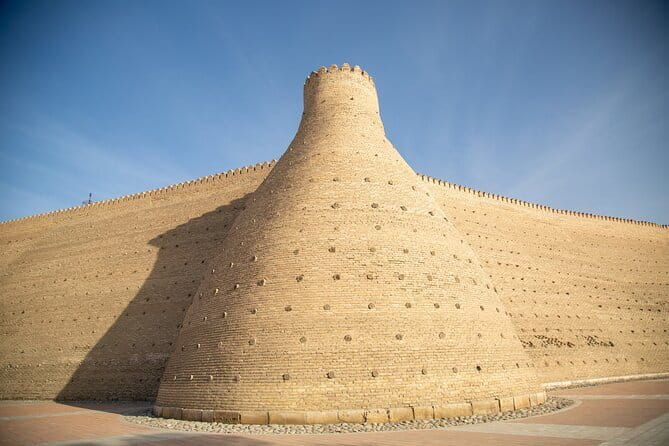
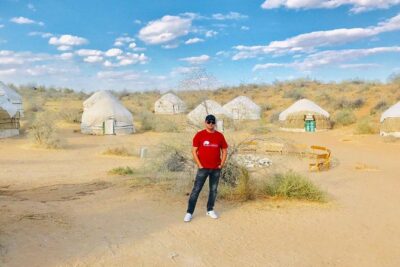
Khiva isn’t only walls. The tour adds the desert-fortress angle with a road trip to Ayaz Kala, described as an impressive mud fortress with roots tied back to the 2nd century BC and part of a chain of border fortresses protecting the oasis from the desert side. Then you visit Toprak Kala, identified as an ancient capital of Khorezm from the 2nd century AD.
These sites are different from urban monuments. They’re about survival, defense, and the logic of settlements at the edges of powerful landscapes. If you like archaeology and ruins that don’t come with loud crowds, this is the calmer side of the Khiva chapter.
Afterward, you head to Urgench for dinner, then fly back to Tashkent at 21:15. Your final night is in Tashkent, and on day 13 you check out, transfer to the airport, and end the trip back where you started.
Price and value: what your $4,766 covers, and what it does not
At $4,766 per person for 13 days, this isn’t a budget tour. But the value story is clearer than it looks on the sticker.
From the included items, you get:
- 12 hotel nights in a double room
- A sightseeing program with entrance fees
- A local English-speaking tour guide
- Air-conditioned vehicle transfers and round-trip excursions
- Domestic train segments including Tashkent to Kokand and Tashkent to Samarkand
- Domestic flight Urgench to Tashkent
- Food experiences built into the route, including a cooking day and the special dinners in Samarkand and Bukhara
- A theatre performance in Samarkand (El-Merosi)
Also, you’re capped at 15 people, which helps you feel like a group with a real guide rather than a herd with a headset.
What you should budget separately:
- Your home-to-Tashkent flights are not listed in the included set.
- An optional folklore show tied to the summer palace in Khiva is listed at $15 per person. If you like performing arts, you might add it. If not, you can stick to the core Khiva sightseeing and dinner.
If your goal is a deep-feeling Silk Road trip with craft, cooking, and a guide who does more than read a script, this pricing starts to make sense.
The guiding style: why Nodir and Sacha matter
One thing that comes through strongly is the guiding team. The names Nodir and Sacha show up with praise for expertise and a caring approach. One note I found particularly useful is that Nodir speaks Italian very clearly, described as perfect Italian without inflections, which hints at careful language practice and a structured way of explaining what you see.
Even though the tour is described as having a local English-speaking guide, the underlying point holds for you: good guiding makes the difference between memorizing facts and understanding what you’re looking at. Here, the program spends time at artisan workshops and family dinners, so the “how” of explaining culture matters more than it does on a pure monument crawl.
Who this tour is best for
This trip fits best if you:
- Want a classic Silk Road route with Tashkent, Samarkand, Bukhara, and Khiva, plus the Fergana Valley craft layer
- Enjoy food that has a story, like the bazaar tastings and the family cooking experience
- Like small-group energy, not constant solo navigation
- Are comfortable with a schedule that keeps moving, with long sight days balanced by occasional free time in Khiva
If you prefer totally free days, you might feel the structure. If you want a slow, luxury pace with lots of hotel downtime, you may find the day flow a bit intense.
Should you book Cultural Treasures Of The Silk Road?
I’d book it if your ideal Uzbekistan trip includes more than monuments. This one spends real time on craft (silk at Yodgorlik, ceramics via Rishtan, paper-making in Samarkand), and it builds culture through food and family hosting, especially the dinner in an old Jewish house in Bukhara and the cooking day in Samarkand.
I would skip it or at least rethink it if:
- You want a lighter schedule with lots of spontaneous detours
- You are trying to keep costs near a budget level
- You’re uneasy walking most of the day in places like Ichan Kala
If you’re on the fence, here’s the simplest way to decide: ask yourself whether you want to learn how the Silk Road cultures produced art, cloth, and knowledge, or if you only want to check off famous tiles. This tour clearly leans toward the first choice.
FAQ
What cities does this tour include?
The route centers on Tashkent, Samarkand, Bukhara, and Khiva, and also includes a stop in the Fergana Valley region plus Shahrisabz (from Amir Timur’s birth town area).
What transport is included between cities?
You’ll use domestic travel including fast trains (Tashkent to Kokand, and Tashkent to Samarkand) and you also have a domestic flight from Urgench to Tashkent.
Are entrance fees included?
Yes. The tour includes a sightseeing program with entrance fees according to the itinerary.
What kind of guide will I have?
You’ll have a local English-speaking tour guide. The guiding team includes guides such as Nodir and Sacha.
How many hotel nights are included?
The tour includes 12x hotel accommodation in a double room.
Are meals included?
Breakfast is included 12 times, and dinners are included as part of the program. There are also specific included food experiences such as cooking with an Uzbek family and dinner at sites listed in the itinerary.
Is there an extra paid activity in Khiva?
Yes. A folklore show connected with the summer palace in Khiva is listed as optional, at $15 per person.
What is the cancellation window?
You can cancel for a full refund up to 24 hours before the experience starts. Changes made less than 24 hours before start time are not accepted. The tour also has a minimum traveler requirement, and if it is canceled for that reason, you’ll be offered a different date or a full refund.
The Full Uzbekistan Review Pile
Whole Country Itineraries


More of Uzbekistan we have reviewed
- Uzbekistan 6 days / 5 nights tour★ 5.0 · 3 reviews
- Tashkent Mountain Tour Amirsoy with Transport★ 3.5 · 3 reviews
- Private Tashkent City Tour★ 5.0 · 3 reviews
- Transfer Tashkent Airport / Railway Station – Hotel★ 3.5 · 3 reviews
- Tashkent: 3-Day Horseback Riding Tour in Chimgan Mountains★ 4.4 · 3 reviews
- Samarkand: Uloq-Kopkari (Buzkashi) Game Day Tour★ 5.0 · 3 reviews
Multi-Day Uzbekistan & Silk Road Tours, compared.
 ★ 5.02 Days Tour to Bukhara and Samarkand from Tashkent by trainFrom $49953 reviews
 ★ 5.0Magic Land Tour to UzbekistanFrom $1,24749 reviews
 ★ 5.0Uzbekistan 6 days private tour Tas-Khiva-Buk-Sam-TasFrom $85045 reviews
 ★ 5.0Uzbekistan Silk RoadFrom $1,23039 reviews
 ★ 4.5Uzbekistan 8 Days Private Tour Tashkent-Urgench-Bukhara-Samarkand-TashkentFrom $97538 reviews
 ★ 4.5Uzbekistan 3 Day Private Tour Tashkent-Bukhara-Samarkand Bullet TrainFrom $50023 reviews
 ★ 5.0Colourful UzbekistanFrom $2,19715 reviews
 ★ 5.0Private Multi-Day Tour to Ancient Cities UzbekistanFrom $1,82215 reviews
Browse the lists this tour appears in