
Review · SILK ROAD
6- Day Private Tour to Tashkent, Khiva, Bukhara and Samarkand
Four UNESCO cities, one efficient plan.
This 6-day private tour strings together Tashkent, Khiva, Bukhara, and Samarkand with a mix of domestic flight and train travel, plus guided visits to the big UNESCO sights. It is not meant to slow down for hours on end. It is built to help you see the essentials across the Silk Road circuit without getting lost in logistics.
I like the hotel-to-hotel structure and the air-conditioned transportation that keeps travel days from turning into scavenger hunts. I also like that most of the heavy lifting is handled for you, from entry fees and a local guide through included train and flight tickets.
The main tradeoff is the pace: many stops are time-boxed to 20 to 45 minutes. If you want long photo breaks, extra time inside museums, or a slower stroll, you may feel a bit rushed.
In This Review
- Key highlights to know before you go
- The big idea: a focused UNESCO circuit that still feels organized
- Day 1 in Tashkent: airport pickup and a calm start
- Day 2: Khiva and the Itchan Kala walled city core
- Itchan Kala, the main event
- The likely drawback in Khiva
- Day 3: Train from Khiva to Bukhara across the Silk Road route
- How to make train time count
- Day 4: Bukhara’s main sights, from Ulugbek Madrasah to Poi Kalyan
- Ulugbek Madrasah
- Bolo Hauz Mosque
- Chor Minor Madrasah
- Ark of Bukhara
- Lyab-i-Hauz
- Poi Kalyan Mosque and Mir-i-Arab Madrasah
- The rhythm issue
- Day 5: Samarkand’s Registan, Bibi Khanym, and Shah-i-Zinda
- Gur Emir Mausoleum
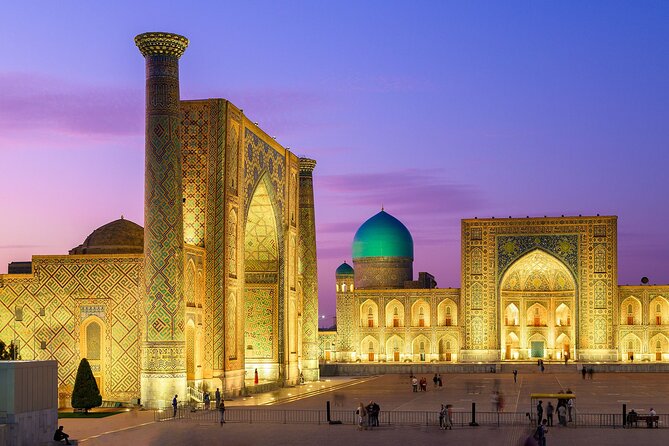
- Registan: the heart of the postcard
- Bibi Khanym Mosque
- Siyob Bozor
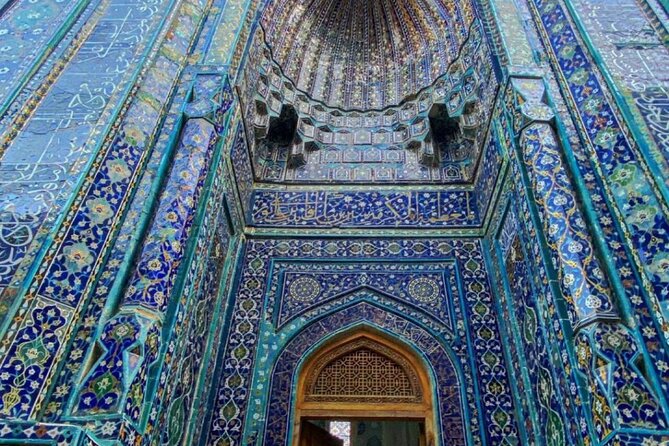
- Shah-i-Zinda
- Ulugh Beg Observatory
- Day 6: Tashkent highlights, metro, bazaars, and the Museum of Applied Art
- Amir Temur Square and museum
- Khast Imam ensemble and the special books
- Independence Square and Chorsu Bazaar
- Museum of Applied Art and Tashkent metro
- Courage Earthquake Memorial
- Price and value: what $765 buys you, and what it does not
- Guides, coordination, and the small things that matter
- Who should book this Uzbekistan private loop
- Should you book it
- FAQ
- How long is the tour?
- What time does the tour start?
- Is pickup included?
- What transport is included between cities?
- What meals are included?
- Are entry fees included?
- Does the tour include museum and cultural shows?
- What is the cancellation policy?
Key highlights to know before you go
- Private, just your group experience with pickup offered and mobile tickets.
- Flight into Urgench, then trains between cities, so you spend less time on long road days.
- Itchan Kala packed in one go: Islam-Khodja Complex, Kunya-Ark fortress, and Kalta Minor.
- Bukhara’s core ensemble day with Ark of Bukhara, Poi Kalyan Mosque, Mir-i-Arab Madrasa, and the Kalyan minaret area.
- Samarkand’s wow factor at Registan, plus Shah-i-Zinda and a real bazaar stop at Siyob Bozor.
- Optional evening adds if available, like a Registan sound and light show and a folklore performance at Nadir Divan-Begi.
The big idea: a focused UNESCO circuit that still feels organized
This tour is for people who want the highlights of Uzbekistan without spending your days solving transport puzzles. The route makes sense geographically, too: you start in modern Tashkent, swing to Khiva for the walled city experience, then continue to Bukhara and finish in Samarkand before returning to Tashkent.
What makes it practical is the built-in rhythm. You get a full arrival and settle-in in Tashkent, then day trips that mix guided walking with major landmarks. Even better, you are not responsible for buying tickets for the train segments and domestic flight, because those are handled as part of the package.
The value angle is less about seeing everything, and more about reducing decision fatigue. When you only have six days, shaving off logistics time matters as much as the monuments themselves.
Day 1 in Tashkent: airport pickup and a calm start
Day 1 is simple and helpful. The driver picks you up from Tashkent International Airport and transfers you to the hotel, with rest time built in before the first guided sights start later.
This is a good design for jet lag reality. You are not forced into early morning sightseeing the moment you land. It also gives you a chance to get money exchanged, adjust to local time, and find your bearings around the hotel neighborhood.
If you arrive with extra energy, you might still want a casual walk nearby. But the main point is to save your energy for the older-city walks later in the trip.
Longer Silk Road itineraries we have read
- 2 Days Tour to Bukhara and Samarkand from Tashkent by train
★ 5.0 · 53 reviews - Magic Land Tour to Uzbekistan
★ 5.0 · 49 reviews - Uzbekistan 6 days private tour Tas-Khiva-Buk-Sam-Tas
★ 5.0 · 45 reviews - Uzbekistan Silk Road
★ 5.0 · 39 reviews
Day 2: Khiva and the Itchan Kala walled city core
Khiva is where Uzbekistan’s medieval vibe becomes very real, fast. The day starts with flying Tashkent to Urgench, then driving into Khiva and meeting your guide for a full excursion program centered on Itchan Kala, the inner fortified city.
Itchan Kala, the main event
You spend about six hours exploring Itchan Kala, and that time allocation is important. This is not a quick look through a theme park set. Itchan Kala is still a working city space within the walls, so you get a layered feel, architecture plus everyday life, all in one footprint.
A big plus here is the flow through the key pieces:
- Islam-Khodja Complex (about 20 minutes)
It is one of the pearls of the historic core and an early UNESCO-listed site for Uzbekistan.
- Kunya-ark Fortress (about 30 minutes)
This was the residence of the Khiva khans and gives you a sense of political power behind the pretty tiles.
- Kalta Minor Minaret (about 30 minutes)
The famous fat minaret with turquoise tiling history is wrapped in story and symbolism, and it is one of those places where you understand why people remember specific colors.
The likely drawback in Khiva
The only caution is how quickly you move from one landmark to the next. Since each stop is relatively short after that long Itchan Kala block, you might want to prioritize what you care about most. If you love architecture details, you will probably feel satisfied. If you prefer slow wandering and fewer guided stops, you may wish this day had a lighter schedule.
Day 3: Train from Khiva to Bukhara across the Silk Road route
Day 3 shifts gears from walking to rail. After breakfast, you transfer to the Khiva railway station and take the regular train from Khiva to Bukhara, leaving at 11:10 and arriving at 18:14.
This is one of the practical reasons the tour works. Long-distance travel can drain a whole day. By choosing train, the itinerary gives you time that is at least sitting time, with scenery along the way. The route is described as following the Great Silk Road, passing through areas including the Kyzylkum Desert.
Prefer your own guide? More private Uzbekistan trips

How to make train time count
You cannot control what the view is like every day, but you can control your comfort. Pack something warm for the train because temperatures can shift, and keep your essentials easy to reach. If you do not love long rides, treat this as a decompression day rather than a loss of sightseeing time.
When you arrive in Bukhara, the driver meets you at the station, transfers you to your hotel, and you get leisure time. That matters because Bukhara is the kind of city where you will want your brain to be fresh for Day 4.
Day 4: Bukhara’s main sights, from Ulugbek Madrasah to Poi Kalyan
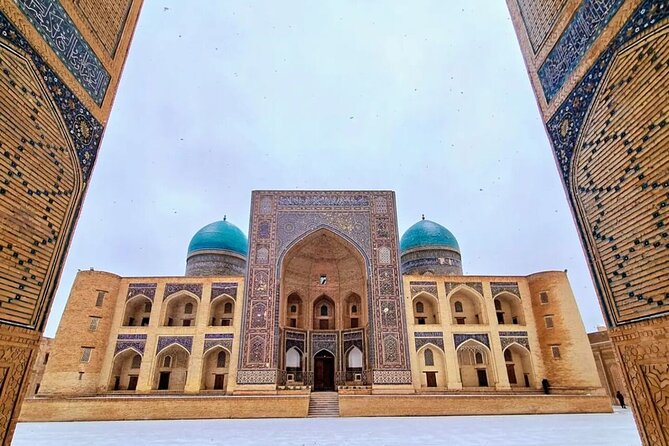
Bukhara is the “wow, they built everything” city, and this itinerary leans into that. The day starts at 09:00 with a guided program and includes a long list of major landmarks, ending with a transfer to the station at 15:50 for the train to Samarkand.
This is the kind of day where you will either feel impressed or slightly rushed. You will not just see one monument and go home. You will connect the dots between institutions, religious spaces, and fortress power.
Here are the stops and why each one works:
Ulugbek Madrasah
You start at the Ulugbek Madrasah, described as the oldest surviving madrasah in Central Asia, built in 1417 by Mirzo Ulugbek. Even if you only catch a few key details, the timing helps you understand Bukhara as a center of learning, not only trade.
Bolo Hauz Mosque
Next is Bolo Hauz Mosque, with tall carved pillars at the entrance. It is a small stop on paper, but the front approach and ornament give you an easy visual marker for the way this region mixes design with faith.
Chor Minor Madrasah
Chor Minor, the four-minarets building, is short but memorable because the silhouette is unusual. You will likely remember the shape after you leave the city.
Ark of Bukhara
The Ark of Bukhara is the “step into power” stop. It is a fortress complex and the itinerary notes multiple museums inside. Two hours would be a fast walk even if you stop and read a little, so you will not cover everything. Still, it is a strong anchor for the day.
Lyab-i-Hauz
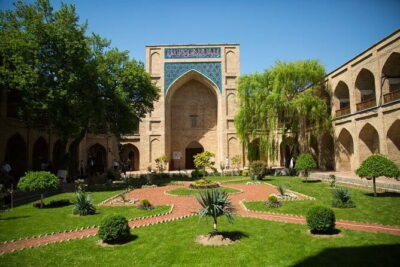
Then you move to Lyab-i-Hauz, built around the pool and surrounded by ensembles including Nadir Divanbegi Madrassa and Khanaka spaces. This is one of the few parts of the day that feels less like an exterior photo target and more like an urban living-room moment.
Poi Kalyan Mosque and Mir-i-Arab Madrasah
Later you hit Poi Kalyan Mosque and Mir-i-Arab Madrasa. These stops reinforce the scale of Bukhara’s religious architecture. The Great Minaret of the Kalon area ties the whole section together visually, because the minaret is the landmark your eyes go to even before you know what you are looking at.
The rhythm issue
Many stops are 30 minutes, and that keeps the day moving. The tradeoff is you might not have time for deep reading in each complex. If you enjoy learning, plan to treat this day as orientation and let it spark curiosity for later.
Day 5: Samarkand’s Registan, Bibi Khanym, and Shah-i-Zinda
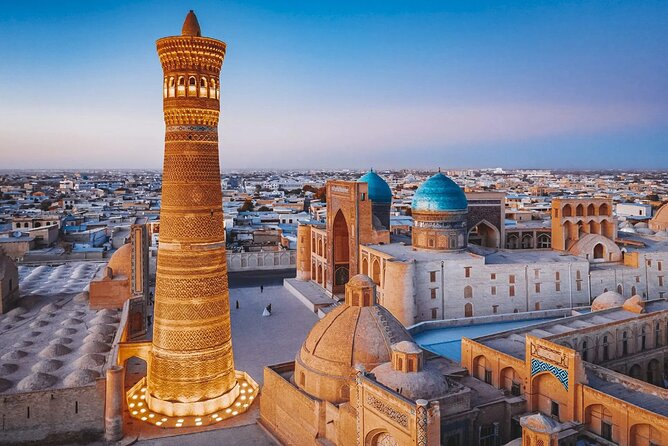
Samarkand is where medieval architecture feels like it has a soundtrack. This day is packed, and it has three major anchors: Registan, Bibi Khanym Mosque, and Shah-i-Zinda.
You start the day at 09:00 and end by heading to the station at 18:00, taking the Samarkand to Tashkent train.
Gur Emir Mausoleum
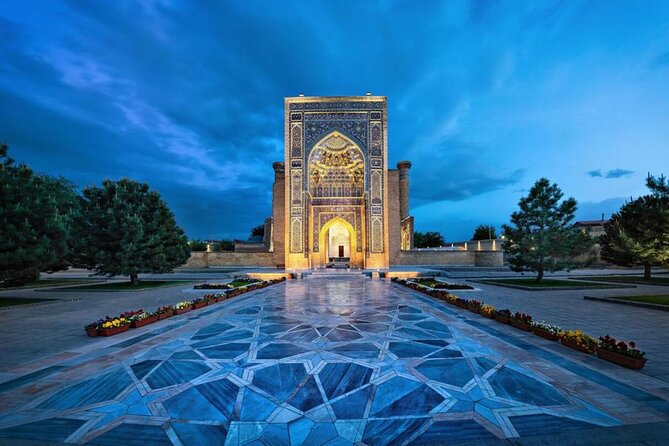
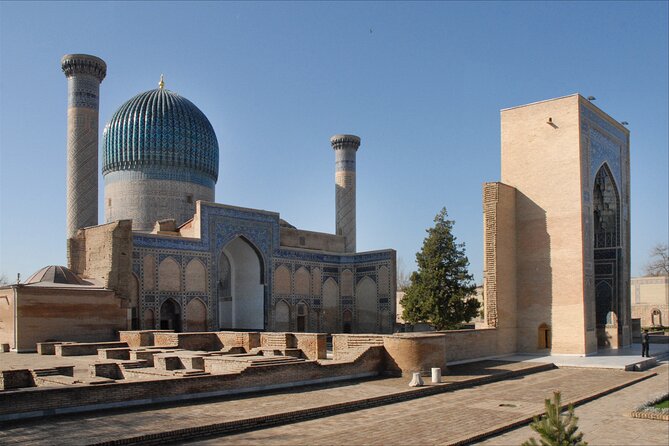
You begin at Gur Emir Mausoleum, the Tomb of the King, with its iconic large azure-like dome look described in the tour notes. It houses the tombs associated with Tamerlane. Even with limited time, this sets the political and dynastic tone for the rest of the city.
Registan: the heart of the postcard
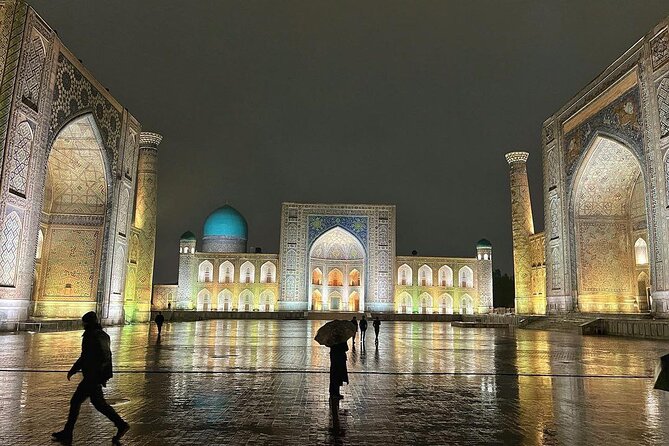
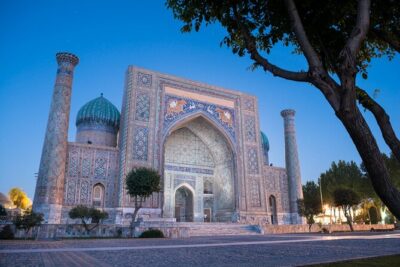
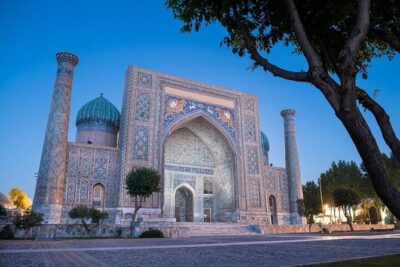
The Registan visit is about one hour, and it is the centerpiece: three grand buildings linked to Ulughbek Madrassa, Sherdor Madrassa, and Tilla Kori. Even if you have seen pictures before, you usually understand the scale better in person.
There is also an “if available” add-on on the tour: a light show at Registan with sound. If you are lucky and it is operating, it can be a nice way to see the square transform after sunset, but only if your day schedule still lets you comfortably catch it.
Bibi Khanym Mosque
Next is Bibi Khanym Mosque, described as one of the largest mosques of its time in the Islamic world. This is a 30-minute stop, so you will focus on the key surfaces and the overall structure rather than trying to read every corner.
Siyob Bozor
Then comes a welcome change of pace: Siyob Bozor for about one hour. This is the largest bazaar in Samarkand, and the highlight is that you can pick up the everyday texture of the city. If you care about food culture, look for local bread like Samarkand naan while you are there.
Shah-i-Zinda
Shah-i-Zinda is a 40-minute ensemble of mausoleums and ritual buildings across centuries. This is one of those sites where your photo instinct and your history instinct work together. The step-and-shrine rhythm makes it easy to see why people keep returning.
Ulugh Beg Observatory
Finally, you visit the Ulugh Beg Observatory (about 30 minutes). It brings a science and astronomy angle to the day, which balances the religious architecture you spent most of yesterday seeing.
Day 6: Tashkent highlights, metro, bazaars, and the Museum of Applied Art
Tashkent is often treated like a transit city, but this itinerary gives it a full day. It starts at breakfast and 09:00 meeting the guide, then runs through major landmarks before heading to the international airport.
This is where the tour feels especially “well paced” because you move between modern city spaces and old-city flavor.
Amir Temur Square and museum
You begin with Amir Temur Square and then Amir Timur Museum, including the central rotunda description with a colorful mural and gold-painted domed ceiling. Even if you are not a museum person, this area helps you understand how modern Uzbekistan frames its identity.
Khast Imam ensemble and the special books
Next is Ensemble Hazrati Imam, which includes Barakkhan madrasah and the Kaffal Shashi Mausoleum, plus a library of Islamic literature and mention of the Holy Quran book of the VII century. The tour notes refer to the original Quran Othman. Time is short, so focus on what the space communicates, not on trying to memorize every name.
Independence Square and Chorsu Bazaar
Then you hit Independence Square and later Chorsu Bazaar for about one hour. Chorsu means four waters, tied to the way the old city parts connect at the market.
This is one of the best moments of the whole trip if you like real daily life. It is also a smart time to do small purchases without making it the whole trip.
Museum of Applied Art and Tashkent metro
One of the more distinctive inclusions is the Museum of Applied art. The itinerary notes it contains over 4,000 exhibits on decorative art in Uzbekistan. That is a serious museum number, so even a partial visit can be a strong cultural payoff.
You also include the Tashkent metro. Metro design here is famous for its unique station architecture, and this stops gives you a chance to see the city’s public design as a travel experience, not just a commute.
Courage Earthquake Memorial
You end with the Courage Earthquake Memorial, set at the approximate epicenter of the April 26, 1966 earthquake. It is brief but grounding. It also reminds you the story of a place is not only monuments.
Then you transfer to Tashkent International Airport to end the trip.
Price and value: what $765 buys you, and what it does not
At $765 per person for a 6-day private tour, the real question is value per day and value per headache avoided.
This package includes:
- 5 nights in 3-star hotels
- All transfers and full transportation in air-conditioned vehicles
- A local guide and an expert tour director
- A domestic flight (Tashkent to Urgench)
- Train tickets for the city-to-city segments, with a note that high-speed tickets may be unavailable and can be replaced by regular trains
- Entry fees for the listed sights
- 1 lunch in Besh Qozon, described as the biggest plov place
- Optional extras if available, including a Registan light show and a folklore show at Nadir Divanbegi
What is not included is equally important:
- No dinners are included, and lunch is only listed once
- You need to handle e-visa if required
So who gets the best value? You, if you hate logistics and you want each day to “just happen.” If you enjoy planning and buying tickets yourself, you could build a cheaper itinerary. But you would likely spend more time coordinating trains, hotel locations, and entry tickets.
Also, note the built-in flexibility signals. High-speed train availability can change if you book close to departure. The tour plan accounts for that by swapping to a regular train or adjusting in a comfortable class.
Guides, coordination, and the small things that matter
One of the strongest signals from the feedback is that the organization feels tight and responsive. The tour coordinator, mentioned as Ulugbek, is noted as available for clarifications, and the overall operation is described as seamless, with knowledgeable guides and support.
That is exactly what you want on a fast-moving itinerary. When something is unclear, or when weather and timing create real-world friction, you need a person who can steer the plan without drama.
There is also one practical caution from feedback: you should be prepared for a border crossing that can involve some walking, especially if weather is rainy. That is not part of every tourist’s mental checklist, so pack a small rain layer and keep your patience handy for any stop like that.
Who should book this Uzbekistan private loop
This tour fits best if:
- You want the biggest UNESCO sights in Tashkent, Khiva, Bukhara, and Samarkand within 6 days
- You like guided structure, with entry fees included and transport handled
- You are comfortable with a schedule where many stops are 20 to 45 minutes
- You prefer private group comfort, even though it is still an active sightseeing pace
It is also a good fit for couples and small groups who want independence without doing the heavy planning work.
If you hate being rushed, or you want deep museum time, consider asking about customization or adding extra nights in one city.
Should you book it
If your priority is seeing the main UNESCO highlights with transport and tickets handled, this is a strong option. The mix of flight plus train is efficient, and the guided list is focused on recognizable anchors like Itchan Kala, Ark of Bukhara, and Registan.
I would skip it, or adjust it, if you know you need long, unstructured downtime in each city. This itinerary is designed to move, not to linger.
If you book, do yourself a favor: pack comfortable shoes, plan to shop and snack during bazaar time, and treat each major stop as a highlight you will build on later.
FAQ
How long is the tour?
The tour lasts about 6 days.
What time does the tour start?
The meeting start time is listed as 7:00 am.
Is pickup included?
Yes, pickup is offered and transfers from hotel to hotel are included.
What transport is included between cities?
The itinerary includes a domestic flight from Tashkent to Urgench, and train tickets for the city-to-city segments. The notes say high-speed train tickets may be unavailable if booked less than 60 days before departure, and they can be replaced with a regular train option.
What meals are included?
Only 1 lunch is included, in Besh Qozon. Lunche and dinner are listed as not included.
Are entry fees included?
Yes, entry fees for the listed tour program stops are included.
Does the tour include museum and cultural shows?
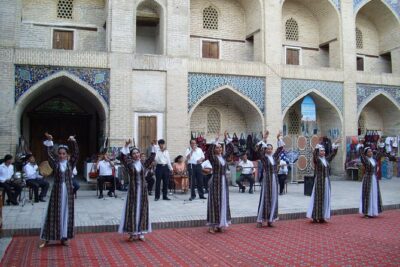
It includes light show at Registan if available and a folklore show in Nadir Divan-Begi Madrasah if available.
What is the cancellation policy?
Free cancellation is available up to 24 hours in advance for a full refund. If you cancel within 24 hours of the start time, no refund is offered.
More Tours Around Uzbekistan
The Full Uzbekistan Review Pile
Whole Country Itineraries


More of Uzbekistan we have reviewed
- Uzbekistan 6 days / 5 nights tour★ 5.0 · 3 reviews
- Tashkent Mountain Tour Amirsoy with Transport★ 3.5 · 3 reviews
- Private Tashkent City Tour★ 5.0 · 3 reviews
- Transfer Tashkent Airport / Railway Station – Hotel★ 3.5 · 3 reviews
- Tashkent: 3-Day Horseback Riding Tour in Chimgan Mountains★ 4.4 · 3 reviews
- Samarkand: Uloq-Kopkari (Buzkashi) Game Day Tour★ 5.0 · 3 reviews
Multi-Day Uzbekistan & Silk Road Tours, compared.
 ★ 5.02 Days Tour to Bukhara and Samarkand from Tashkent by trainFrom $49953 reviews
 ★ 5.0Magic Land Tour to UzbekistanFrom $1,24749 reviews
 ★ 5.0Uzbekistan 6 days private tour Tas-Khiva-Buk-Sam-TasFrom $85045 reviews
 ★ 5.0Uzbekistan Silk RoadFrom $1,23039 reviews
 ★ 4.5Uzbekistan 8 Days Private Tour Tashkent-Urgench-Bukhara-Samarkand-TashkentFrom $97538 reviews
 ★ 4.5Uzbekistan 3 Day Private Tour Tashkent-Bukhara-Samarkand Bullet TrainFrom $50023 reviews
 ★ 5.0Colourful UzbekistanFrom $2,19715 reviews
 ★ 5.0Private Multi-Day Tour to Ancient Cities UzbekistanFrom $1,82215 reviews
Browse the lists this tour appears in