
Review · ACROSS THE BORDER
Seven Lakes Tajikistan Private Excursion From Samarkand
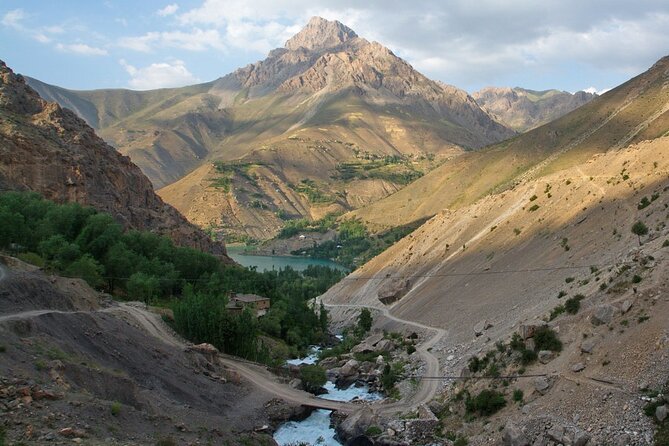
Seven lakes in one day sounds wild. It is, and the payoff is Khaftkul Valley scenery with a full private-group day built around border crossings. I like the round-trip hotel pickup part because it keeps you from juggling transport while everyone else is figuring out passports and timing.
My second big plus is the way you actually get to understand what you are seeing, not just walk past water. The stops include lake name stories tied to what’s visible, like Soya Lake, where the “shadow” idea matches the fact it sits in shade much of the day. You are also traveling with an English speaking guide in Tajikistan, which matters on a day this long.
The main consideration is that this is a mountain-road day with timing pressure. Roads are not asphalted, and depending on border crossing and road conditions, the plan to see all seven lakes can be shortened so you still make it back on time.
In This Review
- Key highlights to know before you go
- Why the Khaftkul Valley lakes are worth a full border day
- Price and what your $145 covers in real terms
- Samarkand to Tajikistan: the border transfer rhythm
- The seven lakes in Khaftkul Valley, stop by stop
- Stop 1: Nezhigon, the lowest lake around 1,640 m
- Stop 2: Soya Lake, the shade-and-color stop
- Stop 3: Gushor, connected by a turbulent stream
- Stop 4: Nofin, elongated and “umbilical cord” shaped
- Stop 5: Khurdak, the smallest lake and the village on the way
- Stop 6: the largest lake, plus petroglyphs nearby
- Stop 7: Hazorchashma, highest at about 2,400 m
- Jartepa and the return, where the clock starts winning
- What to pack for a mountain-day that is not on asphalt
- The people part: guides and driving can make or break the day
- Who this Seven Lakes private excursion is best for
- Should you book the Seven Lakes Tajikistan private day trip from Samarkand?
- FAQ
- How long is the Seven Lakes private excursion from Samarkand?
- Is hotel pickup and drop-off included?
- Where does the tour start in Samarkand?
- Will the guide be in English?
- Do I need a Tajik visa for this trip?
- Is there an Uzbekistan visa requirement for re-entering Uzbekistan?
- Is lunch included?
- Are admissions required for the lakes?
- Can the tour miss the seventh lake?
- Is this a private tour?
Key highlights to know before you go
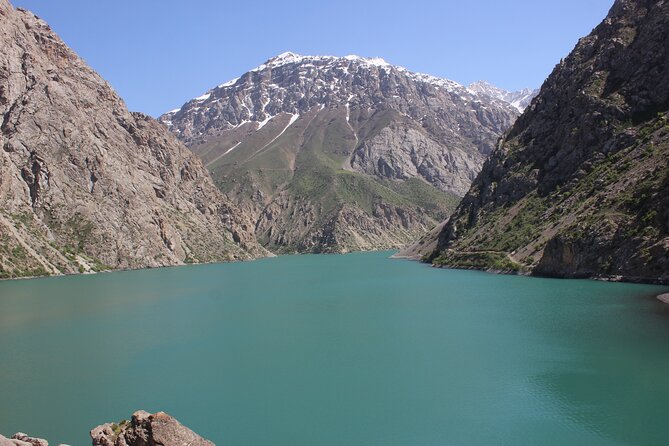
- Seven lakes, one long loop: You hit the full Khaftkul Valley circuit in a single day.
- Border crossing built into the route: You drive with an Uzbek side contact, then switch to a Tajik guide/driver after crossing.
- Lake names that match what you see: Soya is in shade, Nofin is the “umbilical cord,” Hazorchashma means “thousand springs.”
- Altitude changes as you climb: From about 1,640 m at the lowest lake to roughly 2,400 m at the highest.
- Free admissions at the stops: Each lake stop is listed as admission ticket free.
- Lunch is a picnic, paid on the spot: Budget about 15 to 20 USD per person for food.
Why the Khaftkul Valley lakes are worth a full border day
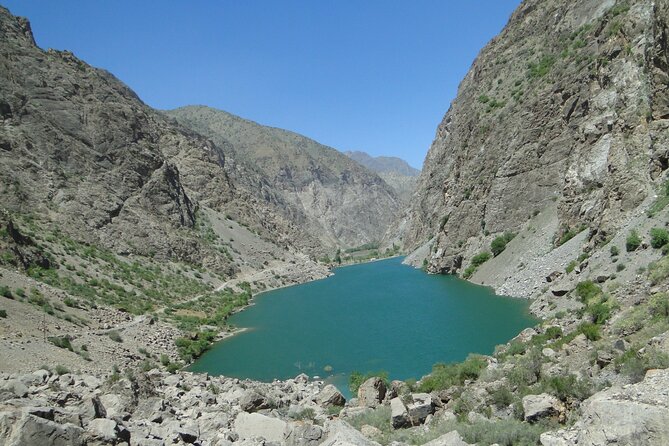
If you want a day trip that feels like real travel, not a checklist, this is the kind of route that does it. You start in Samarkand, then you cross into Tajikistan specifically to see the famous group of high mountain lakes known as the Seven Lakes in the Khaftkul Valley. It is remote enough to feel like you are escaping the city, yet organized enough that you are not stuck planning every turn.
The best part is how the day is paced for photos and walking. Each lake has its own little personality, even when the scenery is similar at first glance. You get a low lake (Nezhigon), then you move toward shades, narrow shapes, and finally the highest one, Hazorchashma. That up and down shift is what keeps the day from feeling repetitive.
Price and what your $145 covers in real terms
The posted price is $145 per person, and what makes it feel fair is what is included. You get private transportation plus an English speaking guide in Tajikistan, and the lake stops themselves are listed as admission ticket free. You also get round-trip transfers from your Samarkand hotel, which is the kind of time-saver that often costs extra when you piece things together yourself.
What is not included is where you should do your budget math. You will need a Tajikistan online visa ($30) and a picnic-style lunch paid on the spot (about 15 to 20 USD per person). Also, plan on tips for the guide and driver, since those are not included. And because you cross out of Uzbekistan and then return, you need a multiple entry Uzbekistan visa or visa waiver to re-enter.
So, I would treat $145 as the transportation and guiding portion, then add visas, lunch, and tips on top. If you do, the value tends to land in a normal range for a private cross-border day like this.
Other border hops out of Samarkand and Tashkent
- Full Day Private Tour in Seven Lakes from Samarkand
★ 5.0 · 94 reviews - Tour From Samarkand To Tajikistan: Seven Lakes
★ 5.0 · 34 reviews - Seven Lakes of Tajikistan Full Package Excursion from Samarkand
★ 5.0 · 26 reviews - Seven Lakes Tajikistan Private Excursion From Samarkand
★ 4.0 · 11 reviews
Samarkand to Tajikistan: the border transfer rhythm
This trip is designed around a clean workflow for crossing into Tajikistan. You start from the Amir Temur Mausoleum, Gur-i Amir complex area in Samarkand, then your group gets picked up and you drive to the border with an Uzbek driver.
Once you reach the other side, you meet your Tajik guide/driver and continue into the mountains. That switch matters. It is one of those small details that keeps your day smoother because you are no longer trying to work out where to go with the wrong paperwork process or a guide who is not used to the local route.
Time at the border can also decide how much of the higher lakes you get. The operator builds in the reality that border crossing and road conditions can vary, and the full plan for all seven lakes can be curtailed to ensure you return to the starting point on schedule.
The seven lakes in Khaftkul Valley, stop by stop
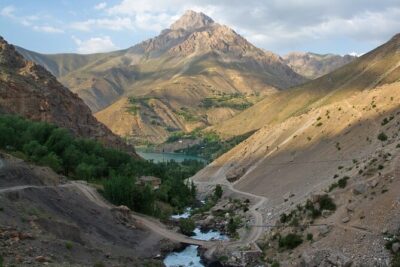
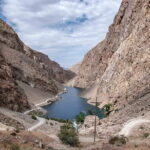
This is the heart of the day: Nezhigon, Soya, Gushor, Nofin, Khurdak, the largest lake (the one many people rate most beautiful), and Hazorchashma. The order is set so you gradually climb and change scenery, rather than bouncing randomly.
Stop 1: Nezhigon, the lowest lake around 1,640 m
Your first lake is Nezhigon, sitting at about 1,640 metres. Even if you are not thinking about altitude, you should notice the light and air feel different once you are up in the hills. It is your warm-up stop, and it sets the tone for the rest of the valley.
Admission is listed as free here, so you can focus on your photos and a relaxed first look. Take a few minutes to look back the way you came too, because the road climb makes a difference in what you can see.
Stop 2: Soya Lake, the shade-and-color stop
Soya Lake is named for the Tajik word for shadow, and the description matches what you should expect: the lake sits between high cliffs, so it is in shade almost all day. On a bright day, that shade can make the color look especially changeable, because the water color shifts depending on weather and time of day.
This is one of the stops where I think an English guide helps most. You get the meaning behind the name while you are standing there, so you are not just staring at water, you are reading the landscape like a story.
Prefer your own guide? More private Uzbekistan trips

Stop 3: Gushor, connected by a turbulent stream
Gushor is about 400 metres from Soya. As you approach, you will see a turbulent stream connecting the two, and the lake is surrounded by steep cliffs.
The name is tied to the idea of watchfulness, which is a good mental hook. Spend a little time looking for movement in the water and the flow direction, because that stream connection is part of the “two-lake pair” effect of this valley.
Stop 4: Nofin, elongated and “umbilical cord” shaped
Nofin is described as very elongated, more than 2.5 kilometres long and about 200 metres wide. The name means umbilical cord, and the reason given is that Nofin sits as the central one among the seven.
This is a stop where I recommend you pace yourself. If you hurry, the lake length can blur into one long view. If you slow down, you can trace the narrow stretch along the shoreline and feel how the valley layout is guiding the whole route.
Stop 5: Khurdak, the smallest lake and the village on the way
Khurdak is the smallest of the seven. Its name means baby, and you reach it after traveling about 1.5 kilometres from Nofin. Along the way, you may see the village of Padrut, which adds a human touch to the mountain-only feeling.
Because it is smaller, this can be an easy stop to over-skip if you are chasing the biggest views. Don’t. Small lakes often show the most detail in water edges, cliff contours, and how the route threads through the valley.
Stop 6: the largest lake, plus petroglyphs nearby
This is listed as the largest and, for many people, the most beautiful lake. You should expect a wide view: broad blue water with mountain backdrop in the same frame.
Also, this stop references petroglyphs of primitive something (the text cuts off), so you might be able to spot ancient rock markings in the area near the lake. If you care about that kind of stop, give yourself extra minutes here so you do not feel rushed at the end of the day.
Stop 7: Hazorchashma, highest at about 2,400 m
Hazorchashma, also seen as Azorchashma, is the highest lake, around 2,400 metres. The name given means thousand springs, and the lake is fed by spring water.
This one is the “final boss” stop, not because it is necessarily the biggest view, but because it is the one most dependent on timing. If the day runs long at the border or the road slows down, Hazorchashma can be the lake that gets cut.
If you are hoping for all seven, take that seriously when you plan your departure time and your expectations.
Jartepa and the return, where the clock starts winning
After the lake circuit, you head toward Jartepa and then back to the border area. The route description includes driving to the border with your Tajik guide/driver and passing the Tajik border, then passing the Uzbek border on the return to Samarkand.
This is where your day can feel like a grind if you are not ready for long driving. But it is also when you can relax into the fact that you saw what you came for. The key is accepting that this is not a slow sightseeing day. It is a day that uses the road and the border crossing as part of the experience, not a nuisance you can ignore.
What to pack for a mountain-day that is not on asphalt
The trip notes are clear that the roads are mountain, not asphalted. That means dust, bumps, and a little more discomfort than you might expect from a “day trip.”
I would pack like you are going somewhere cool and exposed. Bring layers you can adjust because altitude from 1,640 m to 2,400 m can change how you feel, even if the day starts out warm. Comfortable shoes help too, because lake stops include walking on uneven ground.
Also, do not underestimate how much you want your camera working all day. The trip highlights itself suggest keeping your camera charged, and on this kind of route, you will want photos at multiple lakes, not just one.
Finally, have a mindset that keeps you flexible. One negative review described rough conditions in bad weather and a reluctance to drive into muddy patches. I cannot confirm the exact details for every trip, but it is a good reminder: mountain roads can force safety decisions. Your best move is to plan for that possibility mentally, so you do not spend your energy stressed.
The people part: guides and driving can make or break the day
One reason this tour gets strong praise is the human help. In at least one account, the guide was Dawood and the driver was Masoor, and the pair were described as helpful with history and background of Tajikistan. Another positive review praised punctual drivers and a smooth, well-managed day.
At the same time, there are also critical comments about vehicle suitability and the feasibility of the timing. The tour itself already signals the reality that visiting all seven lakes can be curtailed. So rather than assuming the schedule will always hold, I recommend you think of it as a goal that depends on roads and border flow.
If you want the best odds of a smooth day, you should go in with patience and a little humor about logistics. This is not a city tour with predictable traffic.
Who this Seven Lakes private excursion is best for
This is a good fit if you want:
- A private day so you are not waiting on other groups.
- A cross-border experience that feels purposeful, not random.
- To see multiple lakes in one outing, rather than doing slow segments over multiple days.
It is less ideal if:
- You dislike long travel time or you get frustrated with delays.
- You want a guaranteed plan that never changes. The route explicitly allows for curtailment of lake stops depending on conditions.
- You have very limited mobility. The tour requests moderate physical fitness, and it also says it is not recommended for children below 6 years old.
If you are traveling as a couple, a small group of friends, or anyone who values control and comfort over cost, this private format is the attraction.
Should you book the Seven Lakes Tajikistan private day trip from Samarkand?
I would book it if you are excited by remote mountain lakes and you are comfortable with a day that may run on variable conditions. The biggest appeal is the combination: private transport, an English guide in Tajikistan, and an organized path through the Khaftkul Valley that targets seven distinct lakes with free admissions at the stops.
Do not book it on autopilot if you are the type who hates uncertainty. The mountain roads are not asphalted, border timing matters, and the plan may shorten if returning on time becomes the priority. If you want all seven, ask your operator about the possibility of an earlier start and be ready to accept that the highest lake is the most timing-sensitive.
Bottom line: this is a worthwhile Samarkand-to-Tajikistan day for travelers who want real scenery and a well-guided plan, as long as you budget for visas, lunch, and the fact that mountains set their own rules.
FAQ
How long is the Seven Lakes private excursion from Samarkand?
The duration is about 10 to 12 hours.
Is hotel pickup and drop-off included?
Yes. The tour includes round-trip transfers from your Samarkand hotel.
Where does the tour start in Samarkand?
The start point is the Amir Temur Mausoleum, Gur-i Amir complex area near Oqsaroy 1, Бўстонсарой кўчаси 1/4, Universitetskiy Boulevard.
Will the guide be in English?
In Tajikistan, the tour includes an English speaking guide.
Do I need a Tajik visa for this trip?
Yes. You need an online Tajikistan visa, listed as $30 per person, and you should apply at least 7 days in advance.
Is there an Uzbekistan visa requirement for re-entering Uzbekistan?
Yes. A multiple entry Uzbekistan visa or visa waiver is required to re-enter Uzbekistan with this tour.
Is lunch included?
Lunch is not included. The picnic lunch is paid on the spot, approximately 15 to 20 USD per person.
Are admissions required for the lakes?
The lake stops are listed as admission ticket free.
Can the tour miss the seventh lake?
Yes. Visits to all 7 lakes can be curtailed depending on border crossing and road conditions to ensure timely return, and no refunds are offered for this.
Is this a private tour?
Yes. This is a private tour/activity, and only your group will participate.
More Tours Around Uzbekistan
The Full Uzbekistan Review Pile
Over The Border And Back
More of Uzbekistan we have reviewed
- Penjikent Day Trip From Samarkand★ 5.0 · 3 reviews
- Samarkand: Cooking class with local family★ 5.0 · 3 reviews
- Samarkand: city tour★ 4.7 · 3 reviews
- Bird Watching Tours in Samarkand★ 3.6 · 3 reviews
- Samarkand City Tour from Silk Paper Factory to Registan Square★ 5.0 · 4 reviews
- Shakhrisabz Private Day Tour from Samarkand★ 5.0 · 4 reviews
Tajikistan & Cross-Border Day Trips, compared.
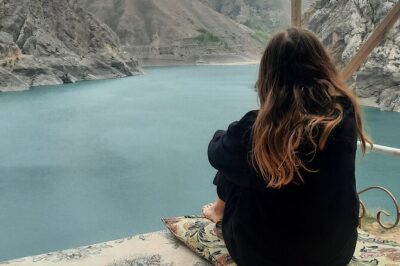 ★ 5.0Full Day Private Tour in Seven Lakes from SamarkandFrom $10094 reviews
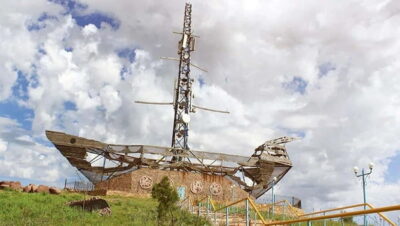 ★ 4.6Shymkent Day Tour from TashkentFrom $25071 reviews
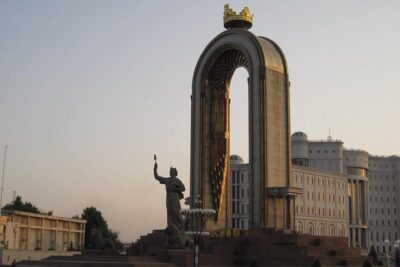 ★ 4.0Khujand Day Tour from TashkentFrom $13535 reviews
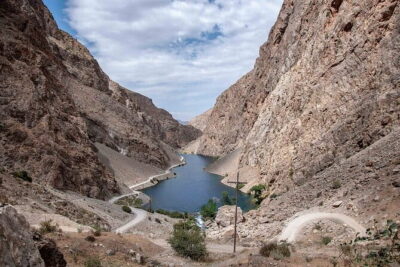 ★ 5.0Tour From Samarkand To Tajikistan: Seven LakesFrom $9934 reviews
 ★ 5.0Seven Lakes of Tajikistan Full Package Excursion from SamarkandFrom $17526 reviews
 ★ 4.5Panjakent day trip from SamarkandFrom $1506 reviews
 ★ 5.0Two Days in Fann Mountains at Iskandarkul and SevenlakeFrom $3006 reviews
 ★ 4.2From Samarkand: Day tour to the Tajiksitan Alexander lake.From $1515 reviews
Browse the lists this tour appears in