
Review · KHOREZM
Daytrip from Khiva to Five Ancient Fortresses
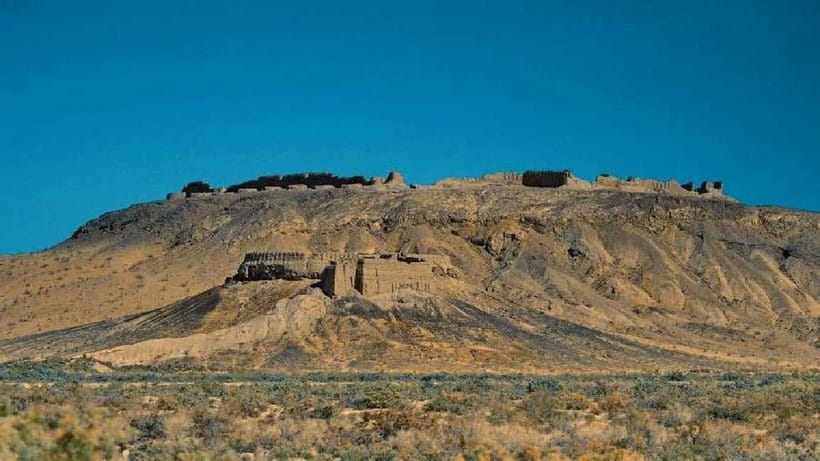
Five fortresses, one day, lots of scale. This private route from Khiva stretches into Karakalpakstan for five ancient forts tied to Khorezmian survival and rule, with sunset-friendly photo stops along the way.
I like the mix of fort styles, from rectangular strongholds with loopholes to citadels built for smoke-signal alerts. You also get the comfort of an A/C private vehicle and a plan that gives you time at each site for wandering and photos, not just a drive-by.
One catch to weigh: entry tickets are not included, and some stops can feel subtle once you see the ruins in person. Also, drivers may have limited English, so you will want to come with a few questions in mind.
In This Review
- Key highlights to know before you go
- Khiva’s comfort, Karakalpakstan’s ruins
- Price and time: what 7 hours buys you
- Pickup and drop-off logistics that actually matter
- Stop 1: Guldursun-Kala and the idea of hard-edged defense
- Stop 2: Ayaz-Kala’s “showy” complex views
- Stop 3: Kavat-Kala’s 15 km stretch and the “city within” idea
- Stop 4: Toprak-Kala, governors, and the clues hidden in objects
- Stop 5: Kyzyl-Kala and the survival logic of smoke signals
- Driver expectations: how to get the most out of limited English
- Entry fees and the reality of paying on-site
- Food, breaks, and what to bring for a comfortable day
- Who should book this day trip
- Should you book the Khiva to Five Ancient Fortresses day trip?
- FAQ
- How long is the day trip?
- Where does pickup happen, and where can I be dropped off?
- What is included in the price?
- What is not included?
- Is it a private group?
- Do I need to buy tickets or pay on-site?
Key highlights to know before you go
- Five specific fortresses tied to different eras, including Guldursun-Kala and Kyzyl-Kala
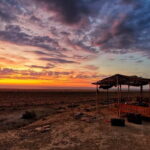
- Sunset timing built into the day, with photo stops at multiple ruins
- Ayaz-Kala is a complex, not just one fortress, grouped around a hill
- Kavat-Kala stretches 15 km, so you can walk segments and feel the scale
- Kyzyl-Kala includes a safety briefing, helpful on uneven ground
Khiva’s comfort, Karakalpakstan’s ruins
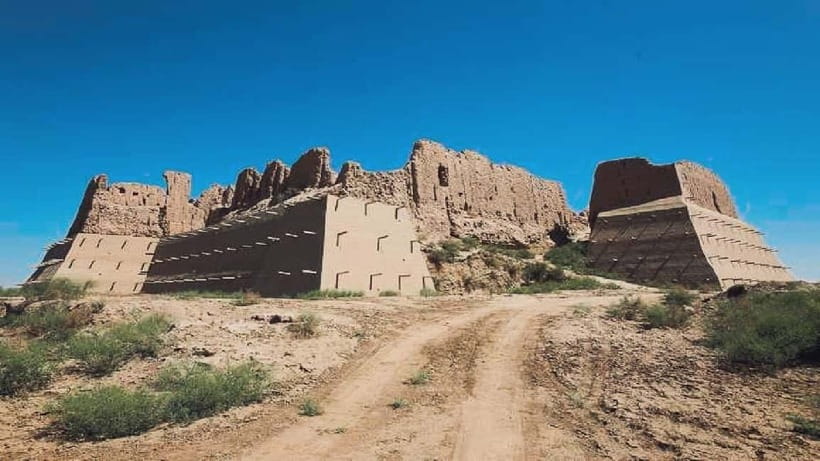
Khiva is all brick, mosaics, and old-city charm. This day trip is different in the best way. You trade the medina streets for wide open ruins in Karakalpakstan, where fortifications were built to endure raids, political change, and the slow collapse of power.
What I find especially appealing is that these aren’t just pretty backdrops. Each fortress hints at a job it had to do. Some were administrative and residential. Others were survival gear, with layered walls, watchtowers, and even a plan for water delivery. If you like history you can see, not history you only read, this is a strong fit.
Price and time: what 7 hours buys you
This is priced at $115 per group up to 3 people. For a private outing, that can be good value because you are paying for door-to-door transport, not shared seats. In plain terms, if you are traveling with one companion, the cost per person drops fast compared to a standard join-a-tour format.
The tradeoff is time. At 7 hours total, you will move through five sites without turning this into a slow, museum-style day. You get photo stops plus time to walk around each fortress, so you can enjoy them, but you should keep expectations realistic: you are not touring five fully restored archaeological parks.
Other fortress runs out of Khiva
- Transfer: Bukhara – Khiva via Ancient Fortresses
★ 4.5 · 101 reviews - Daytrip From Khiva To Ancient Fortresses
★ 4.6 · 60 reviews - Private Daytrip to 7 Ancient Fortresses of Khorezm
★ 5.0 · 25 reviews - Tranfer Khiva – Bukhara via Ancient Fortresses
★ 4.8 · 24 reviews
Pickup and drop-off logistics that actually matter
You can be picked up in Khiva or at Urgench airport, and you can be dropped back in Khiva or Urgench. That flexibility is useful if your schedule is built around flights, trains, or connecting transport.
The trip also includes round-trip A/C vehicle and parking. A/C is not just comfort here. It makes the long car sections easier to tolerate, especially if the day is warm when you hit the open-air sites.
One more practical note: you are told to wait in your address about 10 minutes before pickup time. That small buffer helps the driver keep things smooth.
Stop 1: Guldursun-Kala and the idea of hard-edged defense
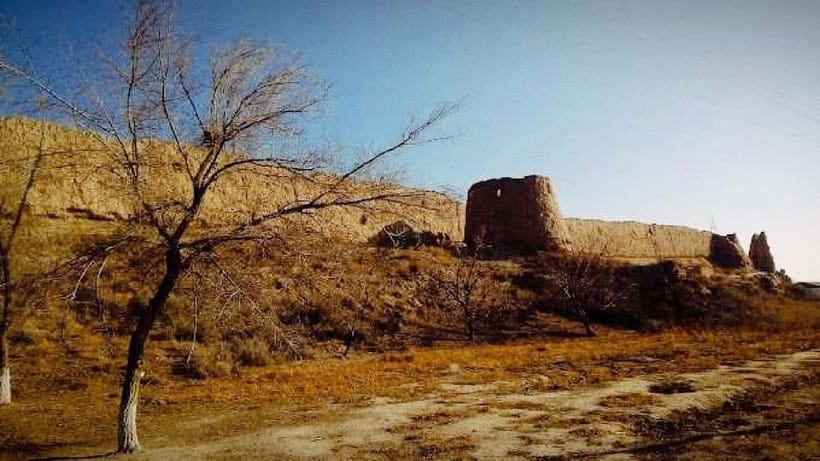
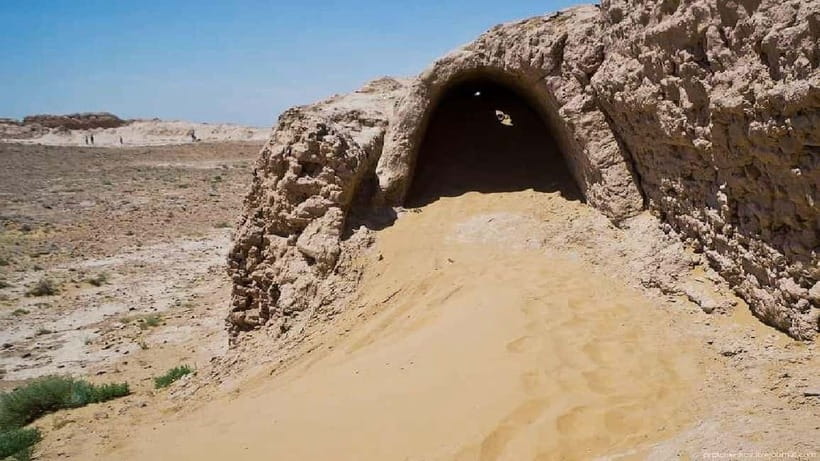
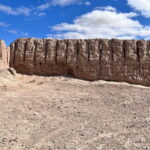
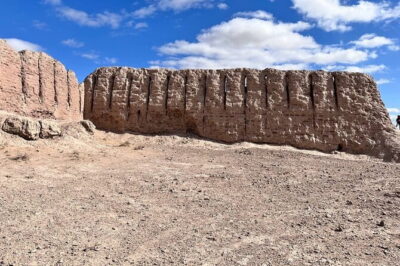
Guldursun-Kala is dated to the 2nd to 1st centuries BC, and it was built on a rectangular base. The fortress covered about 35 hectares, and the walls were adobe, lined with two rows and fitted with built-in loopholes.
So what should you look for when you arrive? Don’t expect a dramatic fortress in perfect condition. Instead, look for the line of the walls and any remaining evidence of the defensive layout. The loopholes concept matters because it tells you this place wasn’t meant for show. It was meant for control under pressure.
There’s also a timeline twist that makes the place more than a single snapshot. Archaeological evidence suggests it was last occupied around 1220, during the rule of Shah Ala ad-Din Muhammad (born 1169, ruled 1200 to 1220). That timeframe lines up with the wider upheavals associated with the Mongol invasions affecting the Khwarezmian Empire.
For a first stop, it sets the tone: you are walking into layers of occupation, not just ruins from one moment.
Stop 2: Ayaz-Kala’s “showy” complex views
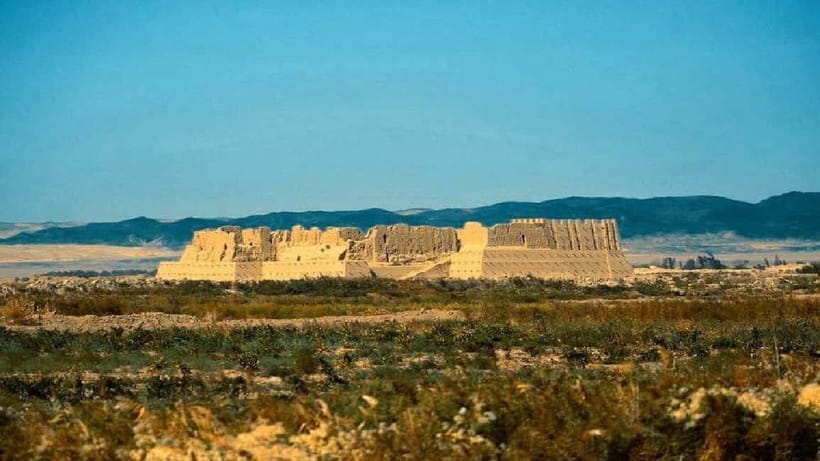
Ayaz-Kala gets attention for good reason. Its name connects to the idea of cold or frosty conditions, but what you really notice on-site is the visual impact. It is also described as the most showy among the ancient Khoresm fortresses.
One detail you will appreciate if you like accuracy: there isn’t one single fortress. It’s a complex of three fortresses grouped around a hill in the eastern part of the Sultan Uizdak ridge.
Geography also helps you understand why this stop feels different. It is located in the north-west of the Elikkala district of Karakalpakstan, about 30 km from the Buston settlement and about 96 km from Khiva. That distance from Khiva is a reminder that this day trip isn’t just a quick excursion to nearby ruins. You are moving deep into the region.
Plan to take your time here. This is where you are more likely to feel that the effort to get out of Khiva was worth it.
Stop 3: Kavat-Kala’s 15 km stretch and the “city within” idea
Kavat-Kala is described as unique, and the numbers help you picture why. The fortress stretches for 15 km and is about 2 to 3 km wide along the Gavhore Channel. Until recently, there were still visible ruins of residential and clay buildings, which makes it feel less like a lone fortress and more like an organized settlement.
The 12th to 13th centuries are the key period. The central part was very populated, at one point reaching around 90 estates. In other words, this was not just a military outpost. It was a functioning center.
What I’d do as you walk here: pace yourself and think in lines and distances. A longer site like this can trick you into thinking you have seen it all after 10 minutes. Try to look both at what stands and at the stretches between remnants, because that’s often where the scale becomes real.
Also, Kavat-Kala is currently subject to considerable research, so you might find more questions than answers on the spot.
Stop 4: Toprak-Kala, governors, and the clues hidden in objects
Toprak-Kala was built in the 3rd century, and it served as the residence of the khorezmshakhs, the governors of the country. This residence status lasted up to about 305 A.D. After aggressive wars, the governors left, and the city gradually fell into decay.
This is the kind of fortress where archaeology does a lot of the talking. Excavations have found coins, fragments of ossuaries linked to Zoroastrian canopic jars, and a wide range of items: thin ceramics, wool and silk fabrics, gold ornaments, and even a necklace of 300 glass beads, plus amber, corals, and bowls.
At ground level, you might not see every category of artifact translated into a clear wall segment. That’s normal. What makes Toprak-Kala compelling is that the site clearly functioned as a high-status residence. Even when the remains are quiet, the evidence points to everyday life plus power.
If you have limited time, I’d treat this stop as your “objects and meaning” moment: focus less on imagining perfect reconstructions, more on imagining a governor’s daily routine and who was controlling the region from here.
Stop 5: Kyzyl-Kala and the survival logic of smoke signals
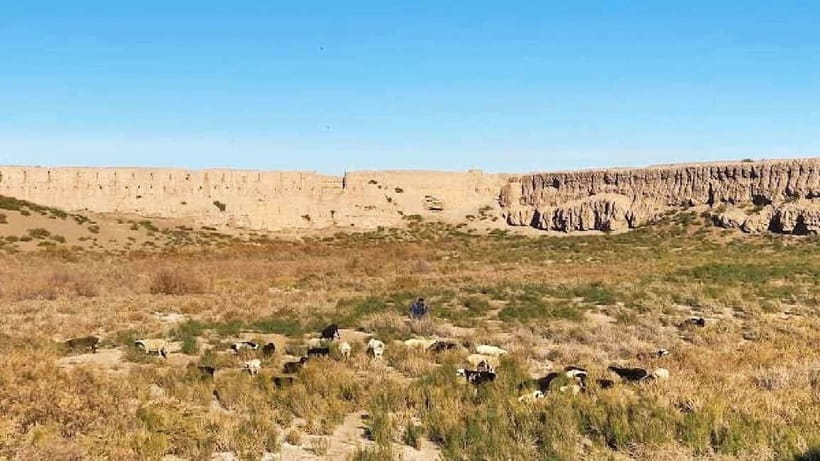
Kyzyl-Kala is all about refuge during nomadic raids. The big idea: smoke signals were used to announce the approach of enemy armies. That gave Khorezmians time to prepare and seek shelter inside the citadel.
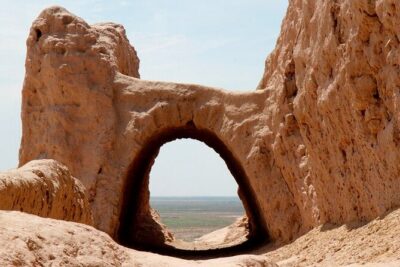
This is one of the most interesting stories on the day because it turns a ruin into a system. You are not just looking at stones. You are looking at communication, timing, and defense. Layered walls mattered, with a double wall and watchtowers fortified at corners.
Water matters too. Ceramic pipes were installed to funnel a continual supply of water to the fort. That detail changes how you imagine a raid. A fort that can last needs more than walls. It needs practical endurance.
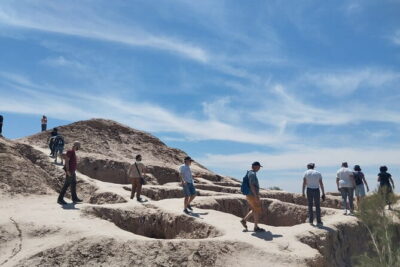
This stop also includes a safety briefing, which is a good sign. Ruins can be uneven, and edges are not always obvious. Listen, take your time, and keep your footing. If you are with someone who moves slowly, this is a stop where calm pace beats rushing.
The day includes sunset-friendly timing here as well, so bring your camera plan and a hat. Even if the ruins themselves do not explode into dramatic views, late light can make earth tones and wall remnants easier to read.
Driver expectations: how to get the most out of limited English
This tour is private transport, and you should understand the role of the driver. Some drivers may have limited English proficiency. The good news is that you are still dealing with drivers described as trained and knowledgeable about the tour program, so the route and timing should work reliably.
What you should plan for: you might get better results if you bring simple questions, like what each fortress was used for, or what time period you are looking at. If you care about details, jot them down before pickup.
A useful detail from real-world experience: one driver named Izzat earned praise for being friendly, funny, and accommodating, and for communicating as best he could in English. That kind of attitude can make a big difference when you cannot rely on a full guided explanation.
One more caution from the same pool of experience: there was at least one complaint about driving too fast on bad roads. Since this is a private outing, it is reasonable to speak up early. If you prefer a slow, careful pace, ask at the start. Your comfort and safety are part of the value.
Entry fees and the reality of paying on-site
Entry tickets are not included, even though you may have skip-the-line access via a separate entrance. So you should expect to pay at sites as needed.
Because the day has multiple fortress stops, the simplest way to prepare is to bring enough cash or payment options for several entries. One person reported paying around 20,000 som multiple times across the day. Even if your exact amounts differ, the pattern is the point: you should budget for more than one payment.
If you want to feel confident, carry small bills and keep some cash separate so you are not scrambling when you are standing at a ticket point.
Food, breaks, and what to bring for a comfortable day
Lunch is not included, though breaks are built in at key stops. That usually gives you a chance to step away, use the restroom if available, and reset.
Since car time can be long, I recommend you treat food like a plan, not a hope. Pack water and a snack if you have dietary needs or if you just hate spending time searching for a place at the end of a long drive.
What to bring:
- Water and a light snack
- Sunscreen and a hat for open-air walks
- Comfortable shoes with grip, because ruins can be uneven
- Cash for entry tickets on-site
Also, you are doing several walks. Even short loops and photo stops add up.
Who should book this day trip
This trip is a great match if you:
- Want to see Khorezm fortresses outside Khiva without arranging everything yourself
- Like archaeology clues, defensive architecture, and survival stories like smoke signaling and water pipes
- Prefer a private group day with flexible pickup and drop-off
It may be less ideal if you expect pristine ruins or perfectly labeled explanations at every stop. Some sites may look subtle until you know what to look for, and the level of on-the-ground interpretation can depend on your driver’s English.
If you love contrast, this day trip delivers it: polished city life in Khiva in the morning, and then the raw geometry of fortification in the countryside by afternoon and sunset.
Should you book the Khiva to Five Ancient Fortresses day trip?
I think it is worth booking if you want a small-group day that gets you out of the usual Khiva routine and into the wider Khorezm world. The private transport, A/C comfort, and the fact that you hit five distinct fortresses make it efficient for your time.
Book it especially if you go in with the right mindset. This is not a restoration-heavy route. It is a chance to read the past through remains, architecture clues, and the stories behind each site, from Guldursun-Kala’s loopholes to Kyzyl-Kala’s smoke-signal defense.
Skip it only if you are strongly dependent on fluent English guiding at every stop, or if you need fully developed facilities at each fortress. In that case, you might be happier with an option that includes a dedicated guide plus more structured site interpretation.
If you want, tell me your travel dates and whether you’re starting from Khiva or Urgench, and I can suggest a realistic game plan for timing, photo stops, and budgeting for entries and lunch.
FAQ
How long is the day trip?
The duration is 7 hours.
Where does pickup happen, and where can I be dropped off?
Pickup options include Khiva and Urgench (hotel or airport). Drop-off options include Khiva and Urgench.
What is included in the price?
Included: pickup from your hotel in Khiva or from Urgench airport/train station, drop-off in Khiva and Urgench, round-trip A/C vehicle, private transportation, flexible departure time, and parking fees.
What is not included?
Entry tickets are not included, and there is no guide included. Optional lunch is also not included.
Is it a private group?
Yes. It is a private group with pricing listed as $115 per group up to 3 people.
Do I need to buy tickets or pay on-site?
Entry tickets are not included, so you should expect to pay for entry at the sites as needed. The activity also notes skip-the-line access through a separate entrance.
The Full Uzbekistan Review Pile

More Khorezm Fortresses
More of Uzbekistan we have reviewed
- Best of Khiva: Exclusive Private Tour!★ 5.0 · 3 reviews
- Traditional Khiva Cooking Class with Market Visit & Lunch★ 5.0 · 4 reviews
- Ayaz Kala & Toprak Kala private fortress daytrip from Khiva★ 3.5 · 6 reviews
- Private Daytrip to Muynak and Nukus★ 5.0 · 10 reviews
- Best of Khiva: Exclusive Private Tour!★ 5.0 · 9 reviews
- Private Transfer & Photo‑Stops: Ayaz‑Kala & Toprak‑Kala”★ 4.6 · 6 reviews
Khorezm Desert Fortress Day Trips, compared.
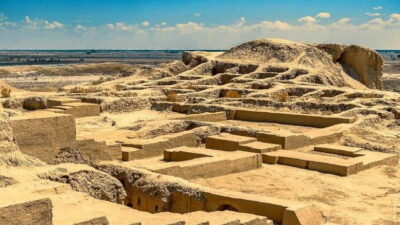 ★ 4.6Daytrip From Khiva To Ancient FortressesFrom $9860 reviews
 ★ 5.0Guided Tour To Old FortressesFrom $8825 reviews
 ★ 5.0Private Daytrip to 7 Ancient Fortresses of KhorezmFrom $19925 reviews
 ★ 3.5Ayaz Kala & Toprak Kala private fortress daytrip from KhivaFrom $386 reviews
Browse the lists this tour appears in